- Excellent deck-building experience
- Overall amazing game
- Massive card variety
- Bad controller support
- Poor Chinese machine translation
- Runs are overly long
Emotions
Archetypes
What players like:
Common complaints:
Gameplay feedback:
Performance notes:
Recommendations:
Other player notes:
Similar games
Blend with other games




Review evidence
Why players say this
Review evidence
Why players say this
Steam review verdict
An excellent, massively varied deck-builder that's overall amazing, though bad controller support, poor Chinese machine translation, and overly long runs hold it back.
What players like
Excellent deck-building experience: Reviewers consistently praise the game as an excellent deck-builder with a wide array of options, synergies, and deep strategic choices.
Overall amazing game: Many reviewers describe the game as phenomenal, solid, and a gem in its kind, with nothing to complain about.
Massive card variety: The game includes a huge number of beautifully rendered cards and card packs, offering a vast spectrum of choices.
Near-infinite replayability: Players highlight the immense depth, variety, and endless replay value, making each run feel fresh.
Abundant unlockable content: There is a lot to do and unlock, with numerous things to see and achieve, adding long-term progression.
Common complaints
Bad controller support: Controller support is criticized as borderline unplayable or atrocious, with minor hitches, and the store's full controller support claim is disputed.
Poor Chinese machine translation: The Chinese translation is machine-translated and poor, negatively affecting the gameplay experience despite the game being labeled as having Chinese support.
Runs are overly long: Players report that each run takes at least 1.5 hours, with some runs lasting 2-3 hours, making the game time-consuming.
Repetitive combat and enemies: Combat is repetitive, with players using the same combos thousands of times and facing the same enemies repeatedly.
Excessive RNG frustration: There is a huge amount of RNG in the game, which players find frustrating and too random.
Gameplay and performance
Deckbuilding roguelike core genre: The game is consistently described as a deckbuilding roguelike or roguelite with RPG elements, featuring card acquisition, deck-building during runs, and meta progression.
Multiple classes and archetypes: The game offers several classes, each with distinct playstyles, cards, and subclasses, enhancing replayability and build variety.
Card synergies and combos: Players highlight card synergies, combos, and keyword-heavy mechanics as central to gameplay, with multiple strategies and archetypes supported.
Story and narrative elements: The game includes story aspects, with a make-your-own-story structure and narrative-driven deckbuilding.
Difficulty levels and challenges: Multiple difficulty levels range from Story to Impossible, with upper levels being challenging and normal relatively easy.
Steam Deck compatibility problems: Multiple issues are reported on Steam Deck, including failure to launch on OLED model, need for Proton 9+ to load, and optimization problems. These hinder playability on the platform.
Steam Deck UI glitches: On Steam Deck, scrolling breaks, the selection indicator is wrong, and the card gallery freezes on the first page. These bugs disrupt navigation and card browsing.
Mouse and keyboard still lacking: Although mouse and keyboard support has improved, players still find it inadequate. This suggests further refinements are needed for a smooth experience.
Recommendations
Strongly recommended by many: Several clusters contain enthusiastic recommendations, with players expressing high praise and urging others to try the game. This positive sentiment is widespread and emphatic.
Must-buy for deckbuilder fans: Fans of roguelike deckbuilding games consistently recommend this title as a must-have. It is frequently described as essential for enthusiasts of the genre.
Suited for deckbuilder enthusiasts: Reviewers note it is best for those deeply into deckbuilding games, especially if they have exhausted major titles. It offers fun for dedicated fans.
Appeals to Slay the Spire fans: Multiple reviewers compare the game to Slay the Spire and recommend it to those who enjoy that style. Across the Obelisk fans are also mentioned as a good fit.
Not recommended for some: A few negative reviews exist, with players either realizing the game isn't for them or advising against purchase. These are less common but notable.
Buying context
Community fair range: $10.00 - $20.00.
Game completion: 12.0h.
Session length: 3.0h.
Endgame: 600.0h.
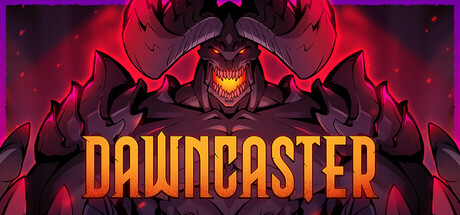
Dawncaster often begins with weak starting decks, long early encounters, and a steep learning curve; many players report enjoyment arriving once systems and synergies click, with one time cue placing the deck's first real punch around one hour.
Reported time to anchor: 1h.
Friction: Weak starting decks and abilities make early combat slow; Long, tedious first maps with too many encounters; Steep learning curve and confusing expansions/canto system; Slow or grindy meta-progression; Lacking or poorly integrated tutorial; Long runs and repetitive dialogue.
Player profiles
Deckbuilding Veteran Synergy Seeker: Builds and optimizes decks around class synergies while comparing systems to other roguelike deckbuilders. Motivation: Mastering synergistic builds and replaying with meaningful deck choices. Stance: buy.
Mobile Commuter Replayer: Plays in short mobile sessions and values easy stopping and starting over long PC sittings. Motivation: Convenient portable play and continuing long-term progress across devices. Stance: buy.
Progression Grinder Tinkerer: Repeats runs to earn currency, upgrade classes, and tinker with newly unlocked cards and builds. Motivation: Unlocking content and steadily expanding options through meta-progression. Stance: buy.
Platform notes
Steam Deck: The Steam Deck experience is mixed but not seamless. Users report that the game may fail to launch without manually forcing Proton Experimental or Proton 9.0+, and controller support remains inconsistent, with missing highlighting and occasional touchscreen reliance. Some reviewers challenge the Steam Deck Verified and Full Controller Support labels, though others report good playability after the Proton workaround and note ongoing controller improvements.
Linux and Proton: Linux and Steam Deck feedback indicates that the game is generally playable but requires manually selecting Proton Experimental or Proton 9.0+ for reliable launching. Users who apply Proton 9+ report that the game loads and plays well, while a few isolated comments mention launch or Steam Deck usability concerns. The evidence supports a minor-tweak compatibility profile rather than a broadly broken Linux experience.
Extra review signals
Monetization: The reviews describe a one-time Steam purchase whose $20 bundle includes all DLC. Users debate value versus the mobile version, but there is no evidence of gacha, paid power, loot boxes, convenience items, or a cash shop. One review explicitly praises the lack of pay-to-win microtransactions. A single mention of an optional support pack outside the DLC bundle is an add-on pricing complaint, not predatory MTX.
External guides: Reviews center on external wiki dependency for understanding unexplained events, keywords, NPC service affordability, and uncertain outcomes. No review explicitly cites farming, drop rates, loot tables, inventory management, crafting requirements, map navigation, or bugs as the primary barrier. Under the strict priority rules, Tier 3 applies.
Other review notes
Mobile port to PC: Multiple reviewers note the game was originally a mobile game and later ported to PC. Some mention playing it extensively on mobile before the PC release.
All DLC included: The base purchase includes all DLC, adding extra areas, cards, monsters, bosses, and story. Some mention that supporter DLC is cosmetic only.
Similar to Slay the Spire: The game is frequently compared to Slay the Spire, with many saying it is comparable in quality or a more fluid alternative. Some consider it on par with or slightly below that game.
Available on mobile and PC: The game is available on Android, iOS, and Steam, with some noting it has been on mobile for a long time.
Inferior to genre giants: Several reviewers compare the game unfavorably to Slay the Spire, Monster Train, and other deckbuilders, citing it as clunkier or lacking new ideas. It is seen as not reaching the levels of the greats in the genre.