- Fun and addictive gameplay
- Appealing consistent artwork
- Excellent card game design
- Card pool too small
- Poor difficulty balance
- Lacking tutorial guidance
Emotions
Archetypes
Hardware
What players like:
Common complaints:
Gameplay feedback:
Performance notes:
Recommendations:
Other player notes:
Similar games
Blend with other games


Review evidence
Why players say this
Review evidence
Why players say this
Steam review verdict
Fun and addictive gameplay with appealing artwork and excellent card design, though the small card pool, poor difficulty balance, and lacking tutorial guidance hold it back.
What players like
Game is fun and addictive: Players consistently describe the game as fun, addictive, and satisfying to play. The gameplay is engaging, easy to pick up, and provides a good time for both casual and dedicated sessions.
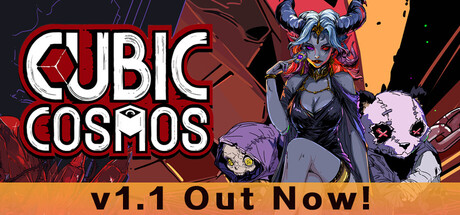
Appealing and consistent artwork: The art style is consistently praised as excellent, attractive, and top-notch. The artwork fits the game's vibe and is visually appealing without being jarring.
Excellent card game design: The card game mechanics are praised for being satisfying, well-designed, and offering diverse card types and classes. Players enjoy the card battles and the freedom of combining cards.
Satisfying deck-building experience: The deck-building core is highlighted as a strong point, with players finding it interesting, enjoyable, and satisfying when builds come together. It is considered one of the best deckbuilders tried.
Varied playstyles and characters: The game offers many different characters and playstyles, providing room for exploration and interesting strategic choices. This variety adds depth and replayability.
Common complaints
Card pool is too small: The card pool is too small, limiting build variety and preventing unexpected synergies. Players note that the pool grows with unlocks, making key cards harder to draw.
Difficulty balance is poor: Difficulty balance is terrible, with noticeable issues starting at difficulty 8. The game swings from too easy to absurdly hard, making progression frustrating.
Tutorial is lacking: The tutorial fails to explain key mechanics like the card three-in-one upgrade. Players often miss the upgrade opportunity, leading to confusion early on.
Content is insufficient: There is too little content, making the game feel short and lacking depth. Players complete the game in about 10 hours, which is not satisfying.
Doll system is confusing: Players find the doll system's purpose unclear and never fully understood. The mechanic is not explained well, leaving players confused about its role.
Gameplay and performance
Deck-building roguelike core: The game is consistently described as a deck-building roguelike, with deck growth and combo mechanics as the central focus. Players build and strengthen their decks from battle to battle, with character and deck unlocks.
Card game with classes: The game is a card battler with various classes and playstyles, often compared to Hearthstone. It features spell cards, unique mechanics, and deckbuilding decisions.
Roguelike card game: The game is a roguelike card game with a unique approach, combining falling card mechanics and auto-chess elements. It features permanent buffs as a core mechanic.
Difficulty levels up to 10: The game offers a difficulty system with levels up to 10, including a performance mode and a threshold at A9. The difficulty curve ramps up progressively.
Single-player Hearthstone experience: The game is often described as a single-player version of Hearthstone, with a hero power and turn-based card gameplay. It offers its own features while remaining reminiscent of PvE Hearthstone.
Steam Deck optimization issues: Multiple clusters report problems on Steam Deck, including buggy controls, poor text rendering, and lack of 16:10 support causing black bars and compressed interface. These issues collectively indicate that the game is not well optimized for Steam Deck.
Controls and input issues: Feedback highlights buggy Steam Deck controls, lack of B button reset, gamepad adaptation issues, and broken left-view derivative operation on hero cards. These control problems hinder gameplay, especially for gamepad users.
Game crashes frequently: Several clusters mention crashes, including two crashes that sent the computer to BIOS, crashes when jumping with certain war souls, a freeze in performance mode, and a crash when playing offline. These crashes are severe and disrupt gameplay significantly.
Resolution and display problems: Users report that resolution cannot be adjusted (only 720p), maximum resolution is limited to 1920x1080 and looks blurry, and full screen mode displays in 4:3 instead of 16:9 or 21:9. These display issues affect visual quality and user experience.
General bugs and glitches: Clusters mention quite a few bugs, including a card becoming huge and covering the screen during fast operations, and other unspecified bugs. These glitches detract from the overall polish of the game.
Recommendations
Recommended for card game fans: The game is highly recommended for players who enjoy card games, deckbuilders, and roguelike mechanics. It appeals to fans of Hearthstone, Slay the Spire, and Monster Train.
Overall positive recommendation: Many reviewers give a general positive recommendation, stating the game is highly recommended or strongly recommended. This indicates a broad satisfaction with the game.
Worth the price: Multiple reviewers emphasize that the game offers good value for its price, especially when on sale. It is considered a worthwhile purchase for card game and roguelike fans.
Good roguelike deckbuilder: The game is praised as a solid roguelike card game, with some calling it a must-try for fans of the genre. It offers unique mechanics and satisfying gameplay.
Specific gameplay tips: Reviewers provide tips such as skipping animations, adjusting difficulty, and focusing on certain events or builds. These tips help players enjoy the game more.
Buying context
Community fair range: $10.00 - $15.00.
Game completion: 20.0h.
Session length: 1.0h.
The game starts with a steep learning curve and information overload, but once players get the hang of the mechanics—often within the first hour or after a run or two—it becomes highly addictive and fun.
Reported time to anchor: 1h.
Friction: high learning curve; information overload; confusing start with few hints.
Unlock drivers: getting past the learning curve; understanding that most effects are similar; playing a run or two; getting the hang of the game.
Player profiles
Power Fantasy Grinder: Focuses on creating a single 'carry' unit or spell combo that can deal massive damage, often ignoring balance concerns in favor of fun. Motivation: To experience overwhelming power and satisfying, fast-paced combat through card upgrades and synergies. Stance: buy.
Deckbuilding Strategist: Carefully selects cards and relics, experiments with different hero powers and synergies, and aims for high-level runs with optimal builds. Motivation: To discover and refine powerful card combinations and overcome challenging encounters through thoughtful deck construction. Stance: buy.
Casual Relaxer: Plays casually, often in short bursts, without deep optimization, enjoying the game's accessible design and satisfying feedback. Motivation: To relax and pass time without the demands of complex mechanics or competitive play. Stance: buy.
Platform notes
The Windows 12-15GB VRAM cohort has sparse evidence, with a single negative review reporting looping and poor text rendering.
Windows 12-15GB VRAM: negative. The only review is not recommended, citing constant looping and poor text, indicating performance issues.
Steam Deck: The game is playable on Steam Deck but suffers from several technical barriers: small text and resolution issues, poor controller support, and stability problems including crashes and launch failures on Linux. Users must rely on touchpad input and may encounter black bars, while crashes can occur during play. These issues require tinkering and workarounds, but the game is not completely broken.
Extra review signals
Monetization: Reviews explicitly mention no microtransactions.
Other review notes
Comparisons to Hearthstone Battlegrounds: Many reviewers compare the game to Hearthstone Battlegrounds, noting similarities in structure and card-focused combat, though some find it less strategic as a single-player title. It is often described as a blend of Hearthstone's adventure mode and Battlegrounds.
Comparisons to Slay the Spire: The game is frequently compared to Slay the Spire, with reviewers noting it as a fun alternative or a blend of Hearthstone and Slay the Spire elements. Some mention shorter runs and lower difficulty compared to Slay the Spire.
Good value for price: Multiple reviewers state the game is worth its price, with some saying it offers more content than expected for the cost. The price is considered reasonable for the amount of gameplay provided.
Active developer updates: The developers are actively updating the game and listening to community feedback, which is seen positively. Reviewers appreciate the frequent updates and steady improvements being made.
Comparisons to Monster Train: Reviewers compare the game to Monster Train in terms of style, rhythm, and deck-building mechanics, with some finding this game more fun. The restart turn button and speed-up animation are also noted as similar features.