- Fun addictive core gameplay loop
- Attractive consistent art style
- Strong deckbuilding freedom
- Strategic depth and replayability
- Severe card balance problems
- Poor overall optimization

Emotions
Archetypes
Hardware
What players like:
Common complaints:
Gameplay feedback:
Performance notes:
Recommendations:
Other player notes:
Similar games
Blend with other games




Review evidence
Why players say this
Review evidence
Why players say this
Steam review verdict
An addictive, stylish deckbuilder with strong strategic depth, replayability, and deckbuilding freedom, but severe card balance issues and poor optimization hold it back.
What players like
Fun core gameplay loop: The game is repeatedly described as fun, enjoyable, and highly replayable once learned. Core mechanics and strategy keep players engaged over time.
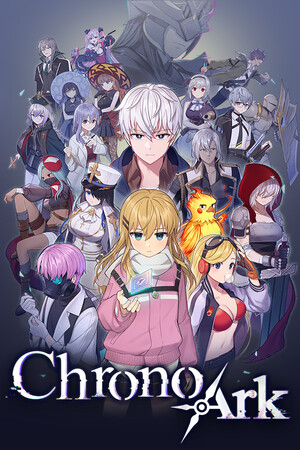
Attractive and consistent art style: The overall art style, including AI-assisted elements, is well received for being consistent and fitting the theme. Many find the visuals appealing and high-quality.
Addictive engaging experience: Many reviewers highlight the game as addictive and immersive, blending relaxation with satisfying progression. The gameplay loop is described as top-tier and hard to put down.
Strong deckbuilding freedom: Players praise the large card pool and the ability to build diverse decks tailored to their preferences. Deckbuilding combinations feel rich and flexible.
Strategic depth and replayability: The gameplay has depth, strategic decision-making, and high replay value due to varied builds. Combat feels thoughtful and rewarding.
Common complaints
Early difficulty tuning issues: Feedback conflicts on early difficulty, but many agree the starting deck is too weak and the first battles are the hardest. Higher difficulties make the opening especially punishing.
Severe card balance problems: Balance is inconsistent, with some single cards enabling easy infinites or winning to the final boss while others are useless. Builds revolve around a few clearly overpowered cards.
Card text overly long: Card effects are described as wordy, essay-like, and exhausting to read. Flashy card faces and art that does not convey card function worsen readability.
No updates for months: Reviewers note a long stretch with zero updates and no new monsters, events, or content. The lack of news frustrates the community.
Too many useless cards: Players complain there are many meaningless dead cards that cannot be removed, diluting decks and rewards.
Gameplay and performance
Card roguelike with deckbuilding: The game is overwhelmingly described as a card-based roguelike with deck-building mechanics. Reviewers compare it to Slay the Spire and Monster Train, emphasizing run-based structure and strategic card combat.
Large card pool and heroes: A very large card pool (often cited as over 500 cards) and multiple heroes provide extensive deck-building variety. Players highlight unlockable cards and hero-specific synergies as major strengths.
Tower defense fusion gameplay: The game blends deck-building roguelike mechanics with tower defense and turn-based strategy elements. Enemies advance toward the player's base, and positioned units defend in a line-based combat system.
Archetypes and build diversity: Deck archetypes and build paths offer many synergistic combinations, with factions and heroes enabling distinct playstyles. Reviewers note that builds vary heavily in power and that core cards define each run.
Card synergies and combinations: Rich card combinations and layered card effects create deep synergy-driven gameplay. Character-specific lineups and combinable effects reward strategic deck construction.
Poor overall optimization: Many players report poor optimization, including low frame rates, high hardware demands, and performance issues even on high-end systems. Comments highlight that the game runs poorly despite being a card game.
Frequent stuttering and lag: Stuttering is a common issue, occurring during card play, animations, and general gameplay. It happens at intervals and is exacerbated by fast-forwarding or complex scenes.
Game crashes and instability: Players experience frequent crashes, including startup crashes, fatal errors, and crashes during gameplay. Some crashes are tied to specific hardware or actions, and workarounds like -dx11 are suggested.
Startup and launch issues: The game often fails to launch or hangs on startup, sometimes requiring workarounds. Issues include freezing, failure to launch, and immediate crashes upon entering the game.
AMD GPU compatibility problems: AMD graphics card users face crashes and other issues, especially after updates. Rolling back drivers to version 25.8.1 is recommended as a fix.
Recommendations
Great for genre fans: Many reviewers recommend the game to fans of roguelike deckbuilders, card games, and similar titles like Slay the Spire and Monster Train. It is frequently described as a must-play within the genre.
Positive overall despite flaws: Many reviewers give a positive recommendation despite acknowledging balance, design, or text issues, indicating the core gameplay is strong enough to overlook shortcomings.
Worth the price: Many players find the game worth its price, with some noting it's a good value even without a discount. The overall cost is considered reasonable for the content provided.
Steep learning curve: The game has a high learning curve and may not be suitable for card game beginners or those without time to study mechanics. However, hardcore fans may enjoy the depth.
Not recommended currently: Some reviewers do not recommend buying the game in its current state, citing unresolved issues or suggesting waiting for major updates.
Buying context
Community fair range: $10.00 - $15.00.
Game completion: 25.0h.
Session length: 3.0h.
Endgame: 25.0h.
Reports most often describe Frostbound as highly addictive, but the clearest progression accounts describe early confusion from a steep learning curve and dense card pool, followed by enjoyment once deck-building clicks. Some players find it fun immediately or tire after a few runs, so the profile is mixed.
Friction: Steep learning curve and dense card/jargon overload make early play confusing.; The initial deck cannot be changed, limiting early deck-building freedom.; Early difficulty and bad luck can end runs before a usable build forms.; Long single runs slow iteration and learning.; Some players need Workshop support or lower difficulty to avoid grinding high difficulty..
Unlock drivers: Understanding Elite cards and the card system turns early struggles into steamrolling.; Seriously studying the deck leads to getting hooked.; Getting an archetype or deck build online creates the addictive payoff.; Combining single-faction and multi-faction builds produces especially satisfying results.; Post-tutorial unlocks of characters, factions, and reinforcement cards expand viable combinations.; Updates that buff function cards and improve mid-game battlefield ability increase satisfaction..
Player profiles
Veteran Deckbuilder Optimizer: Pre-plans a build, funnels resources into core cards, and chases combo or carry-card payoffs across repeat runs. Motivation: Mastery and the satisfaction of planning and optimizing powerful deck synergies. Stance: buy.
Genre Newcomer: Learns through tutorials and guided runs, uses adjustable or lower difficulty, and experiments with simple combinations. Motivation: Accessible, low-pressure fun and a clear path into card roguelikes. Stance: buy.
AI-Art-Sensitive Buyer: Evaluates card art and developer art policy; may play but withhold recommendation or avoid purchase. Motivation: Aligning purchases with visual and artistic standards and protesting AI art or disliked art changes. Stance: no buy.
Platform notes
Across the provided Windows 12-15GB VRAM cohort, user reports are dominated by poor optimization and bad performance, with only one positive mention of performance improvements.
Windows 12-15GB VRAM: negative. Most reports in this cohort describe bad performance and poor optimization, despite one user mentioning substantial performance improvements.
Steam Deck: The game is praised for fun, content, and recent fixes, but the Steam Deck experience is held back by incomplete controller and touch support, frequent crashes or launch failures, and noticeable frame drops and heat. Stability evidence is strong enough to meet the broken threshold under the scoring criteria.
Extra review signals
External guides: The dominant Wiki Tax complaint is instructional-data dependency: players lack in-game help for complex mechanics, events, and hidden content and must rely on external guides or self-research. No review provides clear evidence of farming, drop-rate, loot-table, inventory-management, crafting-planning, or navigation/bug-fix needs that would trigger a stricter tier. The manual Excel mention refers to review data tracking, not in-game inventory or crafting, so it does not meet Tier 2 criteria.
Other review notes
AI-generated art controversy: Many reviewers note the game heavily uses AI-generated art, especially for card illustrations and key visuals. This is the most frequently mentioned issue and is often discussed with controversy or disappointment.
Comparison to Monster Train: Reviewers frequently compare the game to Monster Train, describing it as similar or a side-scrolling counterpart. Some note it is closer to Monster Train than Slay the Spire in gameplay.
AI art being replaced: Following feedback, the developers announced and began replacing AI-generated art with human-drawn art. Some reviewers acknowledge the change in art style or the addition of non-AI card art.
Steam Workshop support: The game has Steam Workshop support, which was promised and delivered by the developers. Some reviews mention it was added later or is planned but not yet available.
Large content volume: The game offers a large amount of content, including over 500 cards and many archetypes, providing dozens of hours of play. The full card pool with all factions is around 500 cards.