- Effective roguelike deckbuilder
- Beautiful art and soundtrack
- Great character variety
- Steep learning curve problematic
- Long run times
- High combat difficulty

Emotions
Archetypes
What players like:
Common complaints:
Gameplay feedback:
Performance notes:
Recommendations:
Other player notes:
Similar games
Blend with other games


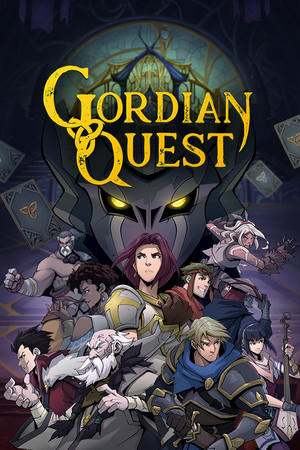




Review evidence
Why players say this
Review evidence
Why players say this
Steam review verdict
A beautiful roguelike deckbuilder with great character variety, though its steep learning curve, long runs, and high combat difficulty can be punishing.
What players like
Effective roguelike deckbuilder: The game excels as a card-based roguelike with deck-building, blending RPG and roguelike elements seamlessly. Multiple reviewers call it a top-tier game in the genre.
Beautiful art and soundtrack: The visuals, character designs, animations, and music are consistently praised as high-quality and immersive, with many noting the art style and soundtrack as major strengths.
Great character variety: Players love the wide range of characters with unique designs, playstyles, and synergies, which greatly enhance replayability and strategic depth. This is a standout feature mentioned repeatedly.
Deep and enjoyable deckbuilding: Deckbuilding is a core fun element, with emphasis on synergy and balance rather than single-card combos. Many players find it satisfying and strategic, especially with character variety.
Engaging story with twists: The story is widely praised for its unexpected twists and satisfying payoffs, making it a standout narrative element that elevates the game beyond typical roguelikes.
Common complaints
Steep learning curve problematic: The game has a high learning curve, making it hard for beginners to understand mechanics and get into the game initially. This is echoed in multiple clusters about difficulty and complexity.
Long run times: Individual runs typically take 1-3 hours, which is considered too long for casual play. Players find this time-consuming and not suitable for short sessions.
High combat difficulty: Combat is extremely hard, especially final bosses, which are seen as unfair and frustrating with multiple phases and unclear gimmicks. This makes the game feel unbalanced.
Confusing card descriptions: Card effect descriptions and skill texts are overly complex and hard to understand, causing confusion for players. This includes unclear boss mechanics and long text.
RNG and luck issues: The game relies heavily on card draw luck and RNG, making success feel dependent on random factors. This reduces strategic depth and can be unfair.
Gameplay and performance
Card-based roguelike deckbuilder: The game is a card-based roguelike deckbuilding game that combines elements of roguelikes, deckbuilding, and turn-based combat with a variety of characters and mechanics.
Deckbuilding with card combat: Players focus on building and customizing their decks through card-based combat, with an emphasis on synergies and strategic card play.
Character synergies and builds: The game features a diverse cast of 20 characters, each with unique synergies and build options, allowing for multiple playstyles and combinations.
Roguelike with story: The game includes a strong narrative element, with a story that progresses between and during runs, adding depth to the roguelike experience.
Party-based turn-based combat: Combat is turn-based, involving a party of up to four characters with distinct roles such as tank, healer, and DPS, emphasizing party management and synergy.
Steam Deck input completely broken: Steam Deck users face broken input, no working controller layout, and Steam Input not functioning with controllers. Clusters 2-6 confirm the device is unplayable due to these failures.
Frequent game crashes and freezes: Players report crashes at Sanctuary on skilled difficulty, freezes at the final true ending, and complete freezes after updating mods. These issues are consistent across multiple clusters, highlighting critical stability problems.
Stuttering and poor optimization: Clusters 9 and 12 describe stuttering and overall poor optimization, causing performance drops even on compatible hardware.
No in-game button remapping: Players cannot change ABXY button mapping in-game, which is essential for controller support. This missing feature is cited in Cluster 5, making the game unplayable on most controllers.
Steam Deck battery life issue: While the game runs great on some Steam Decks, Cluster 8 notes it drains battery in 3-4 hours, which is a significant concern for portable play.
Recommendations
Highly recommended for roguelite deckbuilder fans: The game is strongly recommended for players who enjoy roguelite deckbuilders, with many reviewers highlighting it as a top choice for fans of the genre.
Recommended for anime card game enthusiasts: The game is particularly appealing to fans of anime-style aesthetics and storytelling, with multiple recommendations for those who enjoy anime card roguelites.
Recommended for card game and story lovers: The game is praised for its strategic card gameplay and engaging story, making it a strong choice for players who value both narrative and mechanics.
Worth full price purchase: Reviewers consistently state the game is worth its full price, though some suggest waiting for a sale. It is considered a good value for the content offered.
Strongly recommended as a genre standout: Multiple reviewers rank this among the best in its genre, with some considering it superior to other popular titles like Slay the Spire.
Buying context
Community fair range: $20.00 - $25.00.
Game completion: 55.0h.
Story completion: 30.0h.
Session length: 1.5h.
Chrono Ark has a slow start with a steep learning curve and confusing interface, but after a few hours or once players find their footing, it becomes an addictive and engaging roguelite deckbuilder.
Reported time to anchor: 3h.
Friction: steep learning curve; confusing interface; poor tutorial; overwhelming complexity; repetitive early runs.
Player profiles
Hardcore Strategy Master: Plays on expert or blood mist difficulty from the start, tests extreme builds, and seeks full achievement completion through repeated runs. They may use guides to unravel mechanics. Motivation: To overcome punishing difficulty and optimize intricate card synergies. Stance: buy.
Story-Driven Explorer: Plays multiple runs to unlock all story content, invests in character backstories, and may use easier modes to focus on plot rather than difficulty. They appreciate the visual novel and anime-style presentation. Motivation: To experience the full narrative, character development, and emotional closure. Stance: buy.
Newcomer / Casual Learner: Starts on Hope mode, uses guides and wiki extensively, avoids hardcore challenges, and focuses on understanding basic mechanics rather than optimization. May play only a few runs and prioritizes story over difficulty. Motivation: To ease into the roguelike deckbuilding genre without being overwhelmed, or to enjoy the story without extreme challenge. Stance: sale.
Platform notes
Steam Deck: Chrono Ark offers a mixed Steam Deck experience. While some users report comfortable play, significant friction arises from poor UI readability on the small screen and inconsistent or broken controller support. Additionally, general stability bugs (save loss, crashes) can disrupt sessions. The game is playable but demands adjustment, such as squinting at text or wrestling with controller settings.
Extra review signals
Monetization: The game offers DLC content that is considered valuable, but one DLC in particular (High-Roller Showdown) is described as pay-to-win and broken, which constitutes predatory monetization. Players have also spent significant real money on DLC items.
External guides: The primary user complaint is that Chrono Ark's complex systems and inadequate tutorials force players to rely heavily on external wikis and guides to learn mechanics, understand builds, find secrets, and manage progression. This reliance is seen as mandatory, with many reviews stating that the wiki is essential or that one must study it before playing.
Other review notes
Translation issues reported: The reviewer mentioned a translation problem, likely related to the quality or accuracy of the game's localization.
Study time reduction: The reviewer noted that their study time decreased by 40 hours, possibly due to the game's impact on their schedule or engagement.
Fan translation available: There is a fan-made Spanish translation for the game, indicating community-driven localization efforts.
Personal rating given: The reviewer provided a personal score of 8/10, suggesting a generally positive evaluation of the game.