- Charming art style and exceptional music
- Highly fun and addictive gameplay
- Fair and rewarding difficulty
- Innovative and deep mechanics
- Excessive difficulty and RNG
- Limited content and replayability
Emotions
What players like:
Common complaints:
Gameplay feedback:
Performance notes:
Recommendations:
Other player notes:
Similar games
Blend with other games





Review evidence
Why players say this
Review evidence
Why players say this
What players like
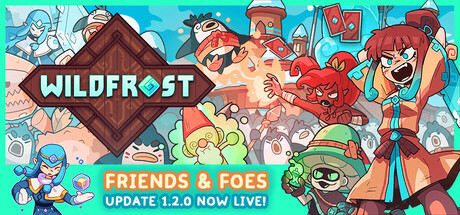
Charming & Polished Art Style: The game's art style, visuals, and animations receive consistent high praise for being beautiful, charming, cute, and unique. This aesthetic quality significantly enhances the player experience and is often highlighted as a major strength.
Highly Fun & Addictive Gameplay: Players overwhelmingly praise the game for its high fun factor, addictive gameplay loop, and overall rewarding experience. Many consider it a standout in the roguelike deckbuilder genre, often citing its replayability and engaging nature.
Exceptional Music & Sound Design: The game's music and sound design are consistently lauded as excellent, immersive, and fitting for the game's theme. The soundtrack is often described as catchy, memorable, and a significant contributor to the overall positive experience.
Fair & Rewarding Difficulty: The game offers a challenging yet fair difficulty curve, with many players appreciating that losses feel like their own fault rather than due to unfair RNG. The unique final boss mechanic, where players fight their previous winning build, adds a clever and engaging layer to this challenge.
Innovative & Deep Mechanics: The game introduces unique and deep combat mechanics, such as the cooldown-based turn system, unit positioning, and the 'fighting your previous run's team' as a boss. These elements foster strategic depth, encourage experimentation, and differentiate it from other games in the genre.
Common complaints
Excessive Difficulty & RNG: Players consistently report that the game's difficulty is excessively high, often feeling unfair or overly punishing. This is exacerbated by a heavy reliance on RNG for critical elements like card draws and enemy encounters, leading to frustrating losses from single mistakes or unpredictable outcomes. The steep and inconsistent difficulty curve, especially in later stages and against certain bosses, makes the game feel more like a test of luck than skill, diminishing enjoyment and replayability.
Limited Content & Replayability: Many players feel the game lacks sufficient content, variety, and long-term replayability compared to other titles in the genre like Slay the Spire. The progression system is perceived as shallow, with most content unlocked early, leading to a quick loss of interest once the initial novelty wears off. This results in a sense of tedium and a lack of motivation to continue playing after a few runs.
Punishing Final Boss Mechanic: The unique final boss mechanic, where the player's previous winning team becomes the next run's boss, is widely criticized. Players feel this system punishes successful runs by creating an overwhelmingly difficult or even unbeatable challenge in subsequent playthroughs, forcing them to intentionally build weaker decks or reset progress. This design choice is seen as frustrating and counter-intuitive, undermining the sense of achievement.
Shallow Deckbuilding & Card Pool: The deckbuilding and card systems are frequently criticized for their lack of depth and limited options. Players report a small card pool, insufficient opportunities to acquire or refine decks, and a heavy reliance on RNG for viable builds. This restricts strategic creativity, often forcing players into specific archetypes or making it difficult to form cohesive and effective decks, especially at higher difficulties.
Poor UI & Tutorial Clarity: Players report issues with the game's intuitiveness and clarity, particularly during initial playthroughs. Insufficient in-game explanations, awkward controls, and persistent tutorial messages contribute to a confusing and frustrating learning experience. Some also noted game-breaking bugs in the tutorial.
Gameplay and performance
Deep Strategic Gameplay & Countdown: The game features deep strategic gameplay, requiring players to think several turns ahead and make complex choices. A core mechanic is the 'countdown' system, where units attack based on timers, making positioning and timing crucial for success.
Challenging & Dynamic Bosses: Boss battles are a central and challenging aspect, requiring adaptive strategies. A unique meta-mechanic involves the player's previous winning deck becoming the final boss in subsequent runs, adding replayability and a dynamic challenge.
Unique Turn-Based Card Combat: The game is a turn-based deck-builder with a unique combat system. Players manage a hand of companion and item cards, strategically placing and repositioning units on a grid, with all actions tied to a countdown timer.
Achievement-Based Unlocks & Charms: Progression is tied to an achievement-based unlock system, where completing challenges and defeating bosses unlocks new cards, charms, and features. The 'charm' system allows for extensive card modification, enabling diverse synergies and build customization.
Roguelike Progression & Modifiers: As a roguelike, the game emphasizes adapting to random elements and offers granular difficulty modifiers, including a 'bell' system similar to ascension levels in other roguelikes, which increases challenge and rewards.
Smooth performance and optimization: Players consistently report that the game runs smoothly and is well-optimized across different platforms, including PC and Steam Deck. This indicates a positive technical performance for most users.
Game crashes on boss damage: A specific bug was reported where the game crashed when a boss received excessive damage. This suggests a potential issue with damage calculation or boss health triggers that could lead to instability.
Recommendations
Highly Recommended Game: The game is overwhelmingly recommended by players, especially those who enjoy roguelike deckbuilders and strategic card games. Many consider it a must-play within the genre, often comparing it favorably to Slay the Spire and Monster Train.
Ideal for Roguelike Deckbuilder Fans: Players frequently recommend the game to fans of roguelike deckbuilders, particularly those who enjoy or are looking for alternatives to Slay the Spire. It's noted for appealing to both genre veterans and some newcomers, though its high difficulty is a common caveat.
Challenging and Demanding: While generally recommended, some players find the game's high difficulty and specific mechanics (like the undo system) can lead to frustration. It's often suggested for players who enjoy a significant challenge or even 'masochistic tendencies'.
Consider Purchasing on Sale: Many reviewers suggest purchasing the game during a sale, indicating that while it's worth the price, a discount makes it an even more attractive buy. Some also recommend trying the demo first.
High Player Engagement & Future Content Desired: Players express strong engagement with the game, with some completing all achievements and looking forward to playing more. There's also a clear desire for future content, such as DLC or a sequel.
Other review notes
Highly Enjoyable and Underrated: Many players express strong enjoyment and dedication, with significant playtime across multiple platforms. They believe the game is underrated and deserves more positive recognition, often defending it against negative reviews.
Achievement Completion Time: Players report varying times to achieve all achievements, ranging from 30 to 80 hours. Many completed the game and its achievements before writing their reviews, indicating a thorough engagement.
Multi-Platform Availability: The game is available on multiple platforms, including PC, Switch, and mobile. Some players own it on several platforms, noting the mobile version is cheaper and well-suited for tablet play.
Difficulty & QoL Improvements: Players frequently request features to mitigate difficulty spikes and improve quality of life, such as an easy mode, a 'death preview' or warning system, a save/load function, and an undo button for turns.
Roguelike Deckbuilder Comparisons: The game is often compared to other roguelike deckbuilders like Slay the Spire and Monster Train. While some find it challenging, others note it's not as difficult for experienced players, though it requires more strategic thinking than 'brain-off' mobile games.