- Massive class variety available
- Deep strategic systems present
- Addictive gameplay loop
- Poor graphical and audio quality
- Poor UI and missing features
- Overwhelming difficulty for players
Emotions
Archetypes
What players like:
Common complaints:
Gameplay feedback:
Performance notes:
Recommendations:
Other player notes:
Similar games
Blend with other games




Review evidence
Why players say this
Review evidence
Why players say this
Steam review verdict
Offers massive class variety with deep strategic systems and an addictive loop, but suffers from poor graphics, audio, UI, missing features, and punishing difficulty.
What players like
Massive class variety: A standout feature is the vast variety of classes, each with unique playstyles and internal variations. This diversity encourages experimentation and multiple playthroughs.
Deep strategic systems: The game features deep strategic systems including resource management, synergy, card mechanics (discard, upgrade, buy), and controllable RNG. The clever resurrection system adds depth without frustration.
Excellent value for money: Players consistently report the game offers excellent value for money, with many considering it worth purchasing multiple times. It is highly recommended for fans of strategy, roguelike, or card games.
Endless replayability: The game offers tremendous replayability through its content depth and class diversity. Players report thousands of runs across platforms, indicating enduring engagement.
Addictive gameplay loop: The core gameplay is consistently described as highly addictive and engaging. Its strong gameplay loop creates an oddly compelling experience that keeps players coming back.
Common complaints
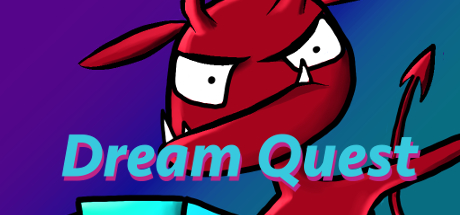
Poor graphical and audio quality: Feedback repeatedly criticizes the game's art as being very low quality, akin to MS Paint drawings or illustrations by a child. Many players also note a lack of animations and sound effects.
Poor UI and missing features: Various usability complaints include bad UI, no hotkeys, no speed control, inability to separate music from sound effects, and cumbersome card dragging. These issues hinder smooth gameplay.
Unfair enemies and hard counters: Specific enemies and bosses are described as unfun or unfair, such as the Lord of the Dream boss, a cheap zombie enemy that ends runs, and hard counters that make runs impossible. These create frustrating experiences.
Overwhelming difficulty for players: Multiple players report the game as excessively difficult, with one noting no win after 80 hours. The high challenge level is frequently cited as a deterrent for newcomers.
Excessive RNG and unfair randomness: Players complain that the game relies too heavily on randomness, with some random generation leading to unsolvable situations. The heavy luck factor undermines strategic play.
Gameplay and performance
Deck-building roguelike dungeon crawler: The game is consistently identified as a deck-building roguelike with dungeon-crawling, turn-based card combat, and run-centric progression.
Multiple classes and class combinations: The game offers four base classes—Warrior, Thief, Priest, Wizard—and advanced combinations, with multiple builds available.
Frequent death and meta-progression: The game features meta-progression that makes death frequent early on, permadeath, and unlocks that aid later runs.
Optimize deck into efficient machine: The main deck-building goal is to refine your deck into a well-oiled machine by gaining stronger cards and removing weaker ones.
Tactical refinement and counter-play: Strategic depth includes managing monster order, health, synergies, and counter-picking enemies with your build.
PS4 controller crash: When a PS4 controller is connected, the game crashes immediately. This is a critical stability issue that blocks gameplay for controller users.
Minor scaling glitch: A minor scaling glitch occurs during gameplay, causing display issues. This is a low-severity visual bug that does not affect functionality.
Recommendations
Top-tier deckbuilder roguelike: The game is widely recommended for fans of deck-building roguelikes, with some considering it the best in its genre and even surpassing Slay the Spire.
Good value and worth buying: Multiple users find the game a great value, with some purchasing it multiple times and recommending it highly.
Not for everyone: Some users find the game hard to recommend due to dated graphics, lack of sound, or unfair mechanics, suggesting it is only worth buying on sale or not at all.
Innovative and addictive: The game is praised as a standout title in the genre, recommended for its strategic depth and addictive progression system.
Graphics don't hinder fun: Players advise ignoring the poor visuals because the gameplay is strong and rewarding, making it worth the experience.
Buying context
Community fair range: $10.00 - $15.00.
Endgame: 300.0h.
The game starts slowly with frustrating difficulty and limited choices, but becomes highly addictive and strategically satisfying after persisting through early runs and unlocking meta-progression.
Friction: slow start; frustrating difficulty even on medium; limited early choices; no tutorial; repetitive early gameplay.
Unlock drivers: meta-progression unlocks; learning game mechanics; unlocking new cards and classes; building better decks; understanding monster patterns; persistence through deaths.
Player profiles
Roguelite Deckbuilding Purist: Methodical, optimizing deck and run decisions with deep strategy. Motivation: Mastering deck-building and unlocking new content via meta-progression. Stance: buy.
Casual Achievement Seeker: Casual, achievement-focused, often playing without deep engagement or sound. Motivation: Casual exploration and achievement collection. Stance: buy.
Veteran Critic: Analytical, critically assessing balance and repetition across runs. Motivation: Critical appreciation of genre innovation despite flawed legacy design. Stance: deep sale.
Other review notes
Runs on many devices: The game is praised for its broad hardware compatibility, running smoothly on various devices up to HD resolution. This makes it accessible to a wide audience without requiring high-end systems.