- Overall fun and enjoyable gameplay
- Charming and pleasant graphics
- Addictive Roman city-building loop
- Accessible with easy learning curve
- Unfinished early access state
- Frequent crashes and lost progress

Emotions
Archetypes
Hardware
What players like:
Common complaints:
Gameplay feedback:
Performance notes:
Recommendations:
Other player notes:
Similar games
Blend with other games





Review evidence
Why players say this
Review evidence
Why players say this
Steam review verdict
An enjoyable, accessible Roman city-builder with charming graphics and an addictive loop, though its unfinished early access state suffers from frequent crashes and lost progress.
What players like
Overall fun and enjoyable game: A large share of feedback simply states that the game is fun, good, and enjoyable overall. Reviewers find it engaging and well put together, even in its current state.
Strong successor to Kingdoms and Castles: Reviewers consistently describe the game as a worthy sequel that improves on Kingdoms and Castles while preserving its core feel. It adds new mechanics and polish that make it feel like a fresh, upgraded experience.
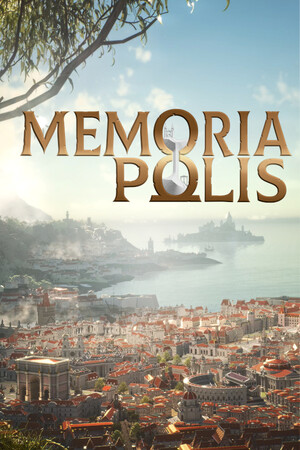
Charming and pleasant graphics: Reviewers frequently highlight the game's visuals as beautiful, pleasant, and charming, often noting a retro appeal. The art style and overall presentation are consistently praised.
Water and aqueduct mechanics shine: The water mechanics and aqueduct systems are repeatedly called out as a standout, unique feature. Players enjoy the physics and find the systems fun and rewarding to figure out.
Solid for early access: Reviewers consider the game stable and pleasant to play despite being in early access. Many are impressed by its polish and state of development.
Common complaints
Unfinished early access state: Many reviewers feel the game is still incomplete, missing features, and more like a beta than a full early access release. It needs significant polish and completion.
Frequent crashes and lost progress: Players report frequent and repeated crashes with no clear cause, and some note that crashes delete autosaves or lose hours of progress. The absence of an autosave feature compounds the issue.
Numerous bugs and glitches: The game is described as buggy, with stuck characters and various glitches. Some players encounter game-breaking bugs like freezing when selecting a god.
Insufficient content and short playtime: The game offers very little content, lasting only about 10-12 hours, and there is nothing to do after that. It lacks levels, story mode, and major content additions since early access began.
Water system problems: The water system, including aqueducts and physics, is buggy, frustrating, and in need of a rework. Players find the water mechanics odd or off.
Gameplay and performance
Roman city-building core gameplay: The game is fundamentally a city builder set in classical Roman antiquity, with players establishing and growing a Roman settlement. Feedback frequently describes it as a city or empire builder with economy and production chains.
Resource management and economy: Resource management, production buildings, and economic simulation are central to the gameplay loop. Players describe balancing city needs, citizen desires, and optimization puzzles.
Water simulation and management: Water mechanics are a standout feature, including water physics, rainfall, flooding risks, and distribution systems. Players note the simulation of fluid dynamics and how water conditions change dynamically.
Aqueduct and dam networks: Building aqueducts and dams is a core mechanic, with rivers reroutable and irrigation systems in place. Aqueducts supply water and are often mentioned alongside terrain height and water outlets.
Gods and temple progression: A progression system revolves around worshipping multiple gods, building temples, and fulfilling divine demands to avoid plagues and morale loss. Gods' favors unlock perks and drive development.
Positive performance on some systems: Several reviewers report smooth performance on specific setups, such as Linux via Proton, low-end PCs, and desktops. Performance can be consistent and playable with few bugs.
Lag and low FPS at scale: Performance degrades noticeably with large populations, causing lag, frame drops, and low FPS. Issues appear around 2k-4k citizens and worsen in later game stages.
Optimization concerns widespread: Many reviewers find optimization insufficient or mediocre, with performance not holding up as cities grow. Some note it runs better than other city builders, but the overall sentiment is negative.
Frequent crashes reported: Multiple players experience unexpected crashes, including during long sessions and when many constructions are queued. This is a recurring stability issue that affects gameplay.
Mac performance issues: Players on macOS and MacBooks report poor performance, including low FPS, lag, and instability. Specific cases include 8 fps on a MacBook and drops when moving across the map.
Recommendations
Great for city-builder fans: Many reviewers strongly recommend the game to people who enjoy city-building games, describing it as fun, addictive, and well suited to the genre.
Appeals to management and strategy fans: Players who enjoy resource management, colony sims, and challenging strategy games recommend it, including those coming from Cities Skylines or Civilization.
Highly recommended overall: Many reviewers strongly recommend the game, with some rating it 10/10 and urging others to pick it up.
Ideal for Kingdoms and Castles fans: Fans of Kingdoms and Castles repeatedly say they love this game and recommend it to others who enjoyed that title.
Good value on sale: Many say it is worth buying especially at a discount, with some advising waiting for a sale, particularly during early access.
Buying context
Community fair range: $20.00 - $25.00.
Game completion: 8.0h.
Session length: 2.0h.
Endgame: 12.0h.
Players generally find Nova Roma fun and addictive from the start, with manageable early progression and satisfying pacing. The main caveats are weak onboarding and late-game repetition or content limits rather than a delayed arrival of fun.
Friction: Insufficient tutorial and unclear guidance can overwhelm new players.; Confusing, disconnected logistics and click-heavy supply-chain management.; Tedious job and population management as the city grows.; God quest and fervor progression can stall or soft-lock advancement.; Low building output and worker shortages slow early and midgame production.; Poor tech-tree choices can make players paint themselves into a corner..
Unlock drivers: Mid/late-game flood and drought mitigation tools make players feel like master planners.; A large midgame water reservoir can solve water issues.; Walls and towers handle midgame defenses without requiring a massive military investment..
Player profiles
Chill Roman City-Builder: Plays casually, often in sandbox or lower-pressure modes, avoids hardcore optimization, and enjoys slow city growth. Motivation: Relaxing, low-pressure city growth with a pleasant Roman aesthetic and cozy atmosphere. Stance: buy.
Systems-Focused Management Veteran: Optimizes layouts, resource chains, and difficulty settings while comparing mechanics against established management games. Motivation: Deep, interconnected city-management systems and efficient production-chain planning. Stance: buy.
Kingdoms & Castles Sequel Seeker: Builds and manages in the familiar K&C style, evaluates what has been improved or omitted, and asks for diplomacy, mythical creatures, and other sequel-like content. Motivation: To see the Kingdoms & Castles formula expanded with Roman themes, new mechanics, and requested features. Stance: buy.
Platform notes
Higher-VRAM Windows and Linux/Proton systems mostly report playable or good performance, though optimization, shadows, and late-game slowdowns remain common caveats. Lower-VRAM Windows systems are less consistent, with one cohort showing mixed late-game drops and another dominated by stuttering, high GPU load, crashes, and poor laptop performance.
Windows 8-11GB VRAM: positive. Mostly runs well, but players note late-game slowdowns, high GPU load, and a need for better optimization when cities grow.
Windows 12-15GB VRAM: positive. Generally delivers high frame rates on stronger 12-15GB cards, though shadows, tree-heavy scenes, and optimization are cited as weak points.
Windows <8GB VRAM / <16GB RAM: mixed. Some players report smooth play and useful auto-saves, while others see late-game drops to around 30 FPS and occasional severe lag.
Steam Deck: The Steam Deck experience is playable thanks to Linux and Proton compatibility, but it is not seamless. Reviews cite missing controller support, GPU strain, late-game frame drops, input friction, and a severe save failure during a Deck session. There is no evidence of forced Proton Experimental, external launchers, anti-cheat errors, or launch failure, so the experience falls into the tinkering/compromised range rather than broken.
Linux and Proton: The available reviews are consistently positive about Linux and Proton compatibility. Users report the game working well via Steam Play and Proton without Linux-specific blockers, required tweaks, or launch failures. No credible evidence of anti-cheat, DRM, or native-port issues appears in the dataset.
Other review notes
Compared to Kingdoms and Castles: Many reviews compare this game to Kingdoms and Castles, often favorably and sometimes as a stripped-out or inferior version. The comparison appears across the largest cluster and several smaller ones.
Spiritual successor to Kingdoms and Castles: Reviews describe the game as a sequel, successor, or advanced version of Kingdoms and Castles. It is noted as coming from the same studio and building on the previous game's mechanics.
In early access: A large cluster of reviews notes the game is in early access, with incomplete features and content still planned. Some say it is already very playable despite being early access.
Frequent updates from active developer: Reviewers repeatedly note that the developer patches the game regularly and is actively developing it. Some mention consistent updates and an active developer who listens to fans.
More updates and features planned: Reviewers mention that future updates are planned, including new gods and more variety. The game is expected to receive further updates as development continues.