- Relaxing organic city builder
- Beautiful graphics and aesthetics
- Fun engaging and innovative gameplay
- Unpolished with frequent crashes
- Mechanics poorly and vaguely explained
- Confusing UI and limited content

Emotions
Archetypes
What players like:
Common complaints:
Gameplay feedback:
Performance notes:
Recommendations:
Other player notes:
Similar games
Blend with other games





Review evidence
Why players say this
Review evidence
Why players say this
Steam review verdict
A beautiful relaxing organic city builder with innovative gameplay, but suffers from frequent crashes, vague mechanics, confusing UI, and limited content.
What players like
Peaceful and relaxing city builder: Many reviewers highlight the game as a peaceful and calming city-building experience, ideal for unwinding. The relaxing nature is a recurring theme across multiple clusters.
Beautiful graphics and aesthetics: The game's graphics, art style, and overall aesthetic are consistently praised as beautiful and stunning. The visual design is a standout feature.
Fun and engaging gameplay: The game delivers enjoyable and fun gameplay that keeps players entertained. Many reviews mention the game being fun and engaging over multiple play sessions.
Original and innovative gameplay: Reviewers frequently praise the game for its unique and innovative approach to the city-builder genre. The fresh mechanics and novel concepts set it apart from traditional entries.
Creative and cool concepts: The game's core concept is frequently described as cool, creative, and fresh. The innovative mechanics and mechanical depth are well-received.
Common complaints
Game is unpolished and buggy: Multiple reviewers report frequent bugs, crashes, and an overall lack of polish, making the game feel incomplete and not yet a full version. Specific crashes prevent finishing sessions, and the game still appears raw after patches.
Mechanics poorly explained: Players find the game's mechanics poorly explained, leading to confusion in the first hours and a steep learning curve. Obscure mechanics require self-discovery, and the game punishes without clear guidance.
UI confusing and cluttered: The user interface is often described as cluttered and confusing, throwing too much information at the player without clarity. Constant pop-ups, especially from the faction system, add to the frustration and detract from the experience.
Factions are ignorable and annoying: Factions are seen as ornamental with no meaningful bonuses, making them ignorable without consequence. However, negotiation is described as a hassle with negative effects and constant pop-ups, adding annoyance.
Lack of real challenge: Reviewers note the game presents essentially no challenge, making it unclear if losing is possible. This absence of meaningful difficulty reduces engagement and lasting interest in the gameplay.
Gameplay and performance
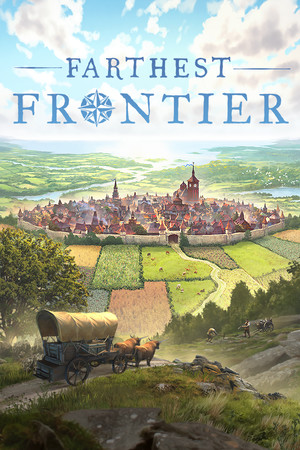
City builder with organic growth: Multiple clusters describe the game as a city builder where roads and residential areas are placed automatically, and the city grows organically around player-placed buildings. This appears to be the core gameplay loop, with high frequency and detail across clusters.
Historical Mediterranean setting: The game is set in an ancient Mediterranean city-state, with gameplay spanning from classical era to the Renaissance. There is a focus on historical architectural development.
Automatic road and housing placement: Roads and residential zones are automatically formed based on building placements and points of interest, with no manual road or district management. This passive building aspect is consistently mentioned and likely a defining feature.
Era-based progression: The game progresses through distinct ages, from antiquity to Renaissance and beyond. Each era unlocks new buildings and mechanics, with some buildings becoming obsolete or being preserved.
Resource management and production: The game involves resource management and production buildings, which can be upgraded to improve efficiency, speed, and storage. Upgrades impact production, and the economy is likely focused on managing these chains.
Frequent game crashes: Multiple reports indicate the game crashes constantly, at specific points, during progression, and in endgame. Crashes occur in endless mode, after loading saves, and after specific upgrades, making the game unplayable for some.
Poor optimization and FPS: Players report low frame rates even on minimum graphics, with performance worse than comparable games. FPS drops below 60, sometimes hitting 40 or 30, especially on mid-range hardware.
Mixed performance on varied hardware: Some players report smooth performance on high-end and older hardware, with no crashes or bugs. This suggests that crashes may be hardware-specific, but others still face severe issues.
High system resource usage: The game uses high CPU and RAM, takes 100% GPU even in menus, and causes overheating. Even when paused, system load is disproportionately high, affecting gameplay stability.
Performance degrades over time: Issues worsen after the medieval age, with severe lag and slowdowns as the game progresses. Performance starts badly and gets worse, and endgame is particularly problematic.
Recommendations
Recommended for city builder fans: Many reviewers recommend the game to fans of city building and management, describing it as a chill, historical, and relaxing experience. It is best for players looking for a casual city builder without too much complexity, with some noting it suits those new to the genre.
Wait for more content before buying: Many reviewers advise waiting for the game to receive more content and updates before purchasing, especially for a low amount of content at its current price. Some recommend waiting until full release or significant updates arrive, suggesting it may be worth revisiting later.
Unique relaxing city builder: Some reviewers find the game refreshing for players who are tired of traditional building or research tree mechanics, offering a unique concept that is relaxing for lovers of the genre.
Not recommended for traditional city builders: A significant portion of negative feedback comes from players who expect a traditional city builder like Cities Skylines or Sim City. Reviewers suggest avoiding it if you expect deep simulation or meaningful decisions, as it may feel like a 'city watching simulator'.
Game overpriced for content: Several reviewers state that the game is not worth its full price, with some recommending buying at a discount or waiting for a sale. They believe content is too sparse given the price tag.
Buying context
Community fair range: $10.00 - $20.00.
Game completion: 10.0h.
Story completion: 11.0h.
Players initially face a steep learning curve and confusing tutorial, but those who persist find that the progression system becomes more natural and rewarding, revealing a deep and addictive city-building experience.
Friction: steep learning curve; confusing tutorial; trial and error required; tedious mechanics; repetitive early gameplay; boring initially.
Unlock drivers: progression system becoming more natural and rewarding; understanding game mechanics fully; engagement in deep city-building system; overcoming initial trial and error phase.
Player profiles
Chill Seeker: Casual, slow-paced, prefers simplicity and aesthetic enjoyment over complexity. Motivation: Relaxation and a stress-free creative experience. Stance: sale.
Systems Thinker: Analytical, methodical, and optimization-focused; enjoys dissecting production chains and strategic progression. Motivation: Intellectual satisfaction from managing complex, interconnected systems. Stance: buy.
Patient Optimist: Plays in bursts, returns for major updates, comfortable with early access cycles. Motivation: Supporting a promising game and enjoying its long-term evolution. Stance: deep sale.
Platform notes
Steam Deck: The game suffers from frequent crashes that can block progression, alongside a minor complaint about small text. While some users report it runs fine, the stability issues make it unreliable on Steam Deck.
Linux and Proton: The game exhibits excellent Proton compatibility on Linux. User reviews report zero issues with Proton-GE and smooth operation on standard Steam Proton, requiring no tweaks or special configurations. Performance concerns are attributed to hardware limitations, not Linux Proton friction.
Other review notes
Incomplete early access content: The game is widely perceived as incomplete despite being out of early access, with many reviewers noting it still feels like an early access title. There is a lack of content and polish to justify calling it a full 1.0 release.
Only two eras available: The early access version currently offers only two of the four planned eras, specifically the Classical/Ancient and Medieval ages. This limits the overall game content and progression scope, making the game feel truncated.
Only one map available: The game currently offers only a single map, with a second one in testing. This includes fixed resources and starting locations, limiting the variety of play experiences, and larger maps may not be possible due to performance constraints.
Potential for future growth: There is a general sentiment that the game has a solid foundation with potential for future improvements and expansion. Players look forward to updates and the planned roadmap.
Banners and Wonders update: A major update called Banners and Wonders reworked the game, adding more freedom and streamlining factions. This update was seen as a significant improvement and was often the point at which new players joined.