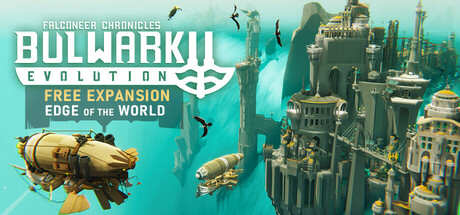
- Stunning visuals create immersive atmosphere.
- Relaxing city-building experience.
- Creative and intuitive building mechanics.
- Intriguing setting and lore.
- Controls are clunky and unintuitive.
- Lacks depth and content.
What players like:
Common complaints:
Gameplay feedback:
Performance notes:
Recommendations:
Other player notes:
Similar games
Blend with other games


Review evidence
Why players say this
Review evidence
Why players say this
What players like
Stunning visuals and atmosphere: The game boasts beautiful and stunning visuals, a unique art style, and a captivating atmosphere that enhances the overall experience. The detailed environments, architecture, and landscapes contribute to an immersive and visually pleasing world.
Relaxing, chill city-building experience: The game offers a relaxing and chill city-building experience, allowing players to experiment and create without harsh resource constraints or fail states. This casual and therapeutic gameplay is suitable for short bursts or extended sessions, providing a mindful and enjoyable experience.
Creative, intuitive building mechanics: The game features simple, intuitive, and satisfying building mechanics that allow for creative freedom and the construction of impressive cities and fortresses. Players can easily create visually appealing structures without excessive micromanagement, leading to an enjoyable and immersive experience.
Intriguing setting and lore: The game features an intriguing setting with rich lore and world-building elements that encourage exploration and discovery. The combination of city-building with adventure and exploration creates a unique and immersive experience.
Unique, immersive city-builder: The game offers a unique take on the city-building genre, with immersive building and exploration mechanics. The reviewer loves the atmosphere and aesthetic of the game, describing it as a wonderful little art project of a game that is iterating on itself.
Common complaints
Clunky and unintuitive controls: The game's controls and camera system are frequently criticized as clunky, unintuitive, and restrictive, making navigation and building placement difficult. Players struggle with awkward camera angles, limited movement options, and unconventional control schemes. These issues detract significantly from the overall experience.
Poor tutorial and guidance: The game suffers from a poorly designed and inadequate tutorial that fails to explain core mechanics, leading to player confusion and frustration. Players are often left to learn through trial and error or seek external resources. This lack of guidance contributes to a steep learning curve and a sense of aimlessness.
Lacks depth and content: The game feels incomplete due to a lack of content, depth, and polish. Reviewers cite repetitive gameplay, a short playtime, missing features, and a general sense that the game hasn't reached its full potential. Some reviewers explicitly compare the game to an early access title.
Repetitive and boring gameplay: The core gameplay loop becomes repetitive and boring quickly, often involving excessive clicking and a lack of meaningful choices. The building system lacks depth and variation, leading to a grindy experience. This repetitiveness diminishes long-term engagement.
Simplistic and shallow combat: The game's combat system is simplistic, automated, and lacks strategic depth. AI opponents are weak and offer little challenge, further diminishing the engagement. Battles often feel inconsequential and lack meaningful player input.
Gameplay and performance
Relaxed sandbox city-building with RTS: The game blends city-building with RTS and 4X elements in a sandbox environment. It emphasizes creative construction and exploration over complex resource management, offering a relaxed and meditative experience. The core gameplay loop involves building, connecting structures, and managing simple resources.
Faction interaction and diplomacy: The game features interactions with different factions through diplomacy, trade, or war. Managing relationships between factions and protecting trade routes are important aspects of the gameplay. Population growth of opposing factions can create challenges, influencing diplomacy and potentially leading to conflict.
Exploration and resource management: Exploration is a key element, typically done via an airship, to discover resources, new locations, and encounters. Resource management is simplified, but resources can be limited, encouraging strategic expansion and trade routes. Players must balance exploration with resource acquisition to thrive.
Shallow building and combat systems: Some reviewers found the building and combat systems to be underdeveloped. The game may lean more towards exploration and expansion than deep city-building or tactical combat. This can lead to a less impactful experience when cities are attacked or when trying to create impressive city expansions.
Limited unit control in combat: Players have limited control over units, often relying on mercenaries or pre-set squads. Combat is automated, with commanders providing combatants for escorts. This can result in a less strategic and more hands-off combat experience compared to traditional RTS games.
Good performance and stability: The game is generally well-optimized, stable, and runs smoothly across different platforms, including Steam Deck and Linux. Many reviewers reported no significant bugs, glitches, or crashes during their gameplay experience.
Gameplay mechanics need refinement: Some reviewers have pointed out specific gameplay issues, such as the lack of tutorial information about exploration ship support during combat and incorrect battle locations on the map. Additionally, the immediate loss of battle upon survey ship destruction and the attack speed reduction when moving the survey ship were mentioned as potential issues.
Performance degrades later on: Some players have reported performance issues such as FPS drops and slowdowns, especially later in the game or when near populated buildings. This suggests that the game's performance may degrade as the game progresses or when the player is in graphically demanding areas.
Graphics issues reported: The game's anti-aliasing was called insufficient for the intricate graphics. Also, some players reported freezing issues on 4K screens upon initial game entry.
Node-based transport optimization: The game uses node-based transport ranges, which reduces the computational load compared to calculating physical distances. This design choice may contribute to the game's overall performance and stability.
Recommendations
Strongly recommended; great value: The game is highly recommended overall, with many reviewers calling it a 'gem' and praising its value, especially for fans of city-building or relaxing games. Some suggest waiting for a sale, while others find it worth the full price, citing steady updates and developer support as additional reasons to purchase.
Try the demo first: Many reviewers suggest trying the demo before purchasing to ensure the game aligns with individual preferences, as it may not appeal to all players. Some recommend it for its unique mechanics, music, and ambiance, while others caution about its lack of depth or unusual gameplay.
Potential; needs more content: Reviewers are optimistic about the game's future, expressing hope for continued development, content updates, and quality of life improvements. Many are eager to see how the game evolves and suggest keeping an eye on it for future releases.
Good for sandbox builders: The game is recommended for players who enjoy sandbox building and exploration games, particularly those who appreciate atmospheric experiences and creative freedom. It's tailored towards players who like to manage and build things without excessive hand-holding or complexity.
Play Falconeer first (lore): Reviewers suggest playing The Falconeer before Bulwark: Falconeer Chronicles to better understand the backstory, although Bulwark is understandable on its own. The game is considered approachable for various skill levels, encouraging experimentation and exploration within the Falconeer universe.
Other review notes
Set in Falconeer universe: The game is set in the same universe as The Falconeer, taking place 40 years after a major war. The title was expanded to clarify that the game is a creative building sandbox, not a strategy game.
Requests for new features/content: Reviewers suggest the addition of mods, more diverse maps and environmental hazards, simulated people in cities, and naval combat features like turrets.
Unique city-sculptor, not RTS: The game is a unique, experimental 'city-sculptor' rather than a traditional city-builder or RTS. Some reviewers noted that the game was mis-advertised on Steam with incorrect tags.
Cheap, optional DLCs available: The game has cheap, optional DLCs that add a little something to the game and act as supporter packs.
Minimalist UI/UX design: The game has a minimalist UI/UX design with limited functionalities, primarily using two mouse buttons and a map button.