- Fun and relaxing gameplay
- Great graphics and visuals
- Easy to learn mechanics
- Repetitive and lacks content
- Short campaign with low replay
- Frequent crashes and bugs
Emotions
Archetypes
What players like:
Common complaints:
Gameplay feedback:
Performance notes:
Recommendations:
Other player notes:
Similar games
Blend with other games





Review evidence
Why players say this
Review evidence
Why players say this
Steam review verdict
Fun and relaxing gameplay with great visuals and easy mechanics, but the short campaign is repetitive, lacks content, and suffers from frequent crashes and bugs.
What players like
Game is fun and enjoyable: Players consistently describe the game as fun, cute, and enjoyable. The gameplay is described as addictive, relaxing, and charming, providing a pleasant experience.
Game is relaxing and cozy: The game is frequently praised for its relaxing and cozy nature, offering a stress-free, laid-back experience. Players find it perfect for unwinding and decompressing after a stressful day.
Great graphics and visuals: Players frequently praise the game's graphics and visual presentation, describing them as great, gorgeous, and stunning. The art style is considered a major positive aspect of the game.
Easy to learn mechanics: The game is described as easy to learn and accessible, with simple mechanics that are easy to pick up. While it is beginner-friendly, it still offers some depth and challenge for players to master.
Interesting and cool concepts: The game's concept and mechanics are described as cool and interesting. Players find the underlying ideas and innovative mechanics engaging and unique.
Common complaints
Gameplay is repetitive: The gameplay loop is described as simple and repetitive, with stages feeling the same and tasks becoming tedious. This reduces long-term enjoyment and replayability.
Game is short and lacks content: Players consistently report that the game is too short and lacks sufficient content, reducing replay value and long-term depth. This is the most frequently mentioned issue, with 16 reviews highlighting it.
No challenge or difficulty: Many players find the game lacks any real challenge, making it boring and unengaging. The absence of difficulty is a common complaint across multiple clusters.
Campaign is too short: The campaign is widely criticized for being brief, with one review noting it can be completed in about 10 hours. Players feel it does not explore enough and is somewhat repetitive.
Lacks depth and variety: The game is criticized for being shallow, with limited depth in mechanics and little variation between maps. This makes it less engaging over time.
Gameplay and performance
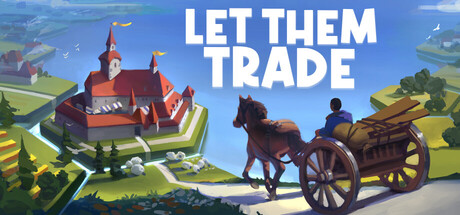
City-building and economic simulation: The game is consistently described as a city builder with a strong economic simulation component, blending cozy building with deep economic management. Players build settlements, manage resources, and watch cities grow.
Trade-focused gameplay: Trade is a central mechanic, with players managing trade routes between cities, setting tariffs, and profiting from exchanges. The game emphasizes supply chains and economic interdependence.
Board game aesthetic: The game features a board game aesthetic with hexagonal tiles and a game board look, reminiscent of Settlers of Catan. This visual style is a distinctive and appreciated aspect.
Relaxing and cozy experience: The game is widely praised for its relaxing, cozy nature, with a hands-off approach and no time pressure. It is simple and easy to learn, making it accessible to casual players.
Resource management and production: Resource management is a key element, involving production chains, resource pipelines, and balancing supply and demand. Players build specialized cities near resources and manage production tiles.
Frequent game crashes reported: Multiple reviewers experienced crashes, including on startup, during gameplay, and repeatedly. Some noted crashes persist even after updates or on lowest settings.
Poor performance optimization: Reviewers consistently described the game as poorly optimized, with low frame rates, lag, and high resource usage. Performance issues were common across various systems.
High GPU and system requirements: The game demands a powerful graphics card and significant GPU resources, making it difficult to run on laptops and weaker systems. Some users noted high memory and CPU usage.
Overheating and fan noise: Several reviewers reported that the game causes internal fans to spin continuously and can overheat the system, especially in late stages. Lowering graphics helped mitigate overheating.
Graphics and display bugs: There are bugs related to graphical settings, windowed mode resolution, fullscreen scaling, and shadows glitching. These issues affect the visual experience and usability.
Recommendations
Best purchased on sale: Many reviewers suggest waiting for a discount before purchasing the game. The consensus is that it is a good value when bought at a reduced price, with some recommending at least 40% off.
Recommended for city-building fans: The game is strongly recommended for players who enjoy city building, resource management, and economic simulation games. It appeals to fans of titles like Banished and those who appreciate deep economic cycles.
Worth full price: Some reviewers believe the game is worth its full price, citing its quality and value for money. They recommend it without waiting for a sale, considering it a good game for its price point.
Relaxing and low-stress experience: The game is recommended for players seeking a calm, stress-free management strategy experience. It is described as a leisurely economic management game that is easy to unwind with, though not for those seeking a challenge.
Mixed overall recommendation: While many reviewers give a clear recommendation, a few do not recommend the game in its current state. The overall sentiment is positive, but there are some dissenting voices.
Buying context
Community fair range: $5.00 - $10.00.
Game completion: 15.0h.
Story completion: 10.0h.
The game is enjoyable at first, offering a relaxing and addictive loop, but becomes repetitive and boring after a few hours or by the mid-game, especially in the campaign.
Friction: clunky tutorial; initial confusion about mechanics; tedious building menu with many clicks; painful frame rate; campaign acts as a long tutorial.
Unlock drivers: understanding how to earn money and build; getting past the tutorial; skipping campaign and playing free play; learning the trade logic.
Player profiles
Chill Casual Builder: Casual, building at own pace, not optimizing heavily, enjoying the visual and systemic unfolding. Motivation: Relaxation and low-stress creative building. Stance: buy.
Economic Trade Optimizer: Analytical, planning production chains, adjusting prices, researching tech, maximizing efficiency. Motivation: Mastering the trade and production systems through optimization. Stance: buy.
Disappointed Performer: Attempted to play but encountered crashes, boredom, or broken mechanics; some gave up, others finished but felt unsatisfied. Motivation: They wanted a fun, functional game but were blocked by bugs or shallow content. Stance: sale.
Platform notes
Steam Deck: The game receives mixed feedback: some users report flawless Linux/Proton performance, but a dedicated Steam Deck review recommends against playing it, and an unresolved crash bug persists. This suggests significant friction and potential instability on Steam Deck.
Linux and Proton: User feedback shows strong positive consensus for Linux/Proton compatibility. Two reviews explicitly state the game works well on Linux/Proton with no issues, and no Linux-specific problems are reported. The only negative mention is a vague Steam Deck recommendation that does not clearly indicate a compatibility problem, so it is disregarded per the guidelines.
Other review notes
Game length varies widely: Players report highly inconsistent playtimes, ranging from 1-2 hours to 20 hours or more. This suggests the game's length depends heavily on play style and content engagement.
Workshop and custom maps supported: The game supports Steam Workshop and includes a map editor, allowing players to create and share custom maps. This is a positive feature that extends content and replayability.
Frequent comparisons to Catan: Many reviewers compare the game to Settlers of Catan, noting similar hexagonal tiles and a laid-back board game feel. Some also mention it as a more complex or 'steroid' version of Catan.
Comparisons to Anno and Civilization: The game is often compared to Anno and Civilization, with some noting simplified supply chains and a board-game-like world. These comparisons help set expectations for gameplay mechanics.
Limited content and replayability: Several reviewers note that the game has limited content and low replay value, especially after completing the campaign. This is a common criticism that affects the game's longevity.