- Nostalgic Settlers successor with polished execution
- Cozy, relaxing gameplay with deep economy
- Enjoyable co-op and multiplayer experience
- Frustrating, unintuitive combat system
- Tedious resource management and cluttered UI
- Performance issues and unfinished 1.0 release
Emotions
What players like:
Common complaints:
Gameplay feedback:
Performance notes:
Recommendations:
Other player notes:
Similar games
Blend with other games




Review evidence
Why players say this
Review evidence
Why players say this
What players like
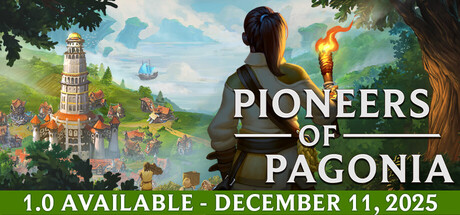
Nostalgic Settlers successor: The game is widely praised as a spiritual successor to *The Settlers* series, capturing the essence, charm, and gameplay mechanics of classic titles like *Settlers 2* and *3*. Players highlight its nostalgic appeal, improved graphics, and faithful recreation of the series' core experience, making it highly recommended for fans of the franchise.
Cozy and relaxing gameplay: The game is praised for its cozy, relaxing, and charming atmosphere, making it ideal for casual play sessions. Players enjoy the lack of punishing mechanics, the ability to play at their own pace, and the satisfying experience of building and managing a settlement without stress. This appeals to both strategy veterans and newcomers.
Polished and high-quality execution: Reviewers consistently describe the game as well-crafted, polished, and made with care and attention to detail. The gameplay is engaging, bug-free (or nearly so), and offers a high level of depth and replayability. The developers' commitment to quality is frequently mentioned as a standout feature.
Deep and intuitive economy: The game features a well-balanced and deep economic system with intuitive resource management, production chains, and logistics. Players appreciate the gradual introduction of mechanics, the variety of goods, and the satisfying challenge of managing complex supply chains, even in Early Access.
Enjoyable co-op and multiplayer: The co-op and multiplayer modes are highlighted as fun, engaging, and well-implemented. Players appreciate the ability to collaborate with friends or family, the beginner-friendly design, and the added strategic depth that co-op brings to the city-building experience.
Common complaints
Lack of strategic depth and replayability: The game is criticized for linear progression, repetitive gameplay loops, and shallow mechanics. Players note the absence of meaningful choices, dynamic AI opponents, or varied difficulty settings. Mid-to-late game content is sparse, and features like PvP, skirmish modes, or campaign narratives are missing, reducing long-term engagement.
Frustrating and unintuitive combat system: The combat system is widely criticized for being cumbersome, random, and poorly balanced. Players highlight issues like indirect unit control, unbalanced enemy matchups, and lack of tactical depth (e.g., 'bigger number wins' mechanics). Enemies are either overpowered or inconsequential, and defensive structures (e.g., walls, ranged units) are missing, leaving settlements vulnerable.
Overly tedious resource management: Resource gathering and production chains are described as time-consuming, unbalanced, and poorly communicated. Key resources (e.g., flax, steel) are difficult to locate, leading to dead-ends or excessive exploration. Late-game content stagnates due to resource scarcity or redundancy, while early-game progression is hampered by slow gathering mechanics and lack of feedback (e.g., resource regeneration rules).
Poor tutorial and onboarding experience: Players consistently report inadequate tutorials, missing in-game references, and overwhelming complexity for newcomers. Essential mechanics like combat, resource management, and unit control are poorly explained, forcing reliance on external guides or trial-and-error. This creates a steep learning curve and frustrates players early in the experience.
Cluttered and unintuitive UI/UX: The interface is described as chaotic, unintuitive, and poorly organized. Issues include unreadable resource icons, cluttered building menus, lack of shortcut keys, and poor map navigation. Building placement is frustrating due to minor obstacles, and the minimap lacks visual cues, making city management cumbersome.
Gameplay and performance
Core gameplay loop and mechanics: The game revolves around building and managing a village, focusing on resource gathering, production chains, and expansion. Players progress through objectives, unlock buildings, and balance production while defending against threats like thieves and bandits. The mechanics resemble the classic *Settlers* series, with added complexity in logistics and territory management.
Integrated hostile NPCs and threats: The game features disruptive elements like thieves, bandits, and mythical creatures that act as obstacles to expansion. Players must deploy guards and rangers to protect resources and settlements. Some feedback suggests adding mechanics for NPC villages to turn hostile if trade is interrupted, enhancing dynamic interactions.
Indirect combat and military mechanics: Combat is indirect, requiring players to destroy enemy buildings by eliminating all connected units. Units are assigned to towers and garrisons with limited direct control. The game also features waves of enemies attacking from multiple directions, adding strategic depth to defense and expansion.
Map generation and editor tools: The game includes procedural random map generation with customizable templates, difficulty levels, and seed values. Players can also use a map editor to create or modify maps, adjusting parameters like sea levels and terrain features. This adds significant replayability and creative potential.
AI and difficulty customization: The game offers customizable difficulty settings, including AI configurations and map design options. Players can adjust the number of opponents and resource availability for varied challenges. However, some feedback notes a lack of diverse AI behaviors, which could limit replayability.
Severe performance and stability issues: Players report frequent crashes, high GPU usage, and performance drops, particularly during intensive gameplay moments or in larger settlements. These issues persist despite adjustments to graphics settings or FPS limits, indicating systemic problems.
Linux compatibility inconsistencies: Feedback on Linux performance is mixed, with some players experiencing crashes, startup failures, or glitches, while others report stability on specific hardware (e.g., Nvidia 40x0 cards). This suggests platform-specific optimization gaps.
Smooth performance on mid-range hardware: Some players report stable performance on mid-range hardware (e.g., GeForce 1060) with medium settings, indicating the game can run well under optimal conditions.
Co-op mode instability: Co-op gameplay is plagued by frequent disconnections, disrupting multiplayer experiences. This is a significant issue for players engaging in collaborative modes.
Hardware and BIOS requirements: Crashes may occur if the motherboard BIOS is outdated, highlighting a dependency on system maintenance for stable performance. This is a niche but critical issue for affected users.
Recommendations
Mixed recommendations due to Early Access flaws: Players are divided on whether to recommend the game in its current state. Many acknowledge its potential and enjoy aspects like production chains and relaxed pacing, but technical issues, shallow combat, and lack of multiplayer significantly detract from the experience. Some are optimistic about future updates, while others feel the game is unplayable or overpriced.
Technical and gameplay limitations: Key criticisms include performance issues (crashes, BIOS requirements), lack of true multiplayer, shallow combat, and unbalanced progression. Players also highlight missing features like skirmish mode, hostile AI settlements, and replayability, which limit long-term appeal. These issues are frequently cited as reasons to wait for future updates or the full release.
Potential for future improvements: Many players express optimism about the game’s direction, praising the developers’ efforts and encouraging continued updates. Suggested improvements include refining combat, adding co-op/multiplayer, and expanding content (e.g., DLC with cultural variety). Some players are willing to revisit the game once these changes are implemented.
Strong appeal to city-builder fans: The game is highly recommended for players who enjoy city-building, economic simulations, and lighter RTS elements. Fans of the *Settlers* series, *Anno*, and similar titles find it particularly appealing due to its relaxing pace, production chains, and nostalgic charm. However, some note it lacks depth compared to classics in the genre.
Linux compatibility concerns: The game is explicitly not recommended for Linux users, likely due to technical or performance issues. This limitation is noted as a barrier for a subset of players.
Other review notes
Early Access expectations and updates: Players acknowledge the game is in Early Access and express hope for future updates, including campaigns, AI opponents, and additional content (e.g., maps, buildings, win conditions). Some are cautiously optimistic, while others are waiting for more substantial improvements before fully committing. This reflects a common sentiment in Early Access titles where players expect iterative development.
Nostalgia for *The Settlers* series: Many players view this game as a spiritual successor to *The Settlers* series, citing nostalgia for the original games (e.g., *Settlers III* or *Settlers 1995*). They appreciate the similarities in gameplay and aesthetics but also express disappointment that it doesn’t fully replicate the older titles. This feedback is constructive as it highlights a specific audience segment and their expectations.
Visual style and exploration focus: Players compare the game’s visual style to *Anno* but note it prioritizes building and exploration over narrative or character depth. Some suggest improvements like adding ferries for terrain obstacles or expanding to new continents via harbors. This feedback emphasizes the game’s strengths in exploration while identifying areas for visual and mechanical enhancement.
Low-priority or niche suggestions: Some feedback includes niche or low-priority suggestions, such as adding decorative elements (e.g., trees, benches), animal farms, or fishing mechanics. While these ideas are creative, they are less critical to core gameplay and may reflect individual preferences rather than widespread demand.
Technical and accessibility feedback: Players provide feedback on technical aspects, such as system requirements, difficulty level, and minor bugs (e.g., missing translations). They also suggest accessibility improvements, like edge scrolling or highlighting buildings of the same type. This feedback is constructive but less critical than gameplay-related suggestions.