- Exceptional city-building depth
- Excellent overall reception
- Comparisons to Dwarf Fortress, RimWorld
- Blend of colony sim genres
- Steep learning curve
- Confusing and overloaded UI
Emotions
Archetypes
Hardware
What players like:
Common complaints:
Gameplay feedback:
Performance notes:
Recommendations:
Other player notes:
Similar games
Blend with other games



Review evidence
Why players say this
Review evidence
Why players say this
Steam review verdict
An acclaimed, deeply rewarding colony-sim blend with exceptional city-building depth and Dwarf Fortress/RimWorld comparisons, but its steep learning curve and confusing, overloaded UI will test newcomers.
What players like
Exceptional City-Building Depth: Players widely praise the game as one of the most complex and in-depth city builders available, with rich mechanics and a strong sense of progression. It fulfills long-standing city‑building fantasies and stands out as a masterclass in the genre. The ancient fantasy setting and intricate production chains add unique appeal.
Excellent Overall Reception: The game is overwhelmingly described as great, a masterpiece, or a gem. It receives high praise for its overall quality and fun factor. Many consider it one of the best games in recent years.
Favorable Comparison to Dwarf Fortress: Reviewers frequently compare the game to Dwarf Fortress, noting it is more approachable and playable while retaining deep mechanics. It is seen as a spiritual successor with better UI and graphics. Some find it more relaxing than both Dwarf Fortress and RimWorld.
Highly Addictive Experience: Many reviewers describe the game as dangerously addictive and hard to put down. The depth and rewarding gameplay loop create a strong 'just one more turn' feeling. It is frequently called crack‑like and obsessively engaging.
Colony Sim and 4X Blend: The game successfully combines colony simulation, city building, and 4X strategy elements into a cohesive experience. It is praised as one of the best sandbox colony sims ever made. The mix of economic strategy and empire building adds significant depth.
Common complaints
Steep learning curve: Many players find the game difficult to learn and get into, with a punishing onboarding experience. The complexity makes the initial hours hard to overcome.
Confusing and overloaded UI: The user interface is frequently described as cluttered, unintuitive, and poorly organized, making information hard to find. Many players find navigation painful and anti-player.
Poor tutorial and guides: The tutorial is widely criticized as inadequate, broken, or covering only a small portion of the game. In-game guides and external resources are lacking, leaving players confused.
Mechanics poorly explained: Core game mechanics are not communicated well, with convoluted systems that feel like busywork. Players struggle to understand how things work without external help.
Graphics are unappealing: Many players find the graphics unattractive or off-putting at first glance. Some note they take time to get used to but remain a clear minus.
Gameplay and performance
City-Building Core Gameplay: The game is fundamentally a city-building and management simulation where players construct and expand settlements. It emphasizes creative freedom and progression from small towns to large cities.
Colony Simulation with Micromanagement: It features colony simulation elements with deep micromanagement of individual citizens and resources. Players manage complex systems similar to Dwarf Fortress and RimWorld.
Combat and Battle Systems: Combat includes real-time battles with unit types like infantry, archers, and cavalry. Battles can be resolved via a minigame or Total War-style system.
Grand Strategy and 4X Elements: The game blends city-building with grand strategy and 4X mechanics, including empire expansion and large-scale warfare. It offers a mix of tactical battles and strategic empire management.
Population and Citizen Management: Players manage population needs, happiness, and loyalty across thousands of individually simulated citizens. This includes job assignments, food supply, and services.
Excellent optimization for large colonies: Players consistently praise the game's ability to maintain high performance even with thousands of units, including on low-end and older hardware. Many note smooth simulation at 5k to 12k citizens with minimal frame drops.
Frequent crashes frustrate players: Multiple clusters report recurring crashes within an hour of play, during combat loading, and via specific error messages. Some players note the crashes persist across reinstalls and different computers, indicating a systemic stability issue.
Performance degrades as city grows: Several clusters report slowdowns starting around 8k to 20k population, with frame rates dropping to 20-35 FPS at high speeds. The single-threaded Java architecture is cited as a limiting factor.
Runs well on Linux and Mac: Players report the game runs perfectly on Linux desktops and smoothly on a 6-year-old MacBook. However, Mac users note launcher-related issues that require keeping the launcher open or deactivating Steam overlay.
Launcher causes system freezes: Multiple reports indicate that the launcher can freeze the computer if closed, and its background animation may prevent crashes. Players also mention forced quits of related processes and artificial playtime inflation.
Recommendations
Appeals to city-builder and strategy enthusiasts: A large number of reviews recommend the game to fans of city builders, grand strategy, and management games. It is often described as a solid entry in the genre, especially for those who enjoy complex systems.
Ideal for RimWorld and Dwarf Fortress fans: Many reviewers strongly recommend the game to players who enjoy RimWorld, Dwarf Fortress, or similar colony and city-building simulations. They highlight that it fills a similar niche, often with a fantasy or larger-scale twist.
Strongly recommended by many players: A significant number of reviews give a general high recommendation without genre-specific caveats. This indicates broad satisfaction and positive word-of-mouth.
Try the free demo first: Numerous reviewers suggest trying the free demo before purchasing, especially if unsure. The demo is frequently noted to be nearly identical to the full release, often only one version behind.
Colony sim fans will enjoy it: Reviews highlight that players who love colony sims, especially those wanting deeper mechanics or larger colonies than in RimWorld, will find this game appealing.
Buying context
Community fair range: $20.00 - $25.00.
Game completion: 170.0h.
Session length: 6.0h.
Endgame: 100.0h.
Songs of Syx often starts as a dense, poorly tutorialized learning curve, but many players report becoming hooked once they get the hang of its systems.
Reported time to anchor: 2h.
Friction: Steep learning curve and complex overlapping systems.; Poor or practically nonexistent tutorial/onboarding.; Confusing UI and convoluted controls.; Many mechanics not explained in-game, requiring external learning.; Heavy resource and micromanagement pressure.; Early survival threats and AI demands can overwhelm newcomers..
Player profiles
Hardcore Colony-Sim Veteran: Manages large settlements, economies, races, armies, and expansion while embracing failure and repeated restarts as part of learning. Motivation: To master deep, interconnected colony-management systems at a scale and difficulty beyond RimWorld or Dwarf Fortress. Stance: buy.
Grand City-Builder Optimizer: Plans layouts, balances production chains, trade, technology, and armies, and enjoys scalability, numbers, customization, and min-maxing. Motivation: To build, optimize, and watch a huge, self-sustaining city and production empire grow. Stance: buy.
Overwhelmed Newcomer: Attempts early cities, follows external guides, struggles with happiness, economy scaling, and combat, and may abandon before reaching mid-game. Motivation: To enjoy a deep colony and city builder, but they are blocked by missing tutorials, complex UI, and unclear systems. Stance: no buy.
Platform notes
Performance varies widely by configuration: Linux/Proton users report excellent results, while Windows cohorts show a mix of smooth large-city performance and frequent stuttering or crashes. Lower-VRAM and some higher-VRAM Windows systems still face instability or 4K issues.
Windows <8GB VRAM / <16GB RAM: mixed. Runs on low-end hardware, but reports include stuttering and occasional crashes, so performance is hit-or-miss.
Windows 8-11GB VRAM: negative. Several reports mention crashing, freezing, or failure to load, though one user reports smooth performance.
Windows 12-15GB VRAM: mixed. Large cities often run smoothly, but some users report frequent crashes and poor 4K performance.
Steam Deck: Steam Deck compatibility is mixed: the game is often playable and sometimes reported as flawless, but users must work around Linux native launch failures with Proton, tolerate small text and missing UI scaling, and troubleshoot fullscreen or display issues. Crashes and late-game frame drops add stability concerns. Overall friction is moderate, matching a Tinkering Required verdict.
Linux and Proton: User feedback shows a mostly functional Linux/Proton experience with some Linux-specific friction. The native Linux build reportedly fails to launch for some users, who then succeed with Proton; a few reviews also mention fullscreen trouble on Bazzite and a missing Linux NVIDIA patch in the demo. Against this, multiple users say the game runs great on Linux desktop and via Proton. The consensus is not broken, but Linux users may need minor compatibility workarounds.
Extra review signals
External guides: The reviews consistently describe a Wiki Tax driven by inadequate in-game instructional data. Users cannot reliably learn mechanics, building effects, stats, scaling, or core systems from the encyclopedia or tooltips, so they depend on external wikis, forums, Discord, YouTube guides, Reddit, or spreadsheets. There is no meaningful evidence of farming routes, drop rates, or loot tables, so Tier 1 is not triggered. There is also no primary complaint about inventory management, safe-to-sell valuation, blueprints, or crafting ingredients, so Tier 2 is not triggered despite mentions of Excel sheets used for min-maxing and system understanding. The primary barrier is learning systems and finding explanations, which matches Tier 3: The Student.
Other review notes
Comparisons to Dwarf Fortress and RimWorld: Many reviewers compare the game to Dwarf Fortress and RimWorld, often describing it as a blend of both. It is seen as more accessible than Dwarf Fortress while retaining similar depth.
Generous demo available: A free demo is available that is essentially the full game, only one or a few versions behind the current release. It has no content limit and allows players to try almost everything before buying.
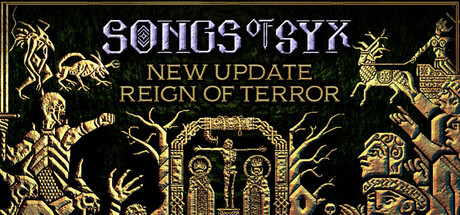
Early access and ongoing development: The game is currently in Early Access and under active development, with frequent updates adding content. Reviewers hope for continued improvement until full release.
Developed by solo developer: The game is developed by a single person, which is frequently mentioned by reviewers. This highlights the impressive scope and quality achieved by one developer.
More approachable than Dwarf Fortress: While compared to Dwarf Fortress for its complexity, the game is considered more approachable due to in-game explanations and a less steep learning curve. It offers similar depth without the intimidating interface.