- Beautiful and impressive graphics
- Unique and interesting factions
- Game is very fun
- Strong improvement over predecessor
- Faction balance is poor
- Game has many bugs
Emotions
Archetypes
Hardware
What players like:
Common complaints:
Gameplay feedback:
Performance notes:
Recommendations:
Other player notes:
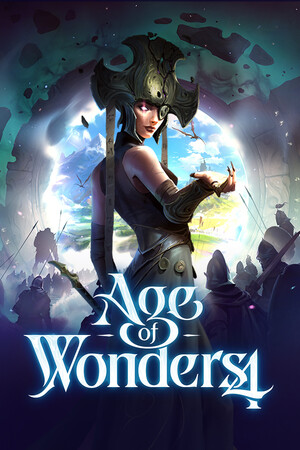
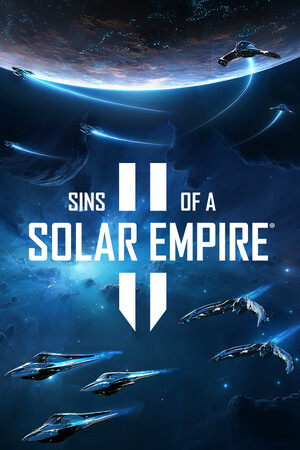
Similar games
Blend with other games







Review evidence
Why players say this
Review evidence
Why players say this
Steam review verdict
A stunning visual upgrade with unique factions makes this a fun and improved sequel, but poor balance and numerous bugs hold it back.
What players like
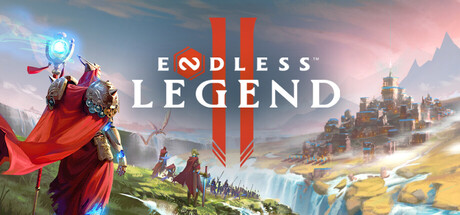
Beautiful and impressive graphics: Reviews frequently praise the game's visuals, art style, and animations. Many note the graphics are gorgeous, beautiful, and not straining.
Unique and interesting factions: Reviewers emphasize that each faction feels distinct with unique mechanics, designs, playstyles, and storylines. This variety adds replayability and depth.
Game is very fun: Players consistently describe the game as fun, enjoyable, and addicting. The positive reception suggests the core gameplay loop is engaging and satisfying.
Strong improvement over predecessor: Many compare the game favorably to its predecessor, noting it improves in many aspects. It is considered a worthy successor with meaningful changes.
Excellent 4X game: The game is repeatedly called one of the best 4X strategy games on the market. Players highlight its depth, freshness, and strong execution of genre mechanics.
Common complaints
Faction balance is poor: Players report that the five factions are unbalanced, with certain buffs making factions overpowered. The custom factions update is also seen as worsening balance issues.
Game has many bugs: Numerous players note that the game is buggy, especially in late game, and suffers from typical early access issues. These bugs affect overall polish and player experience.
UI is cluttered and unintuitive: Players consistently report that the interface is messy, noisy, and difficult to navigate. The UI is described as overcomplicated, clunky, and outdated, making the game harder to read and use.
Too few factions available: The game offers only five factions, which players find sparse and repetitive. Some factions are seen as knock-offs of previous ones, and the limited roster hurts replay value.
AI cheats and is weak: Players complain that the AI cheats on production, movement, and unit upkeep, while also being tactically foolish in combat. This makes combat predictable and less engaging.
Gameplay and performance
4X strategy game: The game is consistently described as a 4X turn-based strategy title, similar to Civilization, with empire building and faction management. It is identified as a fantasy 4X game and a sequel in the Endless franchise.
Distinct asymmetric factions: Players highlight that factions have significantly different mechanics, playstyles, and unique designs, offering asymmetric gameplay that requires distinct strategies. This is a core and highly praised feature.
Tidefall mechanic: The game features a tidefall and monsoon mechanic where periodic tidefalls reveal new tiles and evolve the map over time, encouraging ongoing exploration and map changes.
Five playable factions: The game currently offers five distinct factions, with a sixth planned for addition during Early Access. Each faction comes with its own unique mechanics and lore.
Turn-based combat: Combat is turn-based tactical, involving heroes and units with defense tactics and choke points, similar to Fire Emblem. It is a core part of the gameplay loop.
Smooth performance on varied hardware: Several players report smooth gameplay on older laptops and mid-range PCs, indicating the game is well optimized for a range of systems.
Late-game performance degradation: Multiple reviews mention performance drops, FPS dips, and lags in the late game, sometimes after updates or during specific events, suggesting a scalability issue.
Excellent performance for early access: Players note that the game runs excellently, with stable FPS and great performance, especially considering its early access status.
Freezes and lags on some systems: Some users experience stutters, lags, and freezes on mid-range notebooks, indicating performance issues on certain hardware configurations.
Good FPS on high settings: A reviewer reports good FPS with graphics on max settings even on older hardware like a 1070 and an 11-year-old processor, indicating strong optimization.
Recommendations
Overall recommendations mixed: The game has mixed reviews. Strong recommendations and non-recommendations are present, with early access and comparisons to the first game being key.
Early access concerns: Reviewers recommend waiting for a full release or a sale.
Great for 4X fans: Recommended for fans of 4X strategy games due to genre fit.
Not recommended currently: Some reviewers do not recommend the game until it is fixed.
First game often better: Many reviewers suggest the first Endless Legend is cheaper and better.
Buying context
Community fair range: $20.00 - $30.00.
Game completion: 6.0h.
Session length: 5.0h.
The game is initially captivating with its art, music, and faction design, but becomes repetitive and dull in the late game due to limited content, unbalanced victories, and weak AI.
Friction: Clunky UI; Unintuitive combat and city mechanics; Poor tutorial; Hidden settlement limit; Initial difficulty curve.
Unlock drivers: Beautiful graphics and music; Faction asymmetry; Fun city building and district planning; Engaging quests; Tidefall mechanic adding exploration variety; Relaxing pace.
Player profiles
Loyal Endless Devotee: Focuses on faction asymmetry, lore, and long-term strategy; enjoys roleplaying within the Endless universe and experimenting with different factions. Motivation: Deepening their connection to the Endless universe and experiencing the franchise's unique narrative and faction design. Stance: buy.
Critical 4X Strategist: Analyzes mechanics deeply, compares to other 4X titles, and prioritizes strategic depth, AI behavior, and balanced progression; often frustrated by incomplete systems or repetitive quests. Motivation: Seeking a refined, deep 4X experience with meaningful choices and robust AI that challenges them tactically. Stance: deep sale.
Accessible Newcomer: Takes time learning systems through tooltips and tutorials; prefers guided progression and is forgiving of minor complexity as long as the onboarding is clear. Motivation: Exploring a new 4X universe without feeling overwhelmed; discovering faction asymmetry and building up to competitive play. Stance: sale.
Platform notes
Higher VRAM Windows cohorts (8+ GB) report positive performance, while the sub-8GB VRAM cohort shows mixed results with both praise and stability issues.
Windows <8GB VRAM: mixed. Reports are mixed: one user praises optimization, another describes frequent crashes and freezes, and a third reports stuttering despite recommending.
Windows 8-11GB VRAM: positive. The only snippet reports excellent performance and great optimization.
Windows 12-15GB VRAM: positive. Both snippets indicate good performance with no crashes or freezes.
Steam Deck: The game generally receives positive feedback for Steam Deck performance and compatibility, but specific issues like the inability to switch control modes in docked mode, confusing default control mappings, and small text on external displays require tinkering for some users.
Linux and Proton: The majority of Linux and Steam Deck users report the game runs well via Proton, with some isolated mentions of bugs. No major blockers like anti-cheat or DRM were identified. Overall, the game is playable without extensive tweaks.
Extra review signals
Monetization: The game's monetization is based on traditional DLC expansions, with mixed user feedback. Some users criticize the DLC as overpriced and the base game as incomplete without them, while others view the DLC as fair and reasonably priced. There is no evidence of predatory microtransactions, pay-to-win mechanics, or real-money gambling elements.
External guides: The primary user feedback indicates a significant lack of in-game encyclopedia or wiki for learning game systems, unit traits, mechanics, and events. Several reviews also highlight UI clutter and overlay bugs that worsen the need for external references. The overall sentiment is that the game does not provide sufficient information internally, forcing players to rely on trial and error or external sources.
Other review notes
Early access with active development: Many reviewers note the game is in early access, with some mentioning it feels polished and stable while others point out raw or incomplete content. The developers are actively working on the game, providing regular updates and patches.
Early Access content gaps: A few reviewers point out that while in early access, the game is missing some planned content, such as a faction or systems from the roadmap, but they expect these to be added over time.
Compared to Endless Legend: Many reviews compare the game to the original Endless Legend, with some saying it improves upon it and others feeling it is a step back. The comparison is frequent and often used to frame the game's strengths and weaknesses.
Developers listen to feedback: A significant number of reviews highlight that the developers are responsive to community feedback, actively engaging with players and incorporating their suggestions. This positive relationship with the community is frequently praised.
Sequel to Endless Legend: The game is widely recognized as a sequel to Endless Legend, building on its legacy and set in the same universe. Some reviewers see it as an evolution, while others think it doesn't live up to the original.