- Diverse gods drive replayability
- Deep interconnected strategic systems
- Reactive world enhances immersion
- Terrible, clunky interface
- Poor mechanic explanations and onboarding
- Overwhelming information and cluttered UI
Emotions
Archetypes
What players like:
Common complaints:
Gameplay feedback:
Performance notes:
Recommendations:
Other player notes:
Similar games
Blend with other games





Review evidence
Why players say this
Review evidence
Why players say this
Steam review verdict
Diverse gods and deep interconnected systems make each run replayable and the reactive world immersive, but the clunky interface, poor onboarding, and overwhelming clutter undercut the experience.
What players like
Diverse gods drive replayability: Reviewers repeatedly highlight that different gods, elder gods, and agents fundamentally change playstyle and open distinct victory paths. This variety is a major factor keeping the game interesting across repeated runs.
Deep interconnected strategic systems: Players praise the interconnected mechanics, which create emergent strategic situations and a compelling web of decisions. The depth of these systems is cited as a core strength of the game.
Solid overall gameplay: The core gameplay is described as solid and fun, with many viable strategies. It provides an enjoyable experience for a broad audience.
Unique and weird concept: The game stands out as one of a kind, with a weird and different concept that many find appealing. Its originality is a key selling point.
Great value on sale: Several reviewers feel the game is well worth the price, especially when discounted. This suggests good value for money.
Common complaints
Terrible, clunky interface: The UI is widely described as poorly designed, inconsistent, atrocious, and non-intuitive. Many reviewers cite it as the single biggest barrier to enjoying the game.
Poor mechanic explanations and onboarding: The game fails to explain most of its mechanics, leaving players confused about how systems work. The tutorial is bare-bones and teaches only a fraction of what is needed to play.
Overwhelming information and cluttered UI: The interface presents too much irrelevant information and buries critical stats, making it hard to track what is happening. Menus feel dense and overwhelming, especially for new players.
Dated or dull visuals and art: Graphics are described as plain, minimalist, and dated. The art largely uses public domain historical images with no cohesive visual identity, and portraits are repetitive.
Excessive and disruptive pop-ups: Constant pop-up notifications clutter the screen and interrupt play, sometimes resetting progress. Disabling popup categories also hides important alerts, compounding the frustration.
Gameplay and performance
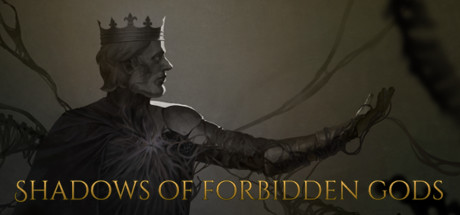
Play as evil gods: Players take the role of various evil or elder gods with distinct powers, victory conditions, and playstyles. The core fantasy is being the villain, spreading shadow, madness, and corruption across a Crusader Kings-like world.
Turn-based hex strategy: The game is a turn-based, hex-based strategy experience with a boardgame-like feel and tactical combat. Few comparable titles exist, giving it a unique strategic identity.
Multiple distinct playable gods: Several gods are available, each with unique designs, gimmicks, powers, and playstyles. Winning unlocks different gods, encouraging replayability and varied strategies.
Agent-based corruption gameplay: Players move agents around the world to infiltrate, corrupt, and topple human kingdoms through covert action. Agents can be opposed by heroes who attack and stop them.
Unique strategy twist: The game features unique mechanics and a distinctive playstyle that sets it apart from typical strategy titles. Its villain-focused premise is a key differentiator.
Persistent error blocks turn completion: An error pops up after about 60 turns and prevents ending turns. The error persists even after fresh installs, file verification, and clean-slating the game multiple times, making the game unplayable.
Window resizing fails after restart: Window resizing does not work after restarting the game, and the window scale becomes unusable across sessions. This affects players who return to the game and find their display settings broken.
Poor performance and loud fans: Performance is poor and fans scream when zooming out on the map. This indicates optimization issues that make the game uncomfortable to play.
Small install footprint under 1GB: The game has a footprint of under 1GB on your hard drive. This is a positive note about storage usage.
Recommendations
Niche appeal for strategy fans: The game is recommended for players who enjoy deep strategy, board games, and complex simulations, including fans of Dominions, Civ, and Age of Wonders. Clusters 3, 8, 17, 18, 20, 23, 25, 33, 36, and 38 describe this target audience.
Broadly recommended by most reviewers: Many reviewers give a clear positive recommendation without significant reservations. Clusters 1, 3, 6, 11, 30, and 32 all express overall endorsement of the game.
Best value on sale: Reviewers frequently mention that the game is worth buying, especially at a discount, sometimes together with DLC. Clusters 2, 4, 26, and 27 discuss pricing and recommend purchasing during sales.
UI and pop-ups are problematic: Several reviewers criticize the user interface, cluttered information, and intrusive pop-ups that hurt the experience. Clusters 9, 13, 39, and 40 highlight these usability issues.
Try demo before buying: Some reviewers suggest playing the demo or watching gameplay to get a feel for the game before purchasing. Clusters 5, 21, and 35 offer this advice.
Buying context
Community fair range: $5.00 - $10.00.
Game completion: 30.0h.
Session length: 6.0h.
Players often find the premise immediately appealing but must push through a dense interface, steep learning curve, and bare-bones tutorial before the strategy systems click into fun.
Friction: Steep learning curve; Dense and obtuse interface; Bare-bones tutorial that does not explain core concepts; Slow early campaign pacing with weak influence and limited agents; Trial-and-error discovery of mechanics.
Unlock drivers: Getting the hang of the UI and systems; The game's logic clicking; Tutorial teaching basic mechanics such as plagues, agents, and infiltration; Toggleable gameplay tips.
Player profiles
Political Sandbox Strategist: Engages deeply with political management, manipulating heroes, kingdoms, and religions; enjoys sandbox experimentation and emergent storytelling. Motivation: To manipulate complex political systems and shape emergent narratives in a sandbox world. Stance: buy.
Dark Fantasy Roleplayer: Uses imagination to roleplay, fills in narrative blanks, and enjoys the thematic flavor of manipulating villains in a Tolkien-esque world. Motivation: To immerse themselves in a dark fantasy power fantasy as an eldritch evil god and create emergent stories. Stance: buy.
Challenge-Driven Learner: Iterative learning through repeated runs, experimenting with different strategies, and savoring the achievement of victory. Motivation: To overcome the initial difficulty, learn from mistakes, and experience the thrill of finally winning. Stance: buy.
Other review notes
Extensive Steam Workshop mod support: The game supports Steam Workshop mods, and reviewers highlight a surprising variety of mods for gods, faction overhauls, and agents. Some consider mods essential because base game content is a bit lacking.
Compared to Crusader Kings: Reviewers frequently compare the game to Crusader Kings for its rich narrative feedback and high fantasy politics, though some note outcomes are more RNG-driven. Others find it similar to CK2 or CK3 intrigue playthroughs, with caveats about complexity.
Missing language localizations: Reviewers report no French, Japanese, or Russian language support is available. A Chinese localization is available on the Steam Workshop, and XUnity.AutoTranslator can be used for translation.
Compared to Civilization and 4X games: Reviewers compare the game to Civilization and Age of Wonders, noting it resembles Civ-like games at first glance with hex-tile and turn structure. One describes it as Civ-lite where you play as Sauron, while another notes players control only diplomat units with more options.
Compared to Plague Inc: Several reviewers draw parallels to Plague Inc, citing its internal flow structure, shadow operation mechanics, hiding from the living world, and apocalyptic endgame. One describes it as a masochistic version of Plague Inc with richer lore and table-top strategy style.