- Highly praised Roman city builder
- Fun and enjoyable gameplay
- Graphics hold up well
- Multiplayer servers offline
- Frequent game crashes
- Lack of language support
Emotions
Archetypes
What players like:
Common complaints:
Gameplay feedback:
Performance notes:
Recommendations:
Other player notes:
Similar games
Blend with other games




Review evidence
Why players say this
Review evidence
Why players say this
Steam review verdict
This highly praised Roman city builder is fun with graphics that hold up well, but offline multiplayer servers, frequent crashes, and missing language support hold it back.
What players like
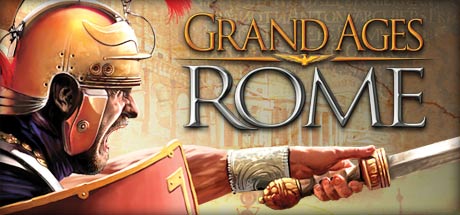
Highly praised Roman city builder: Reviewers consistently recommend it as an excellent ancient Rome city-building strategy game with detailed and authentic historical atmosphere.
Fun and enjoyable gameplay: Many players find the game fun, interesting, and addictive, with pleasant and smooth overall gameplay.
Graphics hold up well: Graphics are described as beautiful and solid for their age, often noted as holding up despite being over a decade old.
Excellent city-building and RTS blend: The combination of city management, resource gathering, and real-time strategy combat is frequently highlighted as a strong point.
Standout city builder: Praised as one of the best city builders, offering pure city management and urban planning fun with limited military aspects.
Common complaints
Multiplayer servers offline: Multiplayer servers have been shut down or are no longer active, so players cannot play online or with friends.
Frequent game crashes: Players report that the game crashes regularly, randomly stops working, and becomes unstable, often making it unplayable.
Lack of language support: The game is only available in English, lacking support for other languages such as Chinese and Spanish, which reduces accessibility.
Clunky and poor UI: The user interface is described as clunky, dated, and poorly designed, making navigation inconvenient and distracting.
Dated and poor graphics: Many reviewers find the graphics outdated, smudgy, and below current standards, detracting from the visual experience.
Gameplay and performance
Blend of city-builder and RTS: The game mixes city-building mechanics with real-time strategy elements, including resource gathering, army management, and combat. This hybrid nature is frequently mentioned.
Core city-building focus: City management is the main gameplay element, with players constructing and managing a city. Many users describe it as a city builder rather than a pure wargame.
Roman-themed strategy city builder: The game is primarily a city-building strategy game set in the Roman Empire, with players managing a Roman colony or empire. It draws comparisons to classic titles like Caesar III, Pharaoh, and Tropico.
Campaign and mission structure: The game features a campaign mode composed of missions, along with a free-build mode. The campaign includes varied objectives and bonus goals.
Citizen happiness and needs management: Players must manage citizen happiness, food supply, entertainment, and religion to maintain a functioning city. Neglect can lead to fires, crime, and other issues.
Crashes in large cities: The game crashes when the city reaches a certain size, often during saving. This occurs regardless of graphics settings and in specific missions like Mission 2.
Runs well on new systems: The game performs perfectly on newer hardware, running smoothly without issues.
Launch failures and black screens: The game fails to launch, showing a black screen or compatibility errors. Some players cannot start the game at all.
Autosave-related crashes: Autosaving or deleting autosaves leads to crashes. Autosave also takes a long time.
Poor performance on modern systems: Some users experience poor performance on modern systems, with random lag and FPS drops on high-end hardware like RTX 3090.
Recommendations
Roman city-builder appeal: Many reviewers recommend the game specifically for fans of Roman-themed city builders and historical settings. It is often compared favorably to classics like Caesar and Pharaoh, though some suggest those classics instead.
Discount purchase recommended: Many reviewers advise buying the game only on sale, as it may not be worth full price. Some say it's only worth it if free or at a bargain.
General recommendation: Numerous reviewers give a straightforward recommendation, stating the game is worth playing. Some emphasize it is a good game overall.
Suited for strategy and city-building fans: The game is broadly recommended for players who enjoy city-building and strategy games, including those with RTS elements. It appeals to fans of build-up strategy and management.
Good addition to collections: Reviewers suggest it is a nice addition to a city-building game collection, particularly for those who enjoy building aesthetically pleasing cities. It is seen as a solid entry in the genre.
Buying context
Community fair range: $5.00 - $15.00.
Story completion: 55.0h.
Session length: 2.0h.
Endgame: 200.0h.
Players often enjoy the early campaign and city-building loop, but repetition, tedious missions, and maintenance make the experience wear thin. A minority report that the game becomes fun only after learning its resource systems or restarting.
Friction: Incomplete tutorial and unclear early building priorities; Clunky UI and fiddly street building; Narrow viable research path that can force restarts; Repetitive missions and combat-heavy scenarios; Dead multiplayer and login or server barriers.
Unlock drivers: Sticking with the game through a few restarts; Learning the resource mechanics until they become intuitive; Using the tutorial and trial and error to learn city building and combat; Playing with friends or family rather than solo; Finding a viable build path that prevents city collapse.
Player profiles
Roman City-Building Nostalgist: Builds detailed Roman cities, manages economy and resources, and values replayable single-player campaigns. Motivation: Relive and enjoy classic Roman city-building with a familiar historical setting. Stance: buy.
Solo Campaign Strategist: Plays methodically map by map, focusing on economy, resource logistics, and occasional combat. Motivation: Work through long single-player campaigns and logistical city-management challenges. Stance: buy.
Co-op Multiplayer Seeker: Seeks multiplayer co-op or shared-base play, often requiring voice coordination and repeat sessions. Motivation: Play city-building campaigns cooperatively or competitively with friends. Stance: no buy.
Extra review signals
External guides: The feedback shows a primary instructional barrier: players are expected to plan successfully without adequate in-game documentation, creating a 'figure it out yourself' experience. Technical stability complaints also appear, including a first-run dual-monitor crash and alt-tab/minimize crashes, but these are secondary under the strict category priority. The presence of Tier 3 instructional data dependency determines the final score.
Other review notes
Frequent comparisons to Caesar series: Players often compare the game to the Caesar series, including Caesar III, Caesar IV, and Caesar II, highlighting similarities in city-building mechanics and strategic depth. Some consider it a worthy successor or a modern alternative.
Similar to Tropico and same developer: Many reviewers note the game is similar to Tropico, often mentioning it uses the same engine and is developed by the same company behind Tropico 3 and 4. Some describe it as essentially Tropico with a Roman skin.
Expansion packs and Gold edition: The game has expansion packs, including the Augustus DLC and Reign of Augustus, which add new missions, buildings, and maps. The Gold edition bundles the base game with expansions.
Old game released in 2009: The game is described as old, having been released in 2009. Despite its age, some reviewers note it still looks good and remains enjoyable.
Predecessor Imperium Romanum and sequel comparisons: As a sequel to Imperium Romanum, the game is often compared to its predecessor, with mixed opinions: some find it better, others prefer the original.