- Strong emotional story praised
- Good addition to Amnesia series
- Puzzles are a major strength
- Less scary than Dark Descent
- Gameplay is bland and tedious
- Not worth full price
Emotions
Archetypes
Hardware
What players like:
Common complaints:
Gameplay feedback:
Performance notes:
Recommendations:
Other player notes:
Similar games
Blend with other games





Review evidence
Why players say this
Review evidence
Why players say this
Steam review verdict
Praised for its emotional story, strong puzzles, and fit in the Amnesia series, but it's less scary than Dark Descent, bland and tedious to play, and not worth full price.
What players like
Strong, emotional story: The story is compelling, emotional, and intriguing, with a mystery that draws players in and leaves a lasting impact. Many find it worth seeing through to the end.
Good addition to Amnesia series: Reviewers consider it a worthy installment in the Amnesia series, with some calling it the best in terms of story and gameplay. It expands the lore and holds up well compared to previous entries.
Puzzles are a major strength: Many reviewers praise the puzzles as interesting, challenging, and enjoyable, with simple but logical design. They do not feel like a drag and are a highlight of the game.
Good horror experience: The game is regarded as a very good horror game, especially for fans of survival horror. It offers scary moments, effective jumpscares, and a suitable experience for newcomers to the genre.
Excellent voice acting: Voice acting is repeatedly described as very good to fantastic, and it helps tell the story effectively. Reviewers highlight it as a standout feature.
Common complaints
Less Scary Than Dark Descent: Numerous reviews state the game is not as terrifying as The Dark Descent, with weaker horror, tension, and atmosphere. The comparison to Dark Descent is a recurring point of disappointment.
Gameplay Is Bland and Tedious: Players frequently criticize the gameplay as uninteresting, boring, slow, and drawn out. Many find it lacks engaging mechanics and becomes a tedious experience.
Underwhelming Compared to Earlier Titles: Many players feel the game does not reach the quality, horror, or storytelling heights of earlier entries in the series. It is frequently described as inferior to the first two games or the best installments.
Not Scary or Atmospheric: Despite being marketed as a horror game, many players did not find it scary or tense. The game is often described as lacking in atmosphere and failing to deliver genuine horror.
Endings Are Unsatisfying: The game's endings are widely criticized as disappointing, lacking closure, and not providing a satisfying conclusion. Some note that no ending offers a desirable outcome.
Gameplay and performance
Multiple Endings Based on Choices: The game features three distinct endings that are determined by player choices near the end. Choices made in the final area lock the player into one of three possible conclusions.
Puzzle Solving Gameplay: Players engage in extensive puzzle solving integrated into the narrative. Puzzles vary in difficulty and quality, forming a core part of the experience.
Story-Driven Horror Experience: The game is a psychological horror title with heavy emphasis on story and lore. It delivers narrative-driven scares and world-building.
Walking Simulator Style: Much of the gameplay involves walking and exploration, often described as a walking simulator. It incorporates survival horror and puzzle-solving elements within that framework.
Match-Based Lighting System: Matches are used to light sources but burn out quickly, providing very limited illumination. They are a manually carried, limited resource that must be aligned with flammable objects.
60 FPS lock criticized: Multiple reviewers complain that the game is capped at 60 FPS despite being a 2020 release. Some note the cap feels lower than 60, and one reviewer could not find an in-game unlock option. Others mention it can be removed via file edits, but above 60 FPS the game still does not feel smooth.
Severe performance issues: Many players report lag, sudden frame drops, and overall poor optimization, even on high-end hardware. One reviewer experienced 9 FPS on top-tier components, while another saw drops to 20 FPS every 30 seconds regardless of settings.
Runs smoothly on some hardware: Several reviewers report smooth performance and no technical issues on their systems. One player ran the game at 2160p 60Hz with 60% GPU load on Bazzite, and another had a great experience on an RTX 3080 Ti.
Crashes force level restarts: The game crashes, and one specific crash forces the player to restart the entire level from the beginning. Another reviewer encountered a crash when opening a specific door after the cave other world section.
Resolution and loading problems: Resolution messes up during play, and loading times are unexpectedly long and arduous. These performance and loading issues are noted as significant for a game of this scale.
Recommendations
Appeals to Amnesia series fans: Many reviewers recommend the game specifically for fans of the Amnesia series, including those who enjoyed the original and its sequels. Being invested in the Amnesia universe strongly correlates with enjoyment.
Not worth full price: Multiple clusters advise against buying at full price, with many stating it is only worthwhile on sale. Reviewers suggest waiting for a discount before purchasing.
Must-play for horror fans: Multiple clusters consistently recommend this game to horror enthusiasts and fans of the horror-suspense genre. It is described as a must-play addition to any horror collection.
General recommendation from players: Many clusters contain straightforward recommendations to play the game, often with high praise. It is described as definitely worth playing and recommended to everyone.
Worth playing on sale: Several clusters indicate the game is worth buying during a sale or at a discount. Full price is often considered too high for the experience offered.
Buying context
Community fair range: $7.00 - $15.00.
Game completion: 10.0h.
Story completion: 9.0h.
Session length: 5.0h.
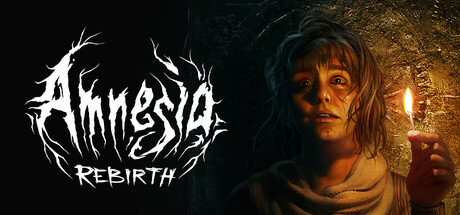
Amnesia: Rebirth often opens with a slow, padded, walking-simulator stretch that bores or overwhelms players, but many report the horror and story click once they push into the mid-to-late game. A minority instead find the opening hours strong.
Reported time to anchor: 2h.
Friction: Slow, uneventful start with long walking-simulator stretches; Early puzzles feel vague or obtuse; Overwhelmed by many flashbacks, notes and names to track; Forced cutscenes and protagonist monologues interrupt pacing early; Repetitive baby-calming and fear mechanics; Boring early environments such as the fort area.
Player profiles
Horror Genre Veteran: Critically evaluates scare design, manages light and fear, and avoids or runs past monsters. Motivation: To find genuine tension and scares and compare the game against other horror titles. Stance: sale.
Amnesia Lore Completionist: Reads notes, collects memory cylinders and cards, pursues 100% achievements, and compares lore across entries. Motivation: To complete the Amnesia story lore and collect all narrative and achievement content. Stance: buy.
Emotional Narrative Player: Plays immersively with focus on story, characters, and atmosphere rather than difficulty or scares. Motivation: To experience a moving, character-driven story and emotional themes. Stance: buy.
Platform notes
Across the two Windows VRAM cohorts, hardware-tagged performance feedback is sparse: the under-8GB cohort has no technical performance details, while the 16GB+ cohort is mostly recommended despite reports of a 60 FPS cap and limited success unlocking it.
Windows <8GB VRAM: positive. The single included review is recommended and reports no performance problems, but it provides no specific frame-rate or stability details for this VRAM tier.
Windows 16GB+ VRAM: positive. Most included reviews are recommended and the game is reported as playable, though users mention a 60 FPS cap and one could not unlock the frame rate.
Steam Deck: The filtered feedback contains little Steam Deck-specific technical evidence. The single Deck-focused review confirms the game launches and runs for hours in offline mode without Proton tweaks, launchers, or anti-cheat errors, but reports that all statistics disappeared afterward, indicating a data-loss/stability bug in offline play. Remaining reviews concern in-game control design (crank inputs) and narrative themes rather than platform barriers. No evidence of required Proton Experimental toggling, external launcher navigation, unreadable UI, or anti-cheat failures was found, so the strict 40-point override does not apply.
Extra review signals
External guides: The reviews primarily show external-data dependency through walkthrough usage for puzzles, hidden mechanics, and missed content. Players repeatedly consult guides to understand systems and avoid missing important parts of the game. Navigation and backtracking issues appear, but they are secondary to instructional and discovery-related barriers.
Other review notes
Compared to The Dark Descent: Reviewers consistently compare the game to Amnesia: The Dark Descent, with opinions ranging from favorable to unfavorable. The comparison is a central reference point for assessing the game's quality and scares.
Part of Amnesia franchise: Many reviews identify the game as an entry in the Amnesia series by Frictional Games, often noting it as a follow-up to The Dark Descent. This franchise connection is the most frequently mentioned aspect across clusters.
Compared to other Amnesia games: Reviews frequently compare the game to other Amnesia titles, often noting it does about the same as past entries. This general comparison reinforces its place in the series.
Review scores around 7/10: Many reviewers assign scores in the 7 to 8 out of 10 range, indicating generally positive but not exceptional reception. Some scores are lower, around 5 to 6 out of 10.
Compared to A Machine for Pigs: The game is frequently compared to Amnesia: A Machine for Pigs, with many considering it better than that game but still worse than The Dark Descent. This places it in the middle of the series.