- Outstanding horror atmosphere praised
- Influential classic horror game
- Engaging and well-written story
- Scary and holds up over time
- Outdated graphics and tech issues
- Frequent crashes affect players
Emotions
Archetypes
Hardware
What players like:
Common complaints:
Gameplay feedback:
Performance notes:
Recommendations:
Other player notes:
Similar games
Blend with other games




Review evidence
Why players say this
Review evidence
Why players say this
Steam review verdict
An influential horror classic with outstanding atmosphere, a well-written story, and scares that still hold up, though dated graphics, technical issues, and frequent crashes mar the experience.
What players like
Scary and holds up over time: The game remains genuinely scary even after many years and replays, with effective scares that still work despite its age. Reviewers note it holds up well and remains a solid horror experience.
Outstanding horror atmosphere praised: Reviewers consistently highlight the game's incredible, gripping, and immersive atmosphere as a major strength. Many describe it as top-notch, unbelievably good, and unmatched.
Influential classic horror game: The game is widely regarded as a classic that defined and influenced the horror genre. It is often called the grandfather of horror games and one of the greatest of all time.
Engaging and well-written story: The narrative is frequently described as engaging, interesting, and well-constructed, with captivating and immersive storytelling. Many praise the plot for maintaining mystery and involvement.
Effective scares without cheap jumpscares: Many reviewers appreciate that the game scares through psychological horror and atmosphere rather than relying on cheap jump scares. It manages to frighten without unnecessary jumpscares, focusing on genuine fear.
Common complaints
Outdated Graphics and Tech: Many players find the graphics and technical aspects of the game outdated, which can be hard to tolerate compared to modern standards. This includes both visual quality and overall technical performance.
Confusing and Unclear Puzzles: Several players report that puzzles are confusing, with unclear solutions or weird logic, leading to frustration. Some puzzles are baffling and may require guides to solve.
Not Scary as a Horror Game: Despite being a horror game, many players do not find it scary, contrary to what others have said. It fails to deliver fear or tension for some.
Predictable and Dumb Enemies: Enemies are often described as very predictable and dumb, with AI that can behave strangely or seem too punitive due to randomness. This reduces the challenge and immersion.
Monotonous and Dull Gameplay: The gameplay is described as monotonous, tedious, and boring, with a dull and stuffy atmosphere. This lack of engagement makes the experience feel repetitive.
Gameplay and performance
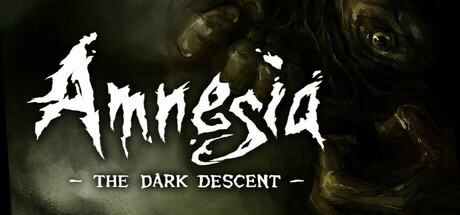
Core survival horror experience: The game is a first-person survival horror title set in a dark castle environment, with atmospheric tension and a focus on dread over combat. It is widely regarded as a classic of the horror genre.
Sanity mechanic drives horror: A central sanity system causes mental deterioration when players stay in darkness or look at monsters, triggering hallucinations, visual distortions, and shaking. This mechanic governs perception and monster detection, making it a defining feature of the gameplay.
Puzzle-solving integration: Puzzles and riddles are a core part of the gameplay, integrated into the environment and often involving physics-based mechanics. Players must solve these to progress through dangerous areas.
Rich modding and custom stories: The game supports a thriving modding community with custom stories and user-generated content that greatly extends replayability. Players can download, create, and share their own stories and mods.
No combat, only evasion: Players have no weapons or combat abilities and must instead flee, hide, or use the environment to survive encounters with monsters. This helplessness amplifies the horror and tension.
Frequent crashes affect players: Multiple reports describe constant crashes, including white-screen crashes and random crashes on Windows 10 with no known fix. This is a widespread stability issue.
Frame rate capped at 60fps: The game engine is hard-capped at 60fps, and cannot run above it even with configuration file changes. This limitation also causes physics to be tied to framerate and breaks scripts if modified.
FPS drops and stutters reported: Players experience FPS drops, especially during flashbacks, as well as occasional stutters and choppy framerate. These performance issues disrupt gameplay.
Runs well on low-end hardware: The game has simple system requirements and runs smoothly on low-end PCs, such as an i3 with integrated graphics, achieving 40-50 fps. It is also very easy on CPU and GPU.
Technical difficulties on old hardware: The game faces technical difficulties on old laptop hardware, but can be streamed to a laptop via HDMI to TV with no delay. Some minor slowdowns occur from extra graphical effects.
Recommendations
Must-play for horror fans: Many reviewers consider this title essential for anyone who enjoys horror games. It is repeatedly described as a legendary, genre-defining experience that every horror fan should try.
General recommendation: A broad set of players simply recommend the game without tying it to a specific audience. The sentiment is strongly positive and encourages others to try it.
Worth playing despite age: Reviewers say the game remains worth playing even though it is older. They encourage at least one playthrough to appreciate its value.
Good for horror beginners: Players note it is a suitable entry point for those new to horror or easily frightened. It is recommended as a first horror game to complete alone.
Great value for money: Reviewers feel the game offers more than its price suggests. It is described as totally worth the cost and a worthwhile purchase.
Buying context
Community fair range: $5.00 - $15.00.
Game completion: 10.0h.
Story completion: 8.0h.
Session length: 1.0h.
Endgame: 1.5h.
The game delivers fun quickly through atmosphere, story notes, and early horror, but many players report that the tension fades once monster behavior and puzzle patterns become familiar, with the late-game narrative shift often seen as a decline.
Friction: Unnecessary and frustrating puzzles interrupt pacing; Boring stretches where little happens; Repetitive explore/collect-hide-chase-safe pattern; Tedious sanity and oil management; Limited threat once monster behavior is understood; Slow pacing for players expecting action.
Player profiles
Horror Genre Veteran: Plays solo in the dark, embraces helplessness, avoids combat by hiding and running, and analyzes genre lineage. Motivation: To experience a foundational, pure psychological horror game and trace its influence on modern horror. Stance: buy.
Atmosphere and Lore Immersionist: Explores slowly, reads documents, listens to audio, analyzes narrative and sound design, and replays for immersion. Motivation: To unravel the story, subtle character themes, and oppressive castle atmosphere through notes and environmental detail. Stance: buy.
Anxious Horror Newcomer: Plays cautiously, hides and avoids enemies, uses guides when stuck, and may play in short comfortable sessions. Motivation: To face horror in a forgiving, low-pressure way and enjoy scares without overwhelming difficulty. Stance: buy.
Platform notes
The Windows <8GB VRAM cohort reports poor performance and stability, with frequent crashes and all included reviews not recommending the game.
Windows <8GB VRAM: negative. Players report frequent crashes and instability, requiring severe resolution and refresh-rate caps to make the game playable.
Steam Deck: The reviewed feedback shows that Amnesia: The Dark Descent is largely playable and enjoyable on Steam Deck, with positive reports about performance, OLED display, and controller support. However, there are intermittent technical barriers: menu lag that caused a one-off crash, launcher and language setup steps, Linux playtime tracking failure requiring a Windows install, and minor control annoyance. The game works with default Proton, so no forced Proton Experimental is reported.
Linux and Proton: The filtered reviews contain limited but mostly positive Linux/Proton evidence. The game is reported as playable on Linux with default Proton, and a Steam Deck user says it ran well aside from recoverable menu lag and a crash. A Linux-specific playtime tracking issue is noted but is not a launch or gameplay blocker. Overall Linux/Proton compatibility appears solid, with only minor non-blocking anomalies.
Extra review signals
External guides: The reviews primarily describe a need for external walkthroughs, wiki lore notes, and puzzle guidance in Amnesia. There is no evidence of farming, drop-rate grinding, inventory valuation, crafting planning, map navigation, or technical bug fixing as the main barrier. The dominant dependency is instructional content, matching Tier 3.
Other review notes
Justine DLC Included: The game includes a free built-in DLC called Amnesia: Justine, which is a short expansion accessed via the launcher. Some reviewers noted crashes with this DLC.
Active Modding Community: The game has a large number of mods created by the community, including custom stories that add replayability. Mods are available on platforms like Workshop and ModDB.
Longevity and Aging Well: The game is over a decade old, with many noting it originated in 2010 and has aged well, remaining a masterpiece. Its enduring quality is frequently highlighted.
Revolutionized Horror Genre: The game is considered to have revived the horror genre and inspired an entire generation of indie horror titles. It redefined modern survival horror and laid the foundation for many first-person horror games.
Developed by Frictional Games: The game is developed by Frictional Games, a Swedish studio known for consistently creating cool games. This is a common point of praise.