- Acclaimed horror masterpiece overall
- Intelligent and scary monster AI
- Terrifying immersive horror experience
- High replayability with randomization
- Short game length criticized
- Weak and shallow story
Emotions
Archetypes
Hardware
What players like:
Common complaints:
Gameplay feedback:
Performance notes:
Recommendations:
Other player notes:
Similar games
Blend with other games





Review evidence
Why players say this
Review evidence
Why players say this
Steam review verdict
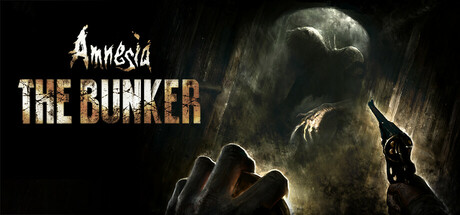
An acclaimed, terrifyingly immersive horror masterpiece with smart monster AI and strong replayability through randomization, though its short length and shallow story disappoint.
What players like
Acclaimed Horror Masterpiece: Many reviewers consider this game one of the best horror games ever made, praising its execution and impact. It stands out as a standout title in the horror genre.
Intelligent and Scary Monster AI: The monster's AI is highly praised for being intelligent, unpredictable, and reacting to noise, creating a terrifying stalker experience. This AI behavior is a core element of the game's fear factor.
High Replayability: The game offers strong replay value through randomization of items and codes, multiple solutions to problems, and varied playthroughs. This keeps the experience fresh and engaging.
Terrifying Horror Experience: Many players find the game genuinely terrifying, with some calling it the scariest game they've ever played. The constant tension and fear-inducing elements are highly effective.
Outstanding Visuals and Sound: The game's visuals and sound design are consistently praised as amazing, beautiful, and top-notch. They enhance the overall horror experience.
Common complaints
Rats Are Universally Annoying: A large number of players find the rats extremely irritating, describing them as cursed, obnoxious, and a major drawback. Cluster 5 adds that the rats cause bleeding and attract the monster, making them worse than the monster itself.
Weak and Shallow Story: The story is criticized as weak, unimpressive, shallow, and lacking meaningful depth. Some find it predictable or confusing, while others say it is simple but passable.
Disappointing and Abrupt Ending: The ending is often described as disappointing, boring, subpar, abrupt, and unsatisfying. Some call it tasteless and bland.
Monster More Annoying Than Scary: The monster and rats become more irritating than frightening, especially later in the game. The monster loses its scare factor and only annoys the player.
Not Scary Enough: Several players find the game not scary, less scary than the first Amnesia, and with a horror component that disappears after the beginning.
Gameplay and performance
Single stalking enemy: A single unkillable monster pursues the player throughout the game. This creature stalks the player and can be hidden from, similar to the alien in Alien: Isolation.
Survival horror resource management: The game is a survival horror with limited resources, emphasizing resource management and oppressive survival conditions. It is set in a claustrophobic environment where players must carefully manage supplies.
Randomized playthrough elements: Each playthrough features randomized elements such as item placement and codes, making every run different. This randomization adds replayability and unpredictability.
World War I setting: The game is set during World War I, specifically in a French-German conflict era. The historical backdrop adds to the horror atmosphere.
Bunker environment: The game takes place in a large, maze-like bunker with claustrophobic environments. Players must explore and navigate this confined space while avoiding threats.
Inconsistent optimization: Optimization quality varies widely: some praise the game as well-optimized and smooth, while others report poor performance and need for tweaks. This inconsistency suggests hardware-specific issues.
Performance issues cause unplayability: Many users report severe performance problems, including low FPS, lag, and stuttering, which make the game unplayable. This is a widespread issue across different hardware configurations.
Frequent crashes and freezes: Players experience regular crashes during startup, mid-game, and loading, as well as frequent freezes. These issues disrupt gameplay and require restarts.
Long loading times: Loading times are excessively long even on SSDs, and launching the game from desktop can be slow. This affects overall user experience.
Stuttering and slowdowns: Occasional stutters occur, especially when grabbing objects, and the game often slows down on powerful PCs. These interruptions harm immersion.
Recommendations
Strongly recommend playing: A large number of reviewers give a strong recommendation to play the game, using phrases like 'highly recommend', 'definitely recommend', and 'can't recommend it enough'. They encourage everyone to give it a shot.
Highly recommended for horror fans: Many reviewers strongly recommend the game specifically to horror enthusiasts, including both general horror fans and survival horror fans. It is described as a must-play for anyone seeking a true horror experience.
Worth the price: Multiple reviewers consider the game worth its cost, with comments like 'worth the money' and 'completely worth what I paid for it'. Others suggest buying during a sale for even better value.
Recommended to play on hard difficulty: Several reviewers suggest playing on Hard difficulty for the first playthrough or for replays, as it enhances the horror experience. Some also mention the Shell Shock mode as a harder challenge.
Best played with headphones in dark: Many reviewers highly recommend playing with headphones in a dark room, alone, and at night for the best atmospheric horror experience. This immersive setup is considered essential by some.
Buying context
Community fair range: $10.00 - $20.00.
Game completion: 5.5h.
Story completion: 5.0h.
Endgame: 30.0h.
For many players, Amnesia: The Bunker starts with intense fear and friction but clicks after the first 1-2 hours once they learn the monster's behavior, master the layout, and unlock better tools. Some reports conflict, describing the horror wearing off into repetition or, for others, never clicking at all.
Reported time to anchor: 1h 30m.
Friction: Initial paralyzing fear makes players reluctant to leave the safe room.; Early monster presence feels overbearing, annoying, or unpredictable.; Repetitive dark concrete corridors and backtracking.; Unclear puzzle objectives or where to go next.; Limited save system can lose significant progress.; Tedious mechanics such as flashlight cranking, forced specific approaches, and long hiding sequences..
Player profiles
Survival Horror Stalker Veteran: Hard-mode stealth, resource conservation, and open-ended experimentation with tools to avoid or distract the monster. Motivation: To feel intense, immersive stalker horror while using survival resource management and systemic problem solving. Stance: buy.
Frictional/Amnesia Lore Devotee: Slow, immersive exploration with puzzle solving, lore reading, and balanced difficulty. Motivation: To continue the Frictional and Amnesia legacy, absorb lore, and solve puzzles at their own pace. Stance: buy.
First-Time Horror/Amnesia Newcomer: Cautious, immersive play while learning the game's systems and surviving on normal difficulty. Motivation: To have a memorable first horror or Amnesia experience and get genuinely scared. Stance: buy.
Platform notes
Performance reports vary sharply by hardware cohort: low-VRAM Windows systems are dominated by stutters, crashes, and optimization complaints, while mid- and high-VRAM cohorts show either smooth high-FPS play or significant frame-rate and configuration issues.
Windows <8GB VRAM / <16GB RAM: negative. Most included reports are not recommended, citing low or unstable FPS on low-VRAM and low-RAM systems, though one user still finds it decent at mid-range FPS.
Windows <8GB VRAM / 16-31GB RAM: negative. The cohort is dominated by severe optimization complaints, sudden FPS drops to very low levels, stutters, and crashes, despite one user reporting stable 80-120 FPS on a GTX 1060.
Windows 8-11GB VRAM: mixed. Positive reports describe good performance on low-end hardware and only minor save-point FPS issues, but negative reports cite poor optimization, low FPS, and serious configuration problems.
Steam Deck: The Steam Deck feedback is mixed. Positive reports describe the game as well optimized, visually strong, and capable of stable 60 FPS on Deck, with some users completing it on the platform. However, one user reports frequent crashes at launch and mid-game, and another reports dips below 30 FPS despite Verified status. No evidence was found for small text, external launchers, or battery drain. Many other reviews focus on in-game puzzle and tool friction rather than Deck-specific issues.
Linux and Proton: Review evidence is overwhelmingly positive for Steam Deck and Linux compatibility: multiple users report the game runs well, is playable, or achieves stable 60 fps on Steam Deck/ROG Ally. One isolated review notes sub-30 fps dips on Steam Deck despite Verified status, but there are no reports of Proton, anti-cheat, DRM, launcher, or launch blockers tied to Linux. Overall Linux/Proton friction is minimal.
Extra review signals
External guides: The feedback centers on unclear puzzle and progression design that pushes players toward external guides and walkthroughs. There is no evidence of farming, drop-rate, loot-table, inventory-management, or crafting-planning dependency. The primary Wiki Tax is therefore instructional: users need outside help to learn systems, solve puzzles, unlock content, and avoid spoilers.
Other review notes
Short game length criticized: Players frequently note that the game is short, typically lasting around 5 hours, with some completing it in a single day. This brevity is a common point of contention.
Compared to Alien Isolation: The game is often compared to Alien: Isolation, particularly regarding its stalker AI and horror atmosphere. Many find similarities in the creature's behavior and the sense of terror.
Compared to other Amnesia games: Reviewers frequently compare this title to previous Amnesia games, especially The Dark Descent, discussing whether it lives up to the series' legacy. Some see it as a worthy successor.
Comparisons to Resident Evil and Penumbra: The game is also compared to Resident Evil and Penumbra series, highlighting its survival horror elements and monster design. These comparisons often focus on the scare factor and gameplay mechanics.
Developed by Frictional Games: The game is developed by Frictional Games, and some consider it one of their best works, even comparing it favorably to Soma. It is seen as a love letter to survival horror.