- Fun strategic tactical combat
- Great roguelike qualities
- Atmospheric visuals and music
- Inferior to Darkest Dungeon
- Repetitive gameplay loop
- Lacks content and variety
Emotions
Archetypes
What players like:
Common complaints:
Gameplay feedback:
Performance notes:
Recommendations:
Other player notes:
Similar games
Blend with other games





Review evidence
Why players say this
Review evidence
Why players say this
Steam review verdict
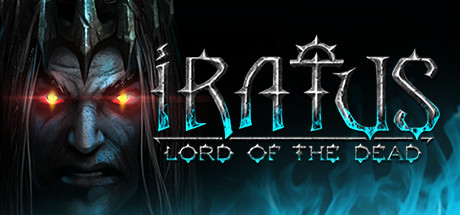
Offers fun strategic combat and roguelike depth with atmospheric visuals, though it trails Darkest Dungeon and suffers from repetitive loops and limited content.
What players like
More casual than Darkest Dungeon: Players repeatedly note the game is less punishing, faster, and more accessible than Darkest Dungeon. It reduces micromanagement and grinding while remaining engaging, making it a preferred alternative for many.
Fun gameplay overall: Multiple reviewers describe the core gameplay as fun, engaging, and addictive. The game is consistently praised for being enjoyable to play across various sessions.
Great roguelike qualities: The game is considered a strong roguelike with engaging mechanics and plenty of replay value. Its strategic elements and variety keep players invested across multiple runs.
Interesting villain premise: The unique concept of playing as a villain, specifically a necromancer raising undead, is highlighted as a fun and novel experience. This role reversal adds distinct appeal to the game.
Strategic and tactical combat: Combat is praised for being deeply tactical with meaningful choices and good unit variety. The balance is well-executed, offering a challenging but fair experience.
Common complaints
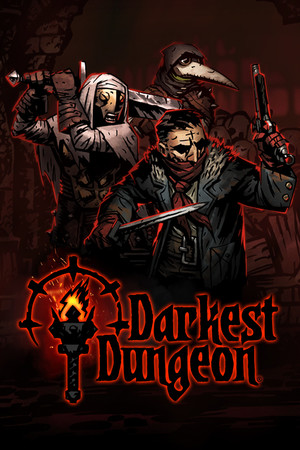
Inferior to Darkest Dungeon: Cluster 1 feedback (27 instances) consistently states that the game is less deep, atmospheric, immersive, and polished than Darkest Dungeon. It lacks comparable system design, town management, and narrator, making it feel like a weaker clone.
Repetitive gameplay loop: Cluster 2 (17) and Cluster 37 (2) both indicate that combat and gameplay become repetitive quickly, with little variation after the first hours. The game becomes tedious once builds are established, and floors are long, leading to monotony.
Balancing issues and difficulty spikes: Multiple clusters (4, 9, 26, 27, 33, 42, 43) report unbalanced difficulty, with sharp spikes, artificial difficulty, and poorly tuned hard modes. The game is either too easy or too frustrating, lacking a smooth progression curve.
Lack of content and variety: Clusters 11 (3), 25 (2), 40 (2), and 41 (2) together indicate a shortage of unique enemies, minions, levels, and useful skills. The game lacks depth and variety to sustain interest.
Game too short: Cluster 3 (6) and Cluster 28 (2) agree that the game has a short playthrough with limited content, even with DLC, and that it feels too long for what it offers. This leads to low replay value.
Gameplay and performance
Darkest Dungeon influence: Many reviews compare the game to Darkest Dungeon, noting similarities in mechanics, atmosphere, and structure. Some call it a clone or a 'reverse Darkest Dungeon' where the player is the horror.
Play as villain: Players assume the role of the villain, typically a necromancer leading undead forces against human enemies. This role-reversal is a key differentiator from similar titles.
Turn-based combat: The core gameplay is turn-based, with many reviews specifying tactical 4v4 battles featuring an initiative line. This tactical structure is widely praised.
Minion building and management: A core mechanic involves collecting materials from fallen enemies to craft and upgrade minions. Managing minion composition and abilities is crucial, with permanent death adding stakes.
Multiple difficulty settings: The game offers several difficulty levels, from easy to 'super difficult,' with some settings including sub-levels. This allows players to tailor the challenge to their preference.
Game runs stably and smoothly: Multiple reviewers report stable performance with no crashes or bugs, even on modest hardware. The game works well on various systems including low-end PCs and integrated graphics.
Crashes on save loading: Several players experience crashes when loading save files, with issues reproduced across multiple devices. This includes crashes on SSDs and complete system restarts, causing lost progress.
System crashes and restart issues: The game can cause the entire PC to restart or blue screen, potentially risking hardware damage. These severe stability problems are mentioned by multiple users and are not warned about on the store page.
Possible SSD-specific bugs: Some players encounter bugs specifically when running the game on SSDs, with issues reproducible on multiple drives and unresolved for years.
Works on Linux and older hardware: Positive reports highlight the game's compatibility with GNU/Linux and older Intel processors, including Ubuntu 18.04 and Intel HD Graphics 4400.
Recommendations
Recommended for Darkest Dungeon fans: Many reviewers recommend this game specifically to fans of Darkest Dungeon, citing its similar positional mechanics and overall feel. It is often described as a spiritual successor or sister game.
Buy on sale, not full price: Many reviewers advise waiting for a discount before purchasing, as the game may not justify its full price. Some suggest getting it at 50% off or more, while others enjoy it at a 90% discount.
Great for tactical turn-based fans: Reviewers highlight the game's tactical turn-based combat and base management as major draws. It is highly recommended for fans of this genre, including those who enjoy roguelite elements.
Strong overall recommendation: A large number of reviewers strongly recommend the game, praising its addictive nature and rewarding strategy. Several give it a perfect score or recommend it without hesitation.
Recommended for genre fans: Some reviewers recommend the game to fans of the genre without specifying further, indicating broad appeal within a certain gaming community.
Buying context
Community fair range: $3.00 - $10.00.
Game completion: 77.4h.
Story completion: 10.5h.
The game starts with a slow, repetitive slog dominated by boring starting units and tedious unlocking, but players report it becomes enjoyable after they unlock better troops and push through early difficulty levels.
Friction: Boring starting minions; Required slow grind on easy mode to unlock better troops; First few runs are repetitive and tedious; Slow overall progression; Punishing early game on normal difficulty; Tedious character unlock and re-leveling system.
Unlock drivers: Unlocking better minions and abilities; Completing the first two difficulty levels; Gaining a feel for the game and learning to optimize resources; Playing on 'Good Always Wins' difficulty for the right challenge; Treating easy mode as an extended tutorial; Understanding the learning curve and progression paths.
Player profiles
Completionist Achievement Hunter: Systematic grinding, multiple playthroughs across difficulties, chasing kill counters and achievement milestones. Motivation: Achieving 100% completion, unlocking every achievement, and perfecting all content. Stance: sale.
Darkest Dungeon Veteran: Compares mechanics between games, adapts to role reversal (playing as villain), uses stress/kill tactics, values less punishing but engaging difficulty. Motivation: Experiencing a familiar but reimagined take on Darkest Dungeon's formula, with adjusted difficulty and new strategic angles. Stance: sale.
Build Theorycrafter: Experimenting with unit combinations, equipment loadouts, and skill synergies; sharing and refining strategies for various difficulties. Motivation: Mastering combat through deep unit customization, discovering optimal lineups, and testing creative synergies. Stance: buy.
Platform notes
Steam Deck: Based on the provided reviews, the game shows promising native Linux performance, but a critical stability issue with loading data causes crashes, which could significantly hinder the Steam Deck experience. The lack of gamepad-optimized controls may also pose a tinkering barrier, although no explicit mention was found in the dataset.
Extra review signals
Monetization: The reviews indicate that the base game is cheap and fun, but the true ending is locked behind a paid DLC, which some players consider a cash grab. No evidence of real-money microtransactions, loot boxes, pay-to-win mechanics, or currency obfuscation exists. Complaints focus on the requirement to buy DLC for full narrative resolution and on overall price-to-content value, which are base-price and traditional DLC concerns.
Other review notes
Frequent Darkest Dungeon comparisons: Many reviews compare the game to Darkest Dungeon, noting similarities in premise, gameplay, and systems, with some calling it an homage or clone and others highlighting differences. This comparison is the most common topic across clusters.
Mixed quality versus Darkest Dungeon: Some reviewers find the game superior, citing less RNG and a more rewarding experience, while others consider it inferior, noting a lack of complexity, atmosphere, or polish. This split opinion is significant for potential buyers.
Multiple difficulty levels: The game has various difficulty settings, with some reviewers playing on easy and finding it accessible, while others note it is not more challenging than Darkest Dungeon's hardest settings.
Lack of mod support noted: Some reviewers are disappointed by the lack of mod support, which is a significant drawback for them, especially compared to Darkest Dungeon's workshop.
DLC adds meaningful content: The DLC, such as 'Wrath of the Necromancer', adds new units and content, and is available as a bundle. Some reviewers note the true ending is locked behind DLC, which may be a point of contention.