- Improvement over original game
- Highly enjoyable and great game
- Fun combos and builds
- Inferior to predecessor
- Overall balance poor
- Difficulty tuning inconsistent
Emotions
Archetypes
What players like:
Common complaints:
Gameplay feedback:
Performance notes:
Recommendations:
Other player notes:
Similar games
Blend with other games




Review evidence
Why players say this
Review evidence
Why players say this
Steam review verdict
An enjoyable upgrade with fun combos and builds, though it falls short of its predecessor due to poor balance and inconsistent difficulty tuning.
What players like
Improvement over original game: Several reviews note that the game surpasses its predecessor in various aspects, with some calling it a significant or big improvement. This suggests the developers successfully built upon the original title.
Highly enjoyable and great game: Multiple players expressed strong overall satisfaction, using words like 'great' and 'enjoyed' frequently. The feedback indicates a widely positive reception.
Fun combos and builds: Players highlight the combination system as a key source of fun, offering room for creativity and experimentation. The variety of builds enhances gameplay depth.
Strong replay value: Multiple mentions of randomized encounters, modifiers, and unlockables indicate that the game encourages repeated playthroughs. The variety in gameplay experiences keeps it fresh.
Lots of additional content: Many reviews mention the abundance of content, implying that players get substantial value for their time and money.
Common complaints
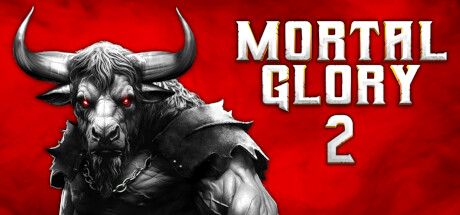
Inferior to predecessor: Many reviewers believe the sequel lost the magic and tactical depth of the original Mortal Glory, feeling more like a patch or regression rather than a true successor. Elements like the branched map, reduced meta-progression, and lack of campaign structure are cited as downgrades.
Overall balance poor: A significant number of players feel the game is highly unbalanced, with issues ranging from difficulty spikes to unfair RNG and overpowered enemies. Specific examples include one-shot kills and enemy advantages on higher difficulties, making the experience frustrating and inconsistent.
Difficulty tuning inconsistent: Players report that difficulty scaling is erratic: normal mode can be too easy, while higher difficulties feel unfairly hard or RNG-dependent. The lack of counter-play on advanced settings is a recurring frustration.
Replayability limited: Shallow artifact pools, few effective archetypes, and minimal character variety reduce the incentive to replay. Players also note that many abilities are incremental or useless, making builds feel samey after a few runs.
Progression feels pointless: Unlock systems are slow, gear upgrades become irrelevant, and later purchases don't improve the experience. Many feel the growth curve is broken because early advantages are unaffordable, while late-game items are useless except for selling.
Gameplay and performance
Turn-based tactical roguelike: The game is consistently described as a turn-based tactical roguelike, merging roguelike progression with tactical RPG combat. This genre blend is the core identity across multiple clusters.
Multiple difficulty settings: There are various difficulty levels, including harder options and modifiers. Players note that enemy AI becomes more intelligent at higher difficulties, suggesting a scalable challenge.
Slay the Spire comparisons: Players draw direct comparisons to Slay the Spire, noting similarities in the map, route system, and overall gameplay loop. This suggests the game follows a familiar structure that appeals to fans of that title.
Strategic and tactical depth: The gameplay emphasizes strategic depth and tactical decisions, often in grid-based battles where positioning and timing are crucial. This indicates a combat system that rewards planning and careful execution.
Critical hits and bosses: The game features critical damage and includes playable characters and enemies, with bosses present. This adds classic RPG elements that enhance combat depth.
No issues running game: Players report a smooth experience with no technical problems such as crashes or performance hitches.
No obvious bugs encountered: The game appears stable with no noticeable glitches or errors affecting gameplay.
Recommendations
Highly recommended for genre fans: Many reviewers strongly recommend the game to fans of roguelikes and tactical RPGs, noting it is a must-buy for those who enjoy both genres. The game is praised for its strategic depth and replayability.
Better value than first game: Some reviewers prefer this game over the first, suggesting it is the definitive version of Mortal Glory. They recommend it to fans of the series and note that it improves upon the original.
Worth buying at full price: Several reviewers state that the game is worth its full price, citing its content and replayability. Some even call it an instant buy and say you cannot go wrong with the purchase.
Recommended despite modest presentation: The game is recommended even with modest graphics, as the gameplay more than compensates. It is seen as an interesting game that is worth supporting despite its visual limitations.
Great for fans of first game: If you enjoyed the first Mortal Glory, this game is worth supporting. Returning players are recommended to also play the first game if they haven't, and no prior experience is required.
Buying context
Community fair range: $10.00 - $15.00.
Game completion: 22.5h.
Story completion: 3.0h.
The game is generally fun early, thanks to an addictive loop and solid tactical foundations, but pacing issues and repetitive builds cause enjoyment to fade after several hours or runs.
Friction: Early game is slow and boring; RNG reliance and few skill synergies; Tedious fight stages in mid-game; Pacing issues that hinder full enjoyment; Boring spells and map design.
Player profiles
Veteran Roguelike Strategist: Strategic, build experimentation, comparing mechanics to genre touchpoints. Motivation: Finding a fresh tactical roguelike with deep build synergy and genre innovation. Stance: buy.
Casual Newcomer: Casual, exploratory, not hyper-optimized, enjoying build variety and replayability. Motivation: An approachable and fun tactical roguelike with room to experiment. Stance: buy.
Disappointed Franchise Veteran: Comparative, nostalgic, evaluating against the predecessor's mechanics and content. Motivation: Seeking a worthy sequel to the original, but finding it underwhelming. Stance: deep sale.
Other review notes
Similar to Slay the Spire: The game is frequently compared to Slay the Spire, especially regarding map design, route selection, and progression UI. Some reviewers note it is structured almost exactly like Slay the Spire.
DLC and expansions enhance replayability: The game has several DLCs and expansions, including the Reign of Tyrants, which adds playable boss characters and is considered a game changer. DLC significantly boosts replayability compared to the original.
Compared to various strategy games: The game draws favorable comparisons to roguelites like FTL, Slay the Spire, and Monster Train, as well as tactical games like Into the Breach and Baldur's Gate 3.
Good value for money: Players find the game inexpensive and offering good value for its price. Some say it is worth more than its default asking price.
Content depth and length: Typical runs take about 2 hours, but many unlockables extend the length significantly. Some achievements may take hundreds of hours, and the game provides at least 20 hours of fun.