- Distinct and varied classes
- Top-tier roguelike experience
- Smooth and responsive gameplay
- Excessive grinding required
- Repetitive and tiring gameplay
- True ending requires grind
Emotions
Archetypes
What players like:
Common complaints:
Gameplay feedback:
Performance notes:
Recommendations:
Other player notes:
Similar games
Blend with other games




Review evidence
Why players say this
Review evidence
Why players say this
Steam review verdict
A top-tier roguelike with varied classes and smooth responsive gameplay, but excessive grinding and repetitive pacing make the true ending a tedious chore.
What players like
Overwhelmingly positive overall reception: The vast majority of reviewers describe the game as good, fun, well-polished, and one of the best in its genre. The feedback is consistently enthusiastic with no notable negative themes.
Distinct and varied classes: The game features many classes, each with unique weapons, abilities, and playstyles that significantly change how the game is played. This distinctiveness is a major source of praise.
Top-tier roguelike: Many reviewers consider it one of the best roguelikes or roguelites available, with some calling it a masterpiece of the genre. It is frequently described as a top contender in its category.
Smooth and responsive gameplay: The gameplay is frequently described as smooth, fluid, and gratifying, with excellent basic game feel and responsive controls. This contributes to an overall enjoyable experience.
Pleasant graphics and art style: Reviewers appreciate the pleasant graphics, smooth animations, and nice ambiance. The visual presentation is often highlighted as a strong point.
Common complaints
Excessive grinding required: Multiple reviewers complain that the game is very grindy and forces excessive grinding. This is a central issue that detracts from the overall experience.
Repetitive and tiring gameplay: The game requires a lot of repeated play, which can feel very tiring and is not suitable for everyone. Some find it boring and tedious.
True ending requires grind: Getting the true ending requires grinding through multiple playthroughs, which is tedious. The NG+7 requirement adds an absurd amount of playtime.
High difficulty level: The game is described as quite difficult, with difficulty being harder than expected and excessively high. Players find it challenging.
Upgrade costs too high: Upgrades get progressively more expensive while gold gain is woefully small, leading to excessive grinding for gold. This is especially problematic for class upgrades.
Gameplay and performance
Metroidvania and Roguelike Blend: Many reviews describe the game as a blend of Metroidvania and roguelike/roguelite genres. The nonlinear exploration and platforming are highlighted alongside procedural elements.
Grinding and Progression Systems: Grinding is a core part of the game, especially for gold to purchase stat upgrades and castle improvements. Progression systems include leveling, skill upgrades, and meta-progression.
Extensive New Game Plus: Players note that New Game Plus mode goes up to NG+7, with NG+ cycles that introduce new challenges, enemies, and bosses. Some even mention NG+ up to 100.
Multiple Classes with Unique Weapons: The game features around 20 distinct classes, each with unique initial weapons and abilities. Classes provide different playstyles and gameplay variety.
2D Platformer with Tight Controls: The game is frequently described as a 2D platformer with precise movement and challenging mechanics. It combines side-scrolling action with roguelite elements.
Excellent optimization on various devices: Reviewers praise the optimization on multiple platforms including Odin 2 Portal, M4 Mac, PlayStation, and PC. The game is described as running smoothly and with rock-solid performance.
Low system requirements: Multiple reviewers report that the game runs smoothly on low-end PCs, laptops, and even minimum specs like 8GB RAM and a GTX 680. This accessibility is highlighted as a positive for players with older hardware.
Steam Deck compatibility confirmed: Users report that the game works perfectly on Steam Deck, indicating good compatibility with the handheld platform.
Aiming issue for ranged classes: For ranged classes, the aiming analog stick is interfered with by aim expansion, causing excessive screen movement when adjusting aim at enemies. This affects gameplay precision.
Frequent crashes reported: One user experiences crashes almost daily, requiring ctrl+alt+del to resolve. This indicates a stability issue for some players.
Recommendations
Recommended for Roguelike Fans: Many reviewers recommend the game to fans of roguelikes and roguelites. This is a common theme across multiple clusters, indicating broad appeal to the genre's enthusiasts.
Great for Platformer Fans: The game is recommended for fans of platformers, especially those who also enjoy roguelikes. Its platforming elements are a key draw.
Fans of First Game Will Enjoy: Reviewers who liked the first game in the series highly recommend this sequel. It is seen as a worthy follow-up that builds on the original's strengths.
Highly Recommended Overall: Many reviewers give a strong, unconditional recommendation. Phrases like 'fully recommend' and 'strongly recommended' are common.
Appeals to Metroidvania Lovers: Reviewers often recommend the game to those who enjoy metroidvania and roguelite hybrids. The combination of exploration and challenging combat is frequently praised.
Buying context
Community fair range: $7.00 - $13.00.
Game completion: 30.0h.
Session length: 0.3h.
Endgame: 111.0h.
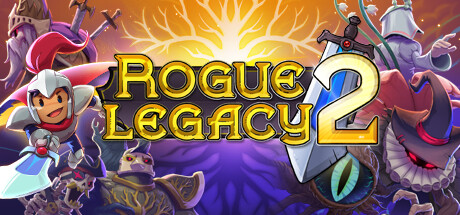
Many players find Rogue Legacy 2 immediately addictive, but the fun often fades once the meta-progression grind and repetitive upgrades dominate, with one report marking the shift after about ten hours. A conflicting strand says the game opens up after the first clear and NG+.
Friction: Massive meta-progression grind; Trivial stat upgrades and poor upgrade scaling; Difficulty scaling outpaces player power; Repetitive procedural level layouts after a few hours; Slow gold earning before higher threads; Base difficulty makes progress tedious without high platforming skill.
Unlock drivers: House Rules can adjust difficulty and progression without penalties; The Skeleton Key improves Fairy Chest progression; Armor and Mastery systems provide steady stat increases; Higher threads yield faster gold; First clear and NG+ open up the game; Overall changes make the early game more approachable and ease power progression.
Player profiles
Roguelite Metroidvania Enthusiast: Switches classes, relics, and traits frequently across runs to explore varied playstyles. Motivation: Fluid combat, class variety, and progression that rewards experimenting with different builds. Stance: buy.
Accessibility-Seeking Casual: Uses House Rules and lowered difficulty, avoids optional grind, and plays at a patient pace. Motivation: To experience the game's content without being blocked by high skill demands or heavy grinding. Stance: buy.
Franchise Veteran: Approaches the game through the lens of the first title, comparing systems and engaging with long-term progression. Motivation: To see how the sequel builds on and reworks the original's death-growth and class systems. Stance: buy.
Platform notes
Steam Deck: The filtered reviews present a strongly positive Steam Deck picture. Users report rock-solid performance, native Linux support, and excellent full-release Deck compatibility. Controller support is praised, with only a minor input caveat tied to aging analog stick hardware. Low PC resource demands further support battery-friendly play. No evidence appears for external launchers, Proton tweaks, small text, anti-cheat errors, battery drain, or crashes.
Linux and Proton: The limited user feedback is uniformly positive regarding Linux and Steam Deck compatibility. Reviewers highlight a native Linux port and rock-solid performance on Steam Deck, with no mentions of Proton tweaks, launch failures, anti-cheat issues, or graphical glitches. This supports a low-friction Linux/Proton experience.
Other review notes
Improves on original in every way: Many reviewers consider this game a vast improvement over the first Rogue Legacy, with refined controls, more content, and enhanced mechanics. It is often described as a perfect version of the original.
Sequel to Rogue Legacy: The game is a direct sequel to the original Rogue Legacy, continuing its premise and expanding upon it. It retains the core spirit while adding new features.
Similar to Dead Cells: Reviewers frequently compare this game to Dead Cells, noting similarities in map design and combat. Some mention it motivates them to play Dead Cells.
Works great on Steam Deck: Multiple players report that the game runs phenomenally well on the Steam Deck. It is described as a delicious game to play on the handheld.
Compared to Hollow Knight and Silksong: Some reviewers compare the combat and movement to Hollow Knight and Silksong, with mixed opinions on smoothness and tightness. The downward slash and lunges are specifically mentioned.