- Fluid controls and core gameplay experience.
- Highly polished, overall enjoyable experience.
- Exemplary Metroidvania genre design.
- Lacks predecessor's depth and overall challenge.
- Extensive abilities and character upgrade systems.
- Broken, grindy game economy reported.
Emotions
What players like:
Common complaints:
Gameplay feedback:
Performance notes:
Recommendations:
Other player notes:
Similar games
Blend with other games


Review evidence
Why players say this
Review evidence
Why players say this
What players like
Fluid controls and core gameplay: The game receives strong praise for its incredibly smooth and fun controls, particularly in platforming and combat. Players enjoy the responsive movement options, engaging action system, and well-balanced optional challenges, making exploration and progression highly satisfying.
Highly polished, enjoyable experience: Players consistently praise the game for its exceptional polish, fluid gameplay, and overall engaging experience. This leads to a high level of enjoyment and satisfaction, with many describing it as one of the best games they've played recently.
Exemplary Metroidvania design: The game is lauded as an outstanding Metroidvania, often cited as a top-tier title in the genre. Players specifically highlight its successful homage to classic Castlevania games, including satisfying 8-directional whip combat and well-defined genre vibes.
Major sequel improvements: Reviewers widely agree that the sequel represents a substantial upgrade over the first game in almost every aspect. This includes improved game design, polish, pacing, boss fights, and map layout, making it a much better and more thoughtful experience.
Enhanced visual charm and world: The game's art style is significantly praised as an improvement, with a polished, charming, and aesthetically pleasing look. The world itself feels more thought-out, lively, and refined, contributing to an immersive experience.
Common complaints
Lacks predecessor's depth/challenge.: Many players found the game disappointing compared to its predecessor, citing a general lack of unique identity, diluted platforming challenges, and less intriguing world atmosphere. It's perceived as an average Metroidvania rather than a distinct, challenging experience.
Broken, grindy game economy.: The game's economy is widely criticized for being unfair, especially on hard mode where currency is permanently lost upon death. Players report excessive grinding is required for basic features like save points, teleportation, and merchant items, making money sinks constant and frustrating.
Performance problems and game crashes.: The game suffers from various technical issues, including framerate drops in busy or later areas, general choppiness, and performance problems on Steam Deck. Crucially, a specific game-crashing bug after a boss fight and stat upgrade was reported, highlighting stability concerns.
Tedious, uninspired level design.: Many areas are described as boring, straight corridors with minimal enemies, lacking engaging design. The prevalence of dead-end paths, particularly in early areas, makes exploration tedious and frustrating, potentially causing players to abandon the game.
Unfair, prolonged boss encounters.: Bosses, particularly on hard mode, are often perceived as damage sponges with excessive HP, leading to overly long and tedious fights. Some boss designs are also criticized for relying on a power attack that can be easily missed during progression, further increasing difficulty unfairly.
Gameplay and performance
Extensive abilities and upgrade systems: The game offers a wide array of sub-weapons, approximately 20 spells, and numerous equipables like relics and tools. Players can unlock complex techniques, power attacks through sidequests, and utilize mana for equipment, healing (easily missed), and recharging sub-skills by hitting monsters.
Adjustable optional platforming challenges: The game features significant, often optional, platforming challenges like 'Ladybug Rooms' and 'Astral Gates'. These challenges are not required for main game progression but offer rewards, and their difficulty can be adjusted via accessibility settings. Platforming is noted as easier than a previous installment.
Castlevania-inspired whip combat: The core combat revolves around an 8-directional whip, reminiscent of classic Castlevania titles like Simon Belmont's mechanics. While initially challenging, players adapt quickly, utilizing various whips and equipment within a new combat system.
Costly, optional fast travel: Fast travel is available from the start, but enabling save points for teleportation often requires spending in-game currency. Players are warned that activating optional portals might increase difficulty, yet save points are conveniently located near bosses.
Varied death and economy impacts: The game features an active currency system and shops from the beginning. On Hard Mode, dying results in a permanent loss of a percentage of currency, while on normal mode, players report no loss on death. Accessibility options are available to ease economic challenges.
Excellent Linux performance: Players report that the game runs smoothly and stably on Linux operating systems. This indicates good optimization and compatibility for a non-Windows platform.
Recommendations
Overwhelmingly Recommended Game: Players enthusiastically praise the game as a solid, S-tier experience, often calling it a 10/10 and fully worth its price. It's consistently highlighted as a top-tier title that reviewers fell in love with and highly recommend.
Accessible to Broad Audience: The game is noted for its less intense difficulty, making it appealing to a broader audience, including casual players and newcomers to the genre. Some reviewers suggest it's a good starting point even for those who haven't played the first game or struggled with it previously.
Other review notes
Positive early impressions: Many players expressed high anticipation for the game's release, with initial impressions being largely positive. Reviewers are looking forward to playing more and have given good early ratings.
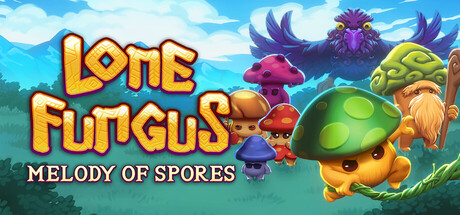
Prequel, new player friendly: The game is a prequel to 'Lone Fungus', appealing to fans of the original. Importantly, new players do not need prior experience with the first game to enjoy or understand this title.
Optional grind items: A key design choice is that most grind-requiring items are purely optional. This allows players to choose whether to engage in extra grinding or focus on the main progression.
Adjusted item costs: Initially, some in-game costs, such as upgrading save points for teleportation, were considered expensive. However, these costs have since been reduced through a post-launch patch.
Solo developer achievement: The game was developed by a single talented individual, which is seen as an impressive feat given the game's scope and quality.