- Improves upon the original game
- Stunning art style and visuals
- Excellent combat and controls
- Enemies deal double damage
- Steep and unforgiving difficulty
- Annoying design over fair challenge
Emotions
Archetypes
Hardware
What players like:
Common complaints:
Gameplay feedback:
Performance notes:
Recommendations:
Other player notes:
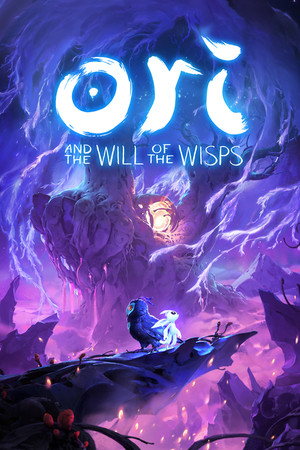
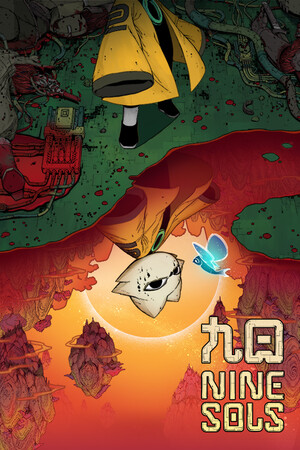
Similar games
Blend with other games





Review evidence
Why players say this
Review evidence
Why players say this
Steam review verdict
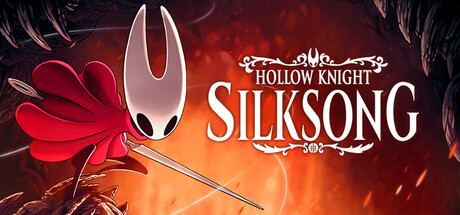
It improves on the original with stunning art and excellent combat, but doubled enemy damage and an unforgiving, often unfair difficulty make its challenge more annoying than rewarding.
What players like
Improves upon the original: The game is seen as a superior sequel that surpasses the first Hollow Knight in nearly every aspect, including gameplay, visuals, story, and atmosphere.
Highly praised overall game: Reviewers overwhelmingly describe the game as a masterpiece, fun, beautiful, and worth the price. Many consider it one of the best games ever made.
Stunning art style and visuals: The art design, backgrounds, and animations are consistently praised as beautiful, detailed, and top-notch, contributing to an immersive world.
Excellent combat and controls: Combat is fast-paced, satisfying, and responsive, with Hornet's movement and moveset offering a distinct and enjoyable experience.
Exceptional soundtrack and music: The soundtrack and music are frequently called incredible, phenomenal, and haunting, enhancing the atmosphere. Specific tracks like Karmelita, Lost Lace, and Choral Chambers are highlighted.
Common complaints
Enemies deal double damage: Many enemies and bosses deal two masks of damage, often from the start when players only have five masks. This makes survival very difficult and reduces effective health.
Steep and unforgiving difficulty: The game is extremely hard with a steep learning curve, especially in the early game. Many players find the difficulty unreasonable and punishing.
Annoying design over fair challenge: The difficulty is increased through annoying design choices rather than fair challenges. Players feel the game is intended to annoy rather than provide a satisfying challenge.
Bosses feel unfair and exhausting: Boss fights rely on randomness and feel designed to torment rather than challenge. Many bosses also deal two masks of damage, even when staggered.
Excessive platforming sections: The map is filled with too many platforming sections, which many players find unnecessary and obnoxious. These sections are often brutal and punishing.
Gameplay and performance
Metroidvania genre and exploration: The game is a 2D Metroidvania with ability-gated exploration, backtracking, and map filling. Many players highlight its large, ambitious world and unlockable movement abilities.
Challenging boss fights: Boss fights are a core element and are often difficult, requiring pattern learning and quick reactions. Some bosses have poorly telegraphed attacks, and many are fast and aggressive.
Platforming challenges and sections: Platforming is a major part of the game, with sections featuring hazards, enemies, and timed challenges. Players note platforming with pogo attacks, diagonal jumps, and breakable platforms.
Combat system and mechanics: Combat is a core mechanic with varied enemy attack patterns and tools. Players describe it as fast and fluid, with acrobatic movement and customization.
Higher difficulty than predecessor: The game is significantly more difficult than the first entry, with tougher platforming and combat. Newcomers may find the difficulty high, especially at the beginning.
Positive performance feedback: Several reviewers report good optimization and decent PC requirements. One notes the game runs on a 10-year-old laptop and another has no issues on a 4070 with i7 setup.
Performance drops in late game: The fourth quarry and Act 3 cause severe lag and low FPS (around 20) on some systems. This indicates optimization issues in later sections.
Controller recognition and binding issues: Xbox Series X controller is not recognized correctly and button bindings are messed up. This affects gameplay for controller users.
Glitchy boss fights in Act 3: Act 3 boss fights have glitchy movements and unintuitive hitboxes, making them frustrating.
Input delay in double jump: Significant input delay when performing a double jump makes platforming feel unresponsive.
Recommendations
Worth Buying and Playing: Numerous reviewers consider the game worth its price and a must-play experience. They highlight its value and overall quality.
Play Hollow Knight First: Many reviewers strongly advise playing the original Hollow Knight before Silksong. This is recommended to understand the story, ease the difficulty, and fully appreciate the sequel.
Not for Casual Players: Reviewers warn that the game is not suitable for casual players or beginners. It is better for seasoned players seeking a challenge.
Not Recommended by Some: A portion of reviewers do not recommend the game, citing disappointment or an overall negative experience. Some find it unenjoyable or overrated.
Too Hard and Punishing: Several reviewers criticize the game's harsh and unfair difficulty. They feel it is too punishing for most players.
Buying context
Community fair range: $20.00 - $40.00.
Game completion: 50.0h.
Story completion: 20.0h.
Endgame: 35.0h.
Many players describe a rough opening with limited movement, low health, scarce resources, and punishing runbacks, then report that enjoyment rises once upgrades accumulate and exploration opens up. Reports are mixed, with some players never clicking or souring later, but the clearest progression evidence is early friction followed by a stronger midgame.
Reported time to anchor: 10h.
Friction: Early-game difficulty spike; Low health and frequent two-mask damage; Limited movement and combat options at the start; Scarce currency and upgrades in the early game; Long boss runbacks and gauntlet rooms; Minimal guidance and slow early pacing.
Player profiles
Hardcore Hollow Knight Veteran Completionist: Optimizes crests and tools, practices bosses, pursues 100% completion, Steel Soul, and speedrun challenges. Motivation: To master Silksong's hardest content and complete the sequel as a seasoned Hollow Knight player. Stance: buy.
Metroidvania Explorer and Lore Seeker: Explores every region, backtracks for secrets, follows side quests, and absorbs environmental storytelling. Motivation: To discover Pharloom's world, lore, secrets, and atmosphere through exploration. Stance: buy.
Cautious Genre Newcomer: Plays cautiously, relies on upgrades and guides, and may drop the game when difficulty spikes. Motivation: To enter the Metroidvania genre through a highly acclaimed but difficult sequel. Stance: sale.
Platform notes
Across the six largest hardware cohorts, performance is mostly positive, with smooth play, stable 60fps or higher, and strong optimization on low- and mid-range systems. Isolated issues include one very-low-end system reporting about 20fps, a microstutter case on an RTX 3070, and stutter on an external 4K display in the high-VRAM cohort.
Windows <8GB VRAM / <16GB RAM: positive. Most reports describe fluid, well-optimized play, including 60fps at 1080p max settings, with one user reporting about 20fps on a very weak system.
Windows <8GB VRAM / 16-31GB RAM: positive. Reports consistently describe strong optimization and smooth performance, including 60fps on weaker laptops and good Steam Deck results.
Windows 12-15GB VRAM: positive. Most users report smooth performance and good optimization, with one RTX 3070 user noting microstutter that disappeared after a GPU change.
Steam Deck: The Steam Deck audit finds a split experience: many users report stable native Linux performance and zero issues, but a meaningful subset must switch to Proton Experimental, suffers controller-input crashes, black-screen cutscenes, and progression-blocking crashes; one SteamOS handheld user could not launch past a blank start screen. No evidence of external launchers, unreadable small text, or battery-drain complaints was found. Overall friction is high due to mandatory workarounds and stability failures.
Linux and Proton: Linux feedback is predominantly positive: users repeatedly praise the native Linux build as polished, broadly compatible, and working out of the box across distributions, with additional positive reports for Steam Play/Proton performance. Linux-specific negatives are isolated: one native cutscene pacing bug leads a user to Proton Experimental, one report cites input lag on Linux, one SteamOS user is stuck at the start screen after downloading, and one user needs Proton/Steam Input for a PS5 controller. These issues qualify as minor tweaks or quirks rather than broad breakage.
Extra review signals
Monetization: Across the review set, Silksong is consistently described as a single-purchase product at roughly $20 with announced free post-launch content. No review reports a real-money shop, premium currency, loot boxes, paid gacha, boosters, or any pay-to-win advantage. The only spending described is the one-time base game purchase and a possible future expansion. Complaints are limited to difficulty and design preferences, and the single 'skins' reference is a joke about another game, which is excluded. All monetization-related evidence is either positive (cheap price, free DLC) or non-existent, so the game falls into the fair/pure band.
Mod reliance: The reviewed feedback shows community mods being recommended for difficulty relief, accessibility, map and cheat convenience, and translation polish. There is no consensus of startup crashes, launch failures, or broken quests requiring a patch. The single 'Unplayable without mods' phrase is hyperbolic and attached to a cosmetic name complaint, so it does not make the vanilla game broken.
External guides: The dominant complaint is not farming or inventory valuation but guide dependence: players repeatedly say Silksong hides critical secrets, routes, quests, and progression behind opaque mechanics that push them to wikis, walkthroughs, and interactive maps. Navigation and boss runbacks add frustration, while economy or grind remarks are secondary and do not center on drop rates or loot tables. The strict priority scan therefore lands on Tier 3.
Other review notes
Compared to Hollow Knight: Many reviewers compare the game to Hollow Knight, often favorably and sometimes unfavorably. The comparisons cover exploration, art, music, length, and gameplay. This is the most frequent topic.
Improvement over predecessor: Numerous reviewers consider the game an improvement over Hollow Knight in almost every aspect, including scope, refinement, and enjoyment. Some mention it fixes many issues from the original.
Sequel to Hollow Knight: The game is widely recognized as a direct sequel to Hollow Knight, continuing its story and lore. Reviewers note it assumes familiarity with the first game.
Anticipated DLC: Many reviewers look forward to future DLC, with Sea of Sorrow specifically mentioned. DLC is eagerly awaited and sometimes announced.
Unfavorable comparisons: Some reviewers compare the game unfavorably to Hollow Knight, citing issues with movement, boss design, progression, and overall feel. They feel it is a downgrade in several areas.