- Overwhelmingly positive overall reception
- Excellent and engaging story
- Well-written charismatic characters
- Top-tier voice acting praised
- Excessive text overwhelms players
- Gameplay feels slow and clunky
Emotions
Archetypes
Hardware
What players like:
Common complaints:
Gameplay feedback:
Performance notes:
Recommendations:
Other player notes:
Similar games
Blend with other games






Review evidence
Why players say this
Review evidence
Why players say this
Steam review verdict
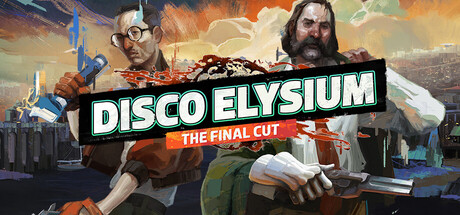
Though praised for its engaging story, charismatic characters, and top-tier voice acting, excessive text overwhelms and the slow, clunky gameplay drags it down.
What players like
Overwhelmingly positive overall reception: Reviewers consistently describe the game as excellent, incredible, or a masterpiece, often calling it one of the best games they have ever played. The enthusiasm spans gameplay, story, and presentation.
Excellent and engaging story: Players find the narrative compelling, gripping, and well written, with high-quality plotting and an intriguing storyline. The story is a central reason reviewers recommend the game.
Well-written, charismatic characters: Characters are described as lovely, eccentric, endearing, and deeply compelling, with fully fleshed-out personalities. Reviewers highlight the strong characterization as a major strength.
Top-tier voice acting praised: Voice performances are repeatedly called fantastic, phenomenal, and among the best in any game, with diverse accents and detailed delivery. This is one of the most frequently highlighted strengths.
Outstanding writing and script: The writing is praised as powerful, poetic, remarkable, and even the best in any game by some reviewers. The script quality is frequently singled out as exceptional.
Common complaints
Excessive text overwhelms players: Multiple clusters highlight the enormous amount of text (around 1.2 million words) and that it can be tedious, especially at the beginning. Players who dislike reading may struggle to enjoy the game.
Gameplay feels slow and clunky: Feedback frequently describes the gameplay as slow, clunky, and not riveting. Controls and overall game flow are criticized as far from groundbreaking.
Business controversies mentioned: The business side of the game allegedly stole it from its creators through financial machinations. The current company is accused of stealing the IP and slandering the original creators.
Original developers ousted: Most of the original developers were fired or removed from the company. The original writers who made the game worth playing were ousted from the studio.
Dice-based skill checks disliked: The 20-skill dice-based random probability checks are seen as unnecessary, with outcomes feeling predetermined rather than random. Chance-based skill checks tied to character stats are found annoying.
Gameplay and performance
Heavily text and dialogue driven: Players repeatedly note that the game is built around reading and listening to large amounts of text and dialogue, with most playtime spent consuming narrative rather than traditional gameplay. This applies to both the overall structure and moment-to-moment interaction.
Dice-based skill checks: Skill checks are resolved through D&D-style dice rolls tied to skill levels, creating success and failure outcomes that shape the story. Players describe the system as luck-based but integral to the RPG mechanics.
Choices shape narrative and world: Dialogue and quest choices directly influence the story, determine which characters survive, and affect how the investigation unfolds. Character builds also gate certain options, adding replayability.
Detective murder-mystery story: The game is framed as an isometric detective story where players gather clues over in-game days to solve a murder. It blends investigation with twists and misadventures, often presented in an interactive-cinema style.
Extensive branching dialogue trees: The game features deep, interconnected dialogue trees with multiple endings and long conversation sequences. Players can pursue different options, and dialogue choices offer significant freedom in shaping interactions.
Solid Steam Deck performance: Multiple players report the game runs well on Steam Deck at 2K resolution with medium-high settings, with comfortable controls and readable text. One specifically notes exceptionally smooth performance and the ability to increase font size for readability.
Runs on older hardware: The game runs smoothly on a five-year-old non-gaming laptop, indicating reasonable optimization for modest hardware. This contrasts with reports that powerful hardware is required.
Crash issues reported: At least one player experienced game crashes, suggesting stability problems for some users. The frequency is low but the issue is severe when it occurs.
Save anytime outside dialogue: Players appreciate the ability to save at any time when not in dialogue, which adds convenience and flexibility. This is a positive usability feature highlighted by feedback.
Font size accessibility option: Settings allow increasing font size to around 1.2 scale, improving readability on Steam Deck. This accessibility feature was specifically praised by a player.
Recommendations
Text-heavy; avoid if disliking reading: Many reviewers stress that the game involves extensive reading, so players who dislike reading should avoid it. It is recommended only for those who enjoy large amounts of text and reading for long sessions.
Everyone should play it: Many reviewers believe the game is a must-play experience for everyone at least once. It is frequently described as essential and broadly recommendable.
Do not buy; pirate instead: Multiple reviews explicitly advise against purchasing the game and suggest pirating it or obtaining it through other means. This sentiment is repeated across several clusters.
Not for action or combat seekers: The game is repeatedly described as unsuitable for players wanting action, combat, or fast dopamine. Those seeking immediate action will likely find it slow.
Highly recommended overall: Many reviewers give the game high praise, with some rating it 10/10 or 9.8/10. It is often recommended without hesitation.
Buying context
Community fair range: $20.00 - $40.00.
Game completion: 30.0h.
Story completion: 25.0h.
Session length: 1.5h.
Disco Elysium often presents a slow, text-heavy, and confusing opening that resolves into enjoyment after the first few hours, once the world, mechanics, and story hooks become clear. Some players still bounce off entirely, and others find the early strength gives way to later tedium.
Reported time to anchor: 2h.
Friction: Large volume of reading and dialogue; Slow, confusing opening with little mechanical guidance; Aimless wandering and backtracking; Skill-check and RNG progression walls; Awkward or inconsistent fast travel; Cognitive overload from dense political and philosophical dialogue.
Player profiles
Philosophical Narrative Reader: Reads carefully, explores dialogue trees, debates politics and morality, and roleplays a complex detective persona. Motivation: Intellectual and emotional immersion in deep, literary detective storytelling. Stance: buy.
Build Experimenter and Replay Completionist: Optimizes stats, clothing, and thoughts; replays with different builds; hunts achievements and hidden content. Motivation: Mastering character builds, discovering alternate outcomes, and completing achievements. Stance: buy.
Narrative-Curious Newcomer: Learns the dialogue and skill-check systems gradually, explores at a patient pace, and relies on story guidance. Motivation: Experiencing an acclaimed story without needing combat skill or deep RPG background. Stance: buy.
Platform notes
Higher-VRAM Windows and MacBook reports are mostly positive, citing stable or high FPS and good performance. Lower-VRAM Windows cohorts show more instability, especially freezes and crashes, with one cohort split between smooth FPS and freezing.
Windows <8GB VRAM / <16GB RAM: negative. Included reports describe FPS drops, crashes and visual glitches, and an unplayable loading-screen freeze, so instability dominates.
Windows <8GB VRAM / 16-31GB RAM: mixed. One report says it never drops below 60 FPS, while another says jogging causes freezes and becomes unplayable; performance evidence is split.
Windows 12-15GB VRAM: positive. Several snippets report constant or high FPS and good runtime, and the non-recommended snippets are not performance-focused.
Steam Deck: Steam Deck feedback is mixed: many users report an excellent out-of-box experience with good performance, readable text, and no Linux issues, but a meaningful minority report frequent crashes, save loss, long-session memory leaks or slowdown, small text on the Deck screen, and uncomfortable or imprecise controller input. The combination of frequent crash reports and handheld text/controller friction places the experience in the high-friction band.
Linux and Proton: Linux and Proton feedback is predominantly positive: users report clean launches and stable play with no notable setup issues. The only Linux-specific negative is an isolated report of memory leaks during very long sessions over six hours, which does not outweigh the broader evidence of good compatibility.
Extra review signals
Monetization: The reviews contain no credible evidence of in-game monetization in this title. One translated review explicitly describes a one-time purchase with no microtransactions, while the negative 'greed' comments concern publisher conduct, layoffs, and a different upcoming game. No paid gacha, loot boxes, pay-to-win mechanics, currency obfuscation, or FOMO shop is documented.
External guides: The dataset's main external-data pain is instructional: players consult wikis or walkthroughs when stuck, need clearer build/stat guidance, and struggle with dense Encyclopedia lore that often lacks context. Technical bugs and alt-tab issues are present but secondary. There is no meaningful evidence of farming, drop-rate, loot-table, inventory-management, or crafting dependency.
Other review notes
Extremely text-heavy experience: Players repeatedly note the game is almost entirely reading and listening, with around 90% of playtime spent on text and very large word counts.
Allegations of stolen IP: Several reviews claim the company stole the game from its original creators and parades as the creative force behind it.
High replayability and multiple endings: Reviewers note many outcomes across play styles, secrets left for subsequent runs, and strong replay value.
Considered a work of art: Players describe the game as art that proves video games can be true art, and as a singular experience unlikely to be replicated.
Long completion times: Reviewers report first playthroughs taking roughly 20 to 50 hours, with typical thorough runs around 30 hours.