- Standout minimalist ink-wash art style
- Beautiful and vivid character designs
- Excellent concise and well-paced writing
- Engaging wuxia detective mystery theme
- Unfinished story with abrupt cliffhanger
- Confusing interrogation and unclear deduction

Emotions
Archetypes
What players like:
Common complaints:
Gameplay feedback:
Performance notes:
Recommendations:
Other player notes:
Similar games
Blend with other games 89%Mohism: Battle of Words
 87%Kill The Shadow
 86%Your Turn To Die -Death Game By Majority-
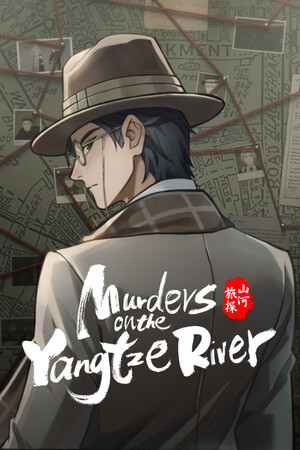 86%Murders on the Yangtze River
 85%Threefold Recital
 85%BURIED STARS
 85%Staffer Case: A Supernatural Mystery Adventure
 84%Detective Instinct: Farewell, My Beloved
 84%マーダーミステリーパラドクス このひと夏の十五年
 84%Sovereign Syndicate
 83%Let Bions Be Bygones
 83%Psycho-Sleuth
Review evidence
Why players say this
Review evidence
Why players say this
Steam review verdict
Minimalist ink-wash art, vivid characters, tight writing, and an engaging wuxia detective mystery are strengths, but the abrupt cliffhanger and confusing interrogation/deduction weaken it.
What players like
Standout Art Style: Reviewers consistently praise the game's distinctive and appealing art style, with many calling it beautiful, clean, and well-coordinated with the writing. The visuals are frequently cited as a major strength.
Beautiful Character Art: The character art and designs are widely praised as beautiful, attractive, and high quality. Reviewers find the portraits striking and the designs excellent and likable.
Vivid Distinctive Characters: Characters are frequently described as vivid, memorable, and well-rounded, with strong three-dimensionality and clear logic in their portrayal. Their personalities are distinct and leave a lasting impression.
Excellent Concise Writing: The writing is praised as excellent, concise, and powerful, conveying information without filler or pretentiousness. Reviewers find it sharp and refined, never tiring the reader.
Well-Paced Narrative: The story pacing is consistently described as smooth, well-balanced, and never boring, keeping players engaged throughout. Reviewers appreciate the tight and controlled narrative flow.
Common complaints
Unfinished story cliffhanger: Many players report that the story ends abruptly on a cliffhanger with 'to be continued', leaving major plot threads unresolved. Several note that later chapters are not yet available, which makes the experience feel incomplete.
Interrogation mechanics confusing: Players find the interrogation sections hard to understand, especially the timer and option behavior. They are unsure which questions yield information or trigger conclusions, and the pace often feels too fast.
Unclear deduction correctness: Players cannot tell whether their deductions or arrests were correct because the game gives no confirmation. This lack of feedback leaves them unsure about case outcomes.
Similar character faces: Several reviewers note that character portraits, especially male faces, look too similar and are hard to tell apart. This causes face blindness and makes it difficult to distinguish the protagonist from other characters.
Bugs present: Multiple players report encountering various small bugs during play. A specific progress-blocking bug in chapter three's warehouse remains unfixed.
Gameplay and performance
Deduction and evidence investigation: Feedback consistently highlights deduction, reasoning, and evidence-gathering as core gameplay. Players search for clues and work through case investigations.
Wuxia detective mystery theme: Players repeatedly describe the game as a wuxia/jianghu-themed detective and case-solving experience. The ancient Chinese setting and mystery deduction are central to how the game is presented.
Tabletop RPG mechanics: Players describe TRPG-style elements such as stat allocation and dice-roll checks. These mechanics add a tabletop feel to the investigation and deduction.
Choice-based branching dialogue: Dialogue choices are frequently mentioned, including options that are repeatable, one-time, or conversation-ending. Choices are seen as affecting story direction and which clues are encountered.
Interrogation scenes with time pressure: Interrogation segments are a recurring feature, often with a short countdown timer for selecting responses. This time limit shapes how players approach questioning suspects.
Game freezes and crashes: The game becomes unresponsive with a gray screen after launch, and pressing Esc multiple times can cause freezes and crashes. Crashing also occurs during saving in chapter three.
Frequent stuttering during gameplay: Players experience occasional stutters and sometimes frequent stuttering, which can disrupt the experience. This appears to be a common performance issue.
Technical issues on macOS: Players report black bars around the window in windowed mode on macOS, and some older PCs may struggle with narrow system requirements. These issues affect visual presentation and compatibility.
Recommendations
Recommended for wuxia fans: The game is strongly recommended for fans of Chinese wuxia and ancient-style settings. Reviewers note the wuxia flavor and jianghu narratives as major draws.
Strongly recommended overall: A large number of reviewers give the game a strong positive recommendation without reservations. They describe it as an excellent work that everyone should experience.
Worth paying full price: Multiple reviewers say the game is worth buying in a paid full version and would pay for it if charged. Some would also support paid DLC or a sequel.
Must-try for TRPG fans: Reviewers repeatedly state that fans of tabletop RPGs and text-based games should not miss this title. The tabletop mechanics and text-driven format are highlighted as key appeals.
Worth playing, no regrets: Several reviewers state the game is truly worth playing and that you will not regret trying it. It is described as a satisfying experience.
Buying context
Game completion: 5.0h.
Story completion: 3.0h.
Session length: 2.5h.
The game hooks most players quickly once the story, characters, and case-based mystery take hold, despite minor early art-style and expectation friction. The main recurring complaint is frustration at an unfinished story or cliffhanger rather than a failure to become fun.
Friction: Rough art style in the first five minutes; Expectation that the game would be boring; Unclear success/failure feedback and missed combat or event outcomes.
Unlock drivers: Story and novel gameplay make play addictive despite rough early art; Deepening immersion makes play increasingly addictive; Quick introduction and strong hooks make the main trio engaging; Tightly linked cases and information-gathering deduction are fun; Case surprises and gradual main-plot progression sustain addiction.
Player profiles
Tabletop-Style Roll-Player: Allocates stats, makes skill-check choices, retries rolls, and hunts for mechanical branching differences. Motivation: Experiencing tabletop-style dice checks and character stat allocation that shape the narrative. Stance: buy.
Case-Cracking Mystery Fan: Investigates scenes, interrogates suspects, takes notes, and cross-checks theories with other players. Motivation: Solving the case, connecting clues, and testing their verdict against the community. Stance: buy.
Wuxia Prose Immersionist: Reads as an interactive novel, savoring descriptions, dialogue, and character debates. Motivation: Immersion in a well-crafted wuxia narrative with distinctive, old-fashioned prose. Stance: buy.
Extra review signals
Monetization: The reviews show appreciation for a free game and voluntary interest in supporting the developer through future paid DLC or crowdfunding. They do not describe any current real-money shop, paid gacha, loot boxes, pay-to-win mechanics, or convenience monetization. Because the only paid content mentioned is hypothetical future DLC, there is no evidence of predatory monetization.
Other review notes
Story remains incomplete: Many reviewers note the narrative is released in chapters and the final half or conclusion is still pending. They describe the current content as ending around chapter three or covering only the first half of the planned story.
Future updates and chapters expected: Reviewers anticipate further chapter releases and content updates, with many stating they look forward to the continuation of the story. Some mention the developer plans a second half update.
Free but paid-quality game: Reviewers repeatedly highlight that the game is free to play despite offering production quality comparable to paid titles. This generosity is a major positive theme across feedback.
Compared to Ace Attorney: The case-solving style, chapter structure, and play style are frequently compared to Ace Attorney, with some calling it an ancient-styled version. One mention also compares gameplay feel to Disco Elysium.
Solo indie developer praised: The game was created by a single independent developer as a passion project. Reviewers acknowledge this and express admiration for the achievement.