- Mechanical improvements over predecessor
- Compelling story and characters
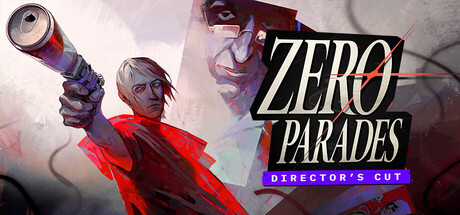
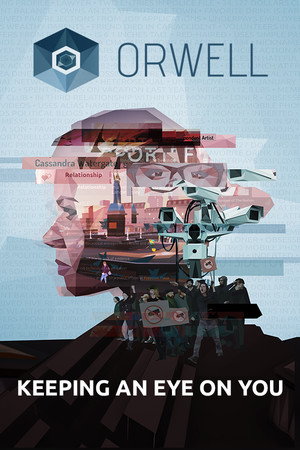
- Stunning art style
- Characters less interesting
- Writing quality is weaker
- Soundtrack is forgettable
Emotions
Archetypes
Hardware
What players like:
Common complaints:
Gameplay feedback:
Performance notes:
Recommendations:
Other player notes:
Similar games
Blend with other games






Review evidence
Why players say this
Review evidence
Why players say this
Steam review verdict
Mechanical refinements, a compelling story, and stunning art shine, though the cast feels less interesting, the writing weaker, and the soundtrack forgettable.
What players like
Mechanical improvements over predecessor: Gameplay mechanics are considered improved compared to Disco Elysium, with better check rolling, resource management, and more options.
Compelling story and characters: The narrative is described as compelling, captivating, and well-written, featuring interesting and complex characters.
Phenomenal and immersive game: Players describe the game as phenomenal, amazing, and overwhelmingly immersive, indicating high overall satisfaction.
Stunning art style: Reviewers consistently highlight the art as stunning, gorgeous, and top-notch, with a beautiful and fantastic art style.
Outstanding voice acting: The voice acting is frequently praised as phenomenal, beautiful, and immersive, with great performances from all characters.
Common complaints
Characters less interesting: Players find the characters, including the protagonist and heroine, less memorable and less well-developed compared to those in Disco Elysium.
Writing quality is weaker: The writing is frequently criticized as less sharp, less creative, and less engaging than Disco Elysium's, with awkward text and shallower dialogue.
Soundtrack is forgettable: The music is widely considered unmemorable, lacking the iconic compositions of Disco Elysium, and often described as bland ambient noise.
Lacks Disco Elysium's soul: Many feel the game misses the emotional resonance, introspective quality, and free-exploration feel that defined Disco Elysium, leaving it without the same magic or charm.
Ending is rushed and unsatisfying: The ending is criticized as abrupt, poorly paced, messy, and predetermined, with major choices having little impact on the outcome.
Gameplay and performance
Espionage theme central: The game is widely described as a spy thriller with conspiracies, investigation, and political intrigue. Players take on the role of a spy, and espionage mechanics are central to the experience.
Dice roll skill checks: Skill checks are resolved via dice rolls, often with percentage success chances. This mechanic is frequently mentioned as a core part of gameplay.
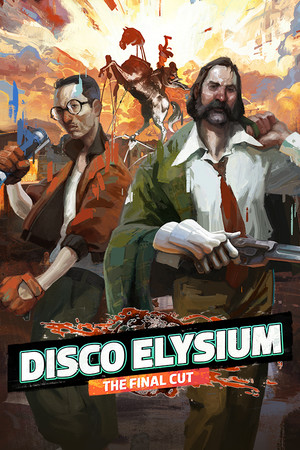
Disco Elysium comparison: Many reviewers compare the game's mechanics and storytelling to Disco Elysium, noting similarities in narrative-driven CRPG design and skills. Some feel the game closely imitates its aesthetics and structure.
Narrative-driven CRPG: The game is a narrative-driven RPG/CRPG with quests, dialogues, and a strong focus on story. It is also described as a visual novel-like CRPG.
Multiple endings and branches: The game offers multiple endings accessible through branch points, and tasks can be resolved in various ways across playthroughs.
Runs great on Steam Deck: Multiple players report that the game runs well on Steam Deck, especially when using lsfg.
Graphics and interface bugs: Players encounter numerous graphical and user interface bugs that affect the experience.
Steam Deck stutters and texture issues: Some Steam Deck users experience stuttering and texture loading problems.
Location-specific lag: Optimization issues cause consistent lag in specific alleys within certain locations.
Audio glitches: Players report audio glitches that disrupt the sound experience.
Recommendations
Comparable to Disco Elysium: Many reviewers recommend the game specifically to fans of Disco Elysium, often calling it a must-play for those who enjoyed that title.
Strong overall recommendation: Numerous reviews give a strong, unconditional recommendation to play the game, often with high praise.
Not as good as Disco Elysium: Some players warn that the game does not match the original Disco Elysium in quality and advise against expecting the same experience.
Wait for a sale: Some reviewers suggest waiting for a discount before purchasing, indicating the game may not be worth full price for everyone.
Manage expectations regarding Disco Elysium: Advice is given to approach the game without expecting it to be another Disco Elysium, as it is a different experience.
Buying context
Community fair range: $25.00 - $35.00.
Game completion: 44.0h.
Story completion: 30.0h.
Session length: 4.0h.
Endgame: 5.0h.
The strongest pattern is a friction-heavy opening that later gives way to an engaging mystery and story. Some players report an immediate hook, but detailed reports most often describe enjoyment arriving after pushing through the early game.
Friction: Slow, dull, and difficult early game; Early progression and presentation issues, including broken choice logic; Confusion over new terms, factions, and names; Technical bugs and missing dialogue in the opening; Builds can be locked out of common skill checks, causing frustration; UI and navigation problems such as soft-locks and unresponsive clicks.
Player profiles
Disco Elysium Devotee: Compares systems and writing to Disco Elysium while playing through dialogue, checks, and character-driven roleplay. Motivation: To find a worthy spiritual successor to Disco Elysium's dialogue-heavy, idea-rich CRPG experience. Stance: buy.
Narrative Reader and Choice-Driven Roleplayer: Reads heavily, follows dialogue branches, and roleplays decisions rather than optimizing combat or action. Motivation: To experience a text-rich story where reading, dialogue, and choices carry the play experience. Stance: buy.
Espionage and Cold War Lore Enthusiast: Engages with dialogue, political worldbuilding, and mission roleplay as an intelligence operative. Motivation: To inhabit a serious spy story with tradecraft, political intrigue, and Cold War atmosphere. Stance: buy.
Platform notes
Across the six largest cohorts, most Windows and handheld players report generally playable performance, though stutter, pop-in, and occasional crashes recur. The high-VRAM Windows cohort is negative because both included reports mention significant stutter.
Windows 12-15GB VRAM: positive. Most reports say the game is stable and playable on desktop, with some stutter, pop-in, and isolated crashes.
Windows 8-11GB VRAM: positive. Most players report no major performance issues, though a few mention occasional frame drops or a single crash.
Windows <8GB VRAM / <16GB RAM: mixed. Some players report smooth, crash-free play, while others report frequent crashes and fixed frame drops on lower-end hardware.
Steam Deck: Steam Deck feedback is mixed: some users run the game smoothly through Proton or GE Proton, but multiple reviews report frequent crashes, Deck-specific instability, severe controller/input failures, frame drops, level pop-in, and imprecise UI clicking. The repeated crash evidence meets the Broken tier under the scoring criteria.
Linux and Proton: Desktop Linux and Proton compatibility is generally positive: users report the game runs well through Proton, including on CachyOS with GE-Proton. The main Linux-specific problems are concentrated on Steam Deck and SteamOS, where reviews cite frequent crashes, a save-disabling bug, frame-rate drops, and asset pop-in. Some Deck users still report smooth or great performance, sometimes with an lsfg workaround, so the evidence indicates a mostly functional Linux experience with notable handheld instability rather than a broken Proton title.
Extra review signals
Monetization: The review set contains repeated debate over whether the game is a cash grab, but it does not describe a real-money shop, paid gacha, loot boxes, paid power, boosters, currency obfuscation, or aggressive FOMO mechanics. One negative review uses cash-grab language as a quality and studio-reputation criticism. Mentions of overpriced merchandise and phone ports concern prior Disco Elysium products rather than in-game monetization in this game. The evidence therefore supports a fair monetization assessment with no confirmed predatory mechanics.
External guides: The reviews primarily complain about insufficient in-game instructional and reference data: no adequate encyclopedia, glossary, journal review, or quest explanations. Players are forced to rely on external wikis that are themselves incomplete, making terminology, lore, and character recall difficult. There is no evidence of farming, drop-rate, loot-table, inventory, selling, blueprint, or crafting-requirement complaints, so the strict scoring hierarchy maps this to Tier 3.
Other review notes
Frequent Disco Elysium comparisons: Reviewers overwhelmingly compare this game to Disco Elysium, often as an unavoidable reference point. Opinions range from viewing it as inferior to considering it equally good or better.
Strong spiritual successor: A significant portion of reviewers consider the game a worthy successor or Disco-like that stands on its own merits. Some even rank it on par with or above Disco Elysium.
Inferior to Disco Elysium: Many reviewers find the game weaker than Disco Elysium in writing, emotional engagement, narrative depth, and humor. Some describe it as a poor imitation lacking the original's spirit.
Similar style and mechanics: Reviewers note shared art direction, watercolor aesthetics, writing style, and gameplay systems with Disco Elysium. The game retains a similar bittersweet atmosphere and narrative structure.
Same studio or developers: The game is associated with ZA/UM and described as made by many of the same people behind Disco Elysium. However, some reviewers clarify it is not from the exact same team.