- Excellent gameplay and feel
- Beautiful pixel art and visuals
- Great music and soundtrack
- Awful keyboard controls
- Frustrating difficulty and controls
- Severe performance issues
Emotions
Archetypes
Hardware
What players like:
Common complaints:
Gameplay feedback:
Performance notes:
Recommendations:
Other player notes:
- -
No data available
Similar games
Blend with other games




Review evidence
Why players say this
Review evidence
Why players say this
Steam review verdict
The game offers excellent gameplay and beautiful pixel art with a great soundtrack, but suffers from awful keyboard controls, frustrating difficulty, and severe performance issues.
What players like
Excellent gameplay and feel: Multiple reviews praise the enjoyable movement mechanics, tight controls, responsive gameplay, and overall positive feel. Clusters 1, 2, 8, 17, 38, 45, and 70 highlight that the core mechanics are fun and well-crafted.
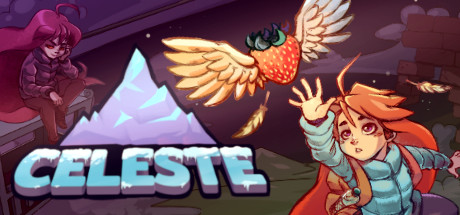
Beautiful pixel art and visuals: The pixel art style and visual presentation are highly appreciated for being beautiful, cute, and appealing. Clusters 9, 12, 20, 29, 31, 33, 58, and 69 note the nice aesthetics and art direction.
Great music and soundtrack: The game's music is widely praised as excellent, memorable, and chill. Clusters 10, 28, 30, 40, 56, 64, and 67 mention the amazing OST and great soundtrack.
Good story and atmosphere: The story is cool and the atmosphere is well-crafted, with metaphors relating to mental health. Clusters 3, 21, 34, 37, 72, and 75 mention the engaging narrative and rich environment.
Excellent level design: Levels are well-designed, clever, and demonstrate the creators' sincerity. Clusters 7, 28, 44, 73, and 74 highlight that most level design is great and fair.
Common complaints
Awful keyboard controls: The keyboard controls are widely criticized as terrible, unintuitive, and awkward, making the game not fun to control. This is the most frequent complaint across clusters 1, 4, 12, and 19, with many players finding them the worst in a platformer.
Assist mode feels like cheating: Assist mode is seen as making the game too easy, undermining difficulty design, and creating an impossible dilemma where using it feels like cheating. Players are demotivated by this feature as it removes the challenge.
Default controls are counter-intuitive: The default controls are confusing and not comfortable, making it hard for players to adjust. This feedback highlights that even the initial control setup is poorly designed and adds to the frustration.
Cannot bind mouse buttons to keyboard: Players cannot map keyboard keys to mouse buttons, as mouse buttons are disabled as an option. This limits control customization and is a specific complaint about keybinding limitations.
Frustrating difficulty and controls: The game is too difficult and frustrating, with the difficulty stemming from poor controls. This combination makes the entire experience unenjoyable and overly challenging.
Gameplay and performance
Trial-and-error platforming: Players repeatedly attempt sections due to high difficulty, requiring precise jumps and memorization. This is highlighted in Clusters 2, 6, and 19.
Assist mode available: An assist mode helps beginners reduce difficulty, as noted in Clusters 3, 4, and 57. It provides a gentler experience for less skilled players.
Precision platforming with collectibles: The game features optional collectibles like strawberries and cassette tapes, which serve as bragging rights and completionist appeal. These are mentioned in Cluster 1 and Cluster 35.
Multiple level tiers: The game includes A-sides, B-sides, and C-sides with increasing difficulty, as per Clusters 5 and 6. These offer extra challenges for skilled players.
High difficulty with memorization: The game relies on muscle memory and pattern recognition for precise platforming, as described in Clusters 7 and 19. Levels require repeated practice to master.
Frequent start-up failures: Multiple reports indicate the game fails to start, often stuck on the opening screen or showing a black screen, leading to an inability to play.
Visual artifacts and glitches: Black square artifacts appear during gameplay, along with black screen problems on startup, pointing to rendering or graphical corruption.
Severe performance issues: Frame rate is locked below 15 FPS, and there are stutters on modern hardware, making the game nearly unplayable due to poor optimization.
Persistent crashes and errors: The game crashes consistently, sometimes with error logs, which suggests a stability issue that causes abrupt termination.
Steam Deck lag spikes: On Steam Deck, lag spikes are reported, indicating specific compatibility problems with this platform beyond general performance issues.
Recommendations
Extreme difficulty for niche audience: Multiple clusters indicate that Celeste is only recommended for players seeking extreme difficulty and precision platforming, not for casual or general audiences.
Not for general audience: Overall, the game is not recommended for a broad audience, with many saying to skip it unless the player is a dedicated fan of the genre.
Not for casual players: The game is consistently described as not suitable for casual players, with explicit warnings to avoid it unless they are hardcore platformer fans.
Precision platformer focus required: Feedback stresses that the game is only for those who love precision platformers and mechanical coordination, with many saying to stay away otherwise.
Positive message and self-improvement: The game is recommended for those who enjoy self-improvement challenges and a positive message, but only for skilled players.
Buying context
Community fair range: $10.00 - $20.00.
Game completion: 35.0h.
Story completion: 9.0h.
Endgame: 10.0h.
Celeste initially feels awkward or boring for some players, but after completing the first chapter and understanding the controls, the game becomes deeply addictive and rewarding.
Friction: steep initial learning curve; awkward movement feel at first; tedious collectible hunting (hearts, strawberries); repetitive music for some players; difficulty spikes in later chapters (e.g., Chapter 3).
Unlock drivers: instant respawn removes frustration; smooth difficulty progression that matches player skill; new mechanics introduced per chapter to maintain interest; sense of visible improvement over time.
Player profiles
Hardcore Masochist: Repeatedly attempts the same room hundreds of times, using precise pixel-perfect inputs, optimizing routes, and obsessively collecting every strawberry and golden berry. Often ignores the story in favor of gameplay. Motivation: To conquer brutally difficult challenges and achieve full completion, gaining immense satisfaction from overcoming impossible sections. Stance: buy.
Story-Emotion Explorer: Plays at a relaxed pace, uses Assist Mode when needed, collects story-relevant items, absorbs the atmosphere and music, and focuses on completing the main narrative rather than optional hard content. Motivation: To experience a heartfelt story about overcoming inner struggles and to connect emotionally with the protagonist's journey. Stance: buy.
Modding & Speed tech Artist: Beats the base game, then dives into modded collabs (e.g., Strawberry Jam), practices speedrun tech on golden strawberries, and engages with the modding community on Discord. Plays on keyboard or controller with optimized bindings. Motivation: To push mechanical limits, learn advanced techniques (wavedash, hyperdash), and explore endless custom content created by a passionate community. Stance: buy.
Platform notes
The game runs smoothly on most hardware configurations, with occasional crashes or stability issues reported on lower-end Windows systems, and a notable complaint of lag after alt-tabbing on Windows with 8-11GB VRAM.
Windows <8GB VRAM / <16GB RAM: positive. Most players report smooth performance at 30fps, though some occasional crashes are noted.
Windows <8GB VRAM / 16-31GB RAM: positive. Players report great visuals and smooth gameplay without performance issues.
Windows 8-11GB VRAM: negative. A player reports instability and noticeable lag after alt-tabbing, along with controller issues.
Steam Deck: Celeste is generally well-rated on Steam Deck with strong performance and battery life, but some users encounter Proton compatibility issues requiring version switching, occasional crashes and lag spikes, and minor controller precision concerns. Overall, it's playable after initial setup tweaks.
Linux and Proton: Celeste on Linux has a known native lighting bug due to outdated SDL2, requiring workarounds like Vulkan (which may cause memory leaks) or switching to Proton (which can break controller inputs). Despite these issues, many users report a smooth experience with mod support and good performance. The game is playable but needs minor tweaks, consistent with a score in the 'Minor Tweaks' range.
Extra review signals
External guides: The primary 'Wiki Tax' issue in Celeste is the need for external data to uncover hidden secrets (e.g., strawberries, blue hearts) and to overcome extremely difficult levels that require step-by-step guidance. Players feel the game's opaque design forces reliance on guides or wikis for full completion.