- Unique and varied level design impresses players
- Strong character writing and voice acting praised
- Smooth and satisfying movement enhances gameplay
- Bugs and performance problems frustrate users
- Short game length disappoints many players
- Camera issues hinder smooth gameplay experience
Emotions
What players like:
Common complaints:
Gameplay feedback:
Performance notes:
Recommendations:
Other player notes:
Similar games
Blend with other games




Review evidence
Why players say this
Review evidence
Why players say this
What players like
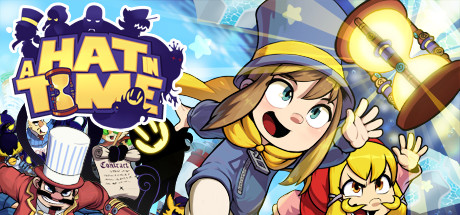
Unique and varied level design: Each level and world is designed to feel fresh, memorable, and immersive, with distinct mechanics, atmospheres, and challenges. Players highlight the creativity and attention to detail in level construction, which keeps the gameplay engaging and non-repetitive.
Strong character writing and voice acting: The game features well-written, charismatic, and often humorous characters with excellent voice acting. Players frequently praise the depth of the story, the emotional connections formed with characters, and the overall quality of the dialogue and performances.
Smooth and satisfying movement: The gameplay is consistently described as fluid, responsive, and satisfying, with controls that are easy to learn but offer depth for skilled players. The movement mechanics are a standout feature, often compared to the best in the genre.
Modding and Steam Workshop support: The game’s modding community and Steam Workshop integration are highly praised for extending replayability with custom levels, mods, and challenges. Players highlight the ease of access and the quality of community-created content.
High-quality DLC expansions: The DLCs, such as *Seal the Deal* and *Nyakuza Metro*, are widely regarded as excellent additions that introduce new content, mechanics, and levels. Players appreciate the value and quality of the post-launch support.
Common complaints
Bugs and performance problems: Players encounter bugs in singleplayer and multiplayer modes, including freezing, graphical glitches, and lag. Performance issues persist even on high-end systems, with stuttering and optimization problems.
Short game length disappoints: Players consistently report the game is shorter than expected, with main story completion times ranging from 4 to 18 hours. Many feel the price is too high for the content provided, and some mechanics or levels feel rushed or unexplored.
Camera issues hinder gameplay: Frequent complaints about the camera being buggy, stuck on corners, or causing motion sickness. These issues make boss fights and tight spaces particularly frustrating and harder than necessary.
Platforming difficulty frustrates: Strict timing and precision in platforming sections, especially in endgame levels, are infuriating for many players. Controls are often cited as not tight enough for the difficulty, particularly with keyboard and mouse.
Inconsistent level quality and design: Some levels lack clarity in objectives, feel disjointed, or are shorter than others. The progression and artistic design are criticized for feeling unpolished or cobbled together.
Gameplay and performance
Core 3D Platformer Gameplay: The game is fundamentally a 3D platformer with collectathon mechanics, inspired by classics like Super Mario 64 and Banjo-Kazooie. Players engage in platforming, puzzle-solving, and collecting items across creative levels.
Sandbox-Style Level Design: Levels are self-contained sandboxes with unique themes, mechanics, and visual styles (e.g., Mafia City, movie studios). They encourage exploration, backtracking, and replayability, often featuring community-created content via Steam Workshop.
Difficulty and Challenge Modes: The base game is casual-friendly, but DLCs introduce high-difficulty challenges like Death Wish mode, which modifies levels for added complexity. Progression is chapter-based, with optional hard modes for skilled players.
Hat-Based Ability System: Hats serve as the primary mechanic for granting unique abilities (e.g., sprinting, invisibility, or combat skills), adding variety to gameplay and enabling diverse strategies. This system is central to progression and exploration.
Multiplayer and Co-op Modes: The game supports local split-screen co-op and online multiplayer (up to 50 players), including cooperative modes for two players. DLCs expand these features with additional content like the Online Party mode.
Performance stuttering across hardware: Players report frequent stuttering, lag, and frame drops even on high-end or mid-range systems, suggesting poor optimization or engine limitations. Lower-end PCs and integrated graphics also struggle.
Mixed hardware performance: While some players report smooth performance on older or entry-level hardware, others highlight limitations like borderless mode issues or reliance on specific hardware (e.g., Ryzen 5 3600x, GTX 1660 Ti).
Frequent crashes during gameplay: Crashes occur during DLCs and level transitions, disrupting gameplay. Some players also report freezing in co-op modes.
Poor Steam Deck compatibility: Shader issues inflate file sizes on Steam Deck, and the game runs poorly out of the box, though some players report flawless performance after adjustments.
Unreal Engine 3 optimization issues: Despite the game's art style, the use of Unreal Engine 3 leads to unexpectedly high system requirements, with performance suffering under heavy effects or models.
Recommendations
Must-play for 3D platformer fans: The game is repeatedly recommended for fans of 3D platformers, classic N64-era games, and titles like Super Mario Odyssey and Banjo-Kazooie. Its modern take on the genre and creative design make it a standout choice for enthusiasts.
Unique art style and charming characters: The game’s aesthetic, inspired by titles like Undertale, and its charismatic characters are highlighted as major draws. Players who enjoy rich details and a visually delightful experience are encouraged to try it.
Highly recommended overall: Reviewers consistently praise the game as a must-play, describing it as an absolute gem, an instant classic, and a highly enjoyable experience. Many emphasize its creativity, attention to detail, and overall value.
Appeals to casual and relaxed players: The game is often recommended for those seeking a chill, pressure-free experience. It’s described as suitable for short play sessions, newcomers to the genre, and players who prefer fun over difficulty.
Best purchased on sale with DLCs: Many players suggest waiting for a sale to buy the game, especially when bundled with DLCs. The ultimate edition or versions including expansions like Nyakuza Metro are frequently recommended for better value.
Other review notes
DLC structure and value concerns: DLC is unlocked post-base game completion, but players debate its quality and pricing. Some find it valuable, while others question its cost-effectiveness.
Personal and nostalgic impact: The game resonates emotionally with players, inspiring cosplay, childhood nostalgia, and introductions to 3D platformers or PC gaming. Its cultural influence extends beyond gameplay.
Mixed playtime perceptions: Playtime varies widely—some report 20+ hours for completion, while others finish in ~9 hours with collectibles, leading to debates about the game's value and length.
Crowdfunding origin: The game's development was funded via Kickstarter, which may influence player expectations and perceptions of its scope or content.
Voice casting detail: A minor but notable point for fans: the voice actor for Mr. Joker in *Persona 5* also voices the conductor, adding a layer of appreciation for casting choices.