- Creative and unique puzzle design
- Excellent atmospheric soundtrack
- Knowledge-based metroidbrainia exploration
- Challenging yet fair difficulty
- No undo forces full resets
- Lack of guidance leads confusion
Emotions
Archetypes
What players like:
Common complaints:
Gameplay feedback:
Performance notes:
Recommendations:
Other player notes:
Similar games
Blend with other games





Review evidence
Why players say this
Review evidence
Why players say this
Steam review verdict
Clever, unique puzzles and a superb atmospheric soundtrack drive this fair but demanding metroidbrainia, though no undo and scant guidance can leave you lost.
What players like
Creative and Unique Puzzle Design: Players widely praise the game's inventive and thoughtfully designed puzzles, which offer a fresh take on the genre. Many highlight its unique concepts and mind-bending challenges as standout features.
Excellent Atmospheric Soundtrack: The music is frequently praised for creating a strong atmosphere and enhancing key moments. Players find it beautiful, grand, and perfectly fitting the game.
Overall Fantastic Puzzle Experience: Reviewers describe the game as fantastic, phenomenal, and one of the best puzzle experiences in years. The overall quality consistently impresses players.
Rewarding Puzzle Solving: The puzzles are highly rewarding once solved, giving players a strong sense of accomplishment. Many describe having a blast while solving them.
Intuitive Mechanics Discovery: The game doesn't spell out its mechanics, but figuring them out is rewarding and intuitive. Puzzle mechanics are clever and offer an impressive array of discoveries.
Common complaints
No undo forces full resets: The lack of an undo feature means one mistake often forces a complete level reset, leading to repeated tedious setup. This is a major pain point across many reviews.
Lack of guidance leads confusion: Players often feel lost due to insufficient direction, unclear objectives, and poor onboarding, especially early on. This confusion was widely reported.
Puzzles are too obtuse and unclear: Many reviewers complained that puzzles are abstract, obtuse, and unclear, often requiring external guides to solve. This was a frequent and significant source of frustration.
Ability gating limits exploration: The game locks abilities behind progress, making it linear and restricting free exploration. This design choice was criticized by several reviewers.
Abstract story and worldbuilding: The story and worldbuilding are very abstract, minimal, and not engaging for many players. This was a frequent narrative complaint.
Gameplay and performance
Metroidbrainia knowledge-based exploration design: Many reviews highlight a Metroidbrainia structure where progression is driven by acquired knowledge rather than items, often compared to Outer Wilds. The world opens up as players understand its rules and use that knowledge to access new paths.
Progressive puzzle unlocking with experimentation: Players unlock puzzle mechanics gradually and must experiment with different combinations to discover new outcomes. Trial and error, combined with hypothesis testing, is the crux of the gameplay.
Open puzzle world with discovery: The game is set in an open world composed of puzzles, where the entire environment is a puzzle to be unraveled. Exploration and discovery are key, with the world itself serving as the puzzle.
Knowledge lock gating mechanics: The game repeatedly features knowledge locks alongside ability locks, meaning certain areas can only be opened by understanding a concept or mastering a rule. This mechanic is central to the progression and puzzle design.
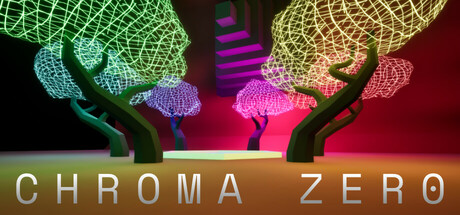
Color-centric puzzle mechanics: Color is the primary mechanic, with deep variations that drive the puzzles and world interaction. Reviews consistently emphasize color-based puzzles as a core element of the experience.
Inconsistent performance and framerate drops: Multiple reviewers report uneven performance with framerate drops in certain areas, and one notes unstable 30 fps even on lowest graphics settings. This inconsistency affects the overall experience.
Struggles on lower-end and laptop hardware: The game runs poorly on lower-end hardware, and a laptop with an RTX4070 struggled at initial entry. Reviewers mention their laptops had trouble running it.
High system requirements from Unreal Engine 5: Reviewers criticize the high system requirements, attributing them to Unreal Engine 5 despite the game's simple geometry. This makes the game demanding for many systems.
Ray tracing lighting instability: Ray tracing lighting is unstable, causing objects to wobble even when standing still. This visual glitch detracts from the experience.
Runs well on Linux with AMD: One reviewer reports that the game runs well and fast even on an AMD card under Linux. This suggests performance may be better on certain configurations.
Recommendations
Highly recommended for Outer Wilds fans: Many reviewers recommend the game to fans of Outer Wilds and similar knowledge-based exploration games. The game scratches the same itch for discovery and non-linear puzzle solving.
Generic strong recommendation: Many reviews simply state 'highly recommended' or similar without specific justification. This indicates broad satisfaction but lacks detailed reasoning.
Recommended for puzzle genre enthusiasts: A large number of players recommend the game to anyone who loves puzzle games, especially those who enjoy challenging and complex puzzles. Fans of Antichamber, The Witness, and Tunic will likely enjoy it.
Appeals to metroidbrainia fans: The game is highly recommended for those who enjoy metroidbrainias and knowledge-based progression games. Fans of the genre will find it a must-play.
Not for everyone: Some reviewers note the game has a niche audience and may not appeal to all players, especially those who prefer clear rules or dislike frustration.
Buying context
Community fair range: $10.00 - $20.00.
Game completion: 8.0h.
Story completion: 8.0h.
Session length: 1.5h.
This knowledge-based puzzle game often starts slow or tedious, but it becomes fun for many players after they get through the initial learning stage and reach midgame or mid-late puzzles. Some players report that it never clicks for them.
Friction: Tedious opening if key knowledge is not found quickly; Repeated exploration of limited areas and repeated paths; Misleading design causing lost and frustrated feelings; No undo button, forcing level resets and repetition; Systems that feel arbitrary rather than cohesive; Repetition after mistakes or experimentation.
Unlock drivers: Persevering through the initial learning stage; Discovering more interesting mechanics; Reaching midgame and mid-late puzzles; Uncovering how the environment works and how elements interact; Knowledge-based progression unlocking previously invisible possibilities.
Player profiles
Metroidbrainia Knowledge-Seeker: Self-guided blind exploration; deliberately avoids guides and external info, observes the world closely, and hunts for secrets and knowledge gates. Motivation: The 'aha' moment of realizing that hidden knowledge, not new items or powers, is what unlocks the next path. Stance: buy.
Indie Aesthetic & Craft Appreciator: Slow, observational exploration focused on visuals, mood and world design rather than raw puzzle difficulty. Motivation: Savoring the game's atmosphere, abstract world design, music and the charm of a solo-developer production. Stance: buy.
Speedrunner Completionist: Completes the game first, then replays with a planned route to chase sub-5-minute times and interact with the competitive speedrunning community. Motivation: Mastery through route optimization and earning the built-in speedrun achievement. Stance: buy.
Other review notes
Frequent Outer Wilds comparisons: Many reviewers compare the game to Outer Wilds, often in the context of knowledge-gated progression, exploration, and puzzle discovery. The game is frequently described as a 'Wilds-like' or part of the MetroidBrainia genre.
MetroidBrainia genre classification: The game is considered part of the growing genre of knowledge-based games or MetroidBrainias. It is often compared to games like Tunic, Animal Well, and The Witness.
Short playtime: The game can be completed in about 5-10 hours, with some variation depending on the player. Several reviewers mention playthrough lengths between 7 and 14 hours.
Developer-made guide available: The developer has created a guide with hints and solutions, which is available to players. It includes multiple tiers of hints and avoids spoilers.
Solo developer project: The game is made by a solo developer, which is noted by multiple reviewers. Some mention that the game is an impressive debut, and one reviewer points out that it cannot be mistaken for not being a solo project.