- Excellent puzzle design and exploration.
- Charming retro aesthetic and soundtrack.
- Sokoban and Metroidvania gameplay blend.
- Unclear puzzle solvability/requirements.
- Game feels incomplete/unfinished.
- Poor guidance and navigation.
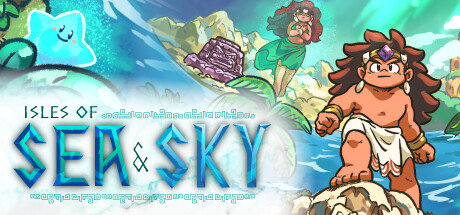
What players like:
Common complaints:
Gameplay feedback:
Performance notes:
Recommendations:
Other player notes:
Similar games
Blend with other games




Review evidence
Why players say this
Review evidence
Why players say this
What players like
Excellent puzzle design and exploration: The game features well-designed puzzles with a good difficulty curve, offering a mix of straightforward and clever designs. The open-world structure allows players to explore and tackle puzzles in a non-linear fashion, preventing them from getting stuck. The game also includes an undo function and quality-of-life improvements, making it a must-play for puzzle enthusiasts.
Charming retro aesthetic and soundtrack: The game has a retro aesthetic reminiscent of Game Boy Color Zelda games, featuring charming pixel art and a beautiful, tranquil soundtrack with a Polynesian vibe. The combination of art style and soundtrack creates a relaxing and immersive experience, enhancing the game's overall appeal.
Satisfying sense of accomplishment: The game provides a satisfying sense of accomplishment when solving difficult puzzles, with a well-crafted design that rewards observation skills and creativity. The game's length is enjoyable and does not overstay its welcome, with many collectibles and secrets to uncover throughout the game.
Creative and unique puzzle mechanics: The game introduces new mechanics through elemental spirits, with each element tying into its respective mechanic in novel ways. The game encourages players to explore the mechanics and think for themselves, with minimal explanation and a flexible design that prevents players from getting stuck on a single puzzle.
Sokoban and Metroidvania blend: The game offers a unique blend of Sokoban (box-pushing) and Metroidvania mechanics, providing a challenging mental workout with a solid mix of classic Sokoban puzzles and new ideas. The game's difficulty increases significantly in later islands, providing a challenge even for experienced Sokoban players.
Common complaints
Unclear puzzle solvability/requirements: A common complaint is the lack of clarity around puzzle solvability. Players often waste time on puzzles that require abilities or items not yet acquired, or that are simply impossible due to bugs or cut content. This leads to frustration and a sense of wasted effort, as players struggle to determine whether they lack the skill, the tools, or if the puzzle is even solvable in its current state.
Game feels incomplete/unfinished: Many reviewers express frustration with the game's incomplete or unfinished feel. This is evidenced by inaccessible areas, cut content, misleading map designs, and unimplemented mechanics. This lack of polish detracts from the overall experience and creates a sense of disappointment, as players encounter elements that suggest a more complete game than what is actually available.
Poor guidance and navigation: The game suffers from weak guidance and a lack of clear direction. Players often get lost, struggle to remember hints, and find backtracking tedious due to limited fast travel. The map system is also criticized for being unhelpful, with missing information and confusing layouts, further exacerbating the navigation issues.
Overly complex/tedious puzzles: Some puzzles and mechanics, particularly in the later stages of the game, are described as overly complex, tedious, or mentally exhausting. This can lead to player fatigue and a decline in enjoyment. Specific examples include the mirror clone puzzles and the wind spirit mechanics.
Poorly implemented hidden collectibles: Hidden collectibles, such as musical notes, are often too difficult to find due to poor visual cues or blending into the environment. This leads to tedious pixel hunting and frustration, especially on the Ice Island. The game also fails to adequately explain the hint system related to these collectibles.
Gameplay and performance
Core: Sokoban-style puzzle exploration: The core gameplay revolves around Sokoban-style block-pushing puzzles within an open world. Players manipulate different box types, utilize environmental elements, and acquire new abilities to solve increasingly complex puzzles. The game blends puzzle-solving with exploration, reminiscent of classic Zelda titles but without combat.
Metroidvania-style progression: The game incorporates Metroidvania elements, where new abilities and items unlock previously inaccessible areas and puzzles. Players often need to revisit earlier locations with new powers to progress, adding a layer of strategic backtracking and exploration.
Open-world puzzle design: The game features an open-world or semi-open world structure, allowing players to explore multiple islands and tackle puzzles in a non-linear fashion. This design encourages exploration and provides options for players who get stuck, but some reviewers noted the progression felt more like a Metroidvania than a true open world.
Unique island mechanics/elements: Each island introduces unique mechanics, elemental themes, and puzzle elements. These mechanics often involve manipulating different types of boxes, interacting with environmental features, and utilizing elemental powers to solve puzzles.
Emphasis on player discovery: The game emphasizes player discovery and experimentation, with minimal explicit guidance or tutorials. Players are encouraged to learn mechanics and puzzle solutions through observation, trial-and-error, and exploration.
Various bugs impact gameplay: Several players reported encountering bugs, including issues with undo actions, level-specific glitches (purple island, fire island, wind island), and interactions not functioning correctly. Some bugs have been resolved since launch, but others persist. These issues detract from the overall experience.
Controller issues and control quirks: Some players have reported issues with the game's controls, including problems with the 'Undo' function on the PS4 controller and unintended movement when using a controller. Adjusting the dead zone may improve controller comfort. These control issues can be frustrating, especially given the game's puzzle-solving nature.
Excellent Steam Deck performance: The game is verified and runs smoothly on the Steam Deck, even with a low TDP setting. This makes it a great option for portable gaming. Some players noted that playing on a larger screen might make certain elements more noticeable.
Windowed mode and input issues: The game's windowed mode lacks resolution adjustment options. Additionally, using a Chinese input method can cause the game window to shrink, requiring a settings reset to fix. These issues affect the game's usability and accessibility for some players.
No bugs encountered: Some players reported not encountering any bugs since the first day of release or in the early stages of the game. This suggests that the game is relatively stable for some players, but it doesn't negate the bug reports from other players.
Recommendations
Highly recommended puzzle experience: The game is overwhelmingly recommended for puzzle enthusiasts, especially those who enjoy Sokoban-style games. Reviewers highlight the enjoyable and engaging gameplay, often praising the puzzle design and overall experience. Many consider it a standout title in the genre, with some even calling it a masterpiece.
Nostalgic Zelda-like puzzle adventure: The game evokes a nostalgic charm reminiscent of classic Zelda and Game Boy games, particularly Link's Awakening and Oracle of Ages. The retro pixel art style and sound design contribute to this feeling, making it appealing to fans of those titles. Some reviewers also compare it to other well-regarded puzzle games with open-world elements.
Worth the price, good value: Many reviewers feel the game is worth its price, whether at full price or on sale, citing the amount of content and the quality of the experience. Some also note that the game is developed by a single person, making the price even more reasonable and encouraging support for future improvements.
Indie masterpiece, needs recognition: Some reviewers consider the game to be a masterpiece or one of the best indie titles of the year, comparing it to other acclaimed games like Animal Well, Fez, and Undertale. They believe it deserves more recognition and attention for its quality and unique design.
Great for short, chill sessions: The game is suitable for relaxing and unwinding, ideal for short play sessions during leisure time. The game is awesome to play in short bursts, especially on portable hardware.
Other review notes
Minimalist, visual storytelling: The game features a minimalist, largely wordless narrative delivered through visuals, environmental details, and cutscenes. The story is open to player interpretation and focuses on themes of restoring the planet and reviving gods after an alien invasion. This approach minimizes language barriers and translation concerns.
Ongoing development and updates: Reviewers noted that the game has received updates and improvements since its demo, and there are expectations for future content additions. Some reviewers are looking forward to these updates, with the developer planning to add cut content in free updates.
Many collectibles require puzzle-solving: The game features a large number of collectibles, including stars, gems, and keys, which are acquired by solving puzzles and exploring the game world. Some reviewers noted the high number of collectibles and the challenge of acquiring them all. Some keys don't have immediate use.
Retro-inspired puzzle gameplay: The game's aesthetic and gameplay draw inspiration from classic top-down 2D games like old Zelda titles on the Game Boy, featuring pixel art graphics and box-pushing puzzle mechanics. However, some reviewers felt it lacked the open-world puzzle design found in games like 'The Witness'. The game has a clear and bright style.
Backtracking and ability-gated progression: The game requires backtracking to solve some puzzles, as certain areas can only be accessed after gaining specific abilities or items. Each island requires finding a guardian deity to gain the ability to break corresponding colored blocks.