- Creative and engaging puzzle designs throughout game
- Stunning hand-drawn art style enhances immersion
- Masterful soundtrack complements gameplay experience
- Puzzles overly difficult and often unclear
- Short game length with low replayability value
- Frustrating interaction mechanics hinder progress
Emotions
What players like:
Common complaints:
Gameplay feedback:
Performance notes:
Recommendations:
Other player notes:
Similar games
Blend with other games



Review evidence
Why players say this
Review evidence
Why players say this
What players like
Creative and engaging puzzles: Players consistently praise the puzzles for their creativity, logical design, and satisfying solutions. The variety in puzzle types and balanced difficulty make them a standout feature of the game.
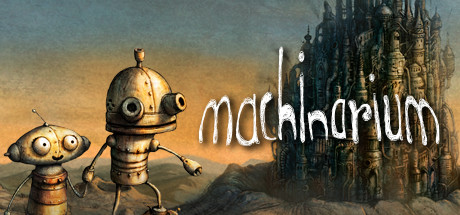
Stunning hand-drawn art style: The hand-drawn visuals are frequently highlighted for their intricate detail, nostalgic charm, and immersive atmosphere. The art style is described as beautiful, unique, and timeless.
Masterful soundtrack and sound design: The music and sound effects are described as atmospheric, immersive, and perfectly complementing the game’s aesthetic. The soundtrack is often called a masterpiece that enhances the overall experience.
Immersive robot world design: The game’s dystopian robot world is praised for its cohesive design, charming character animations, and atmospheric post-apocalyptic setting. The world-building enhances the puzzle-solving experience.
Effective wordless storytelling: The game’s narrative is conveyed through visuals, gestures, and sound, creating an impactful and accessible experience without dialogue. Players appreciate the emotional depth and clarity of the story.
Common complaints
Puzzles overly difficult and unclear: Numerous players report that puzzles are frustratingly difficult, non-intuitive, and often require external guides or trial-and-error. Specific complaints include abstract logic, lack of clarity, and reliance on niche skills like musical hearing.
Short game length and low replayability: The game is criticized for its short duration (3-6 hours) and lack of replay value. Players feel the experience is not worth the price due to its brevity.
Frustrating interaction mechanics: Players highlight issues with precise clicking requirements, unclear interactive elements, and unintuitive sequential interactions. This leads to trial-and-error gameplay and frustration.
Mentally taxing and stressful experience: The game is described as mentally demanding, stressful, and unsuitable for younger or casual players due to its extreme difficulty and counterintuitive mechanics.
Minimal and unengaging story: The narrative is described as basic, underdeveloped, and lacking emotional depth. It serves primarily as a goal-setting tool rather than a compelling aspect of the game.
Gameplay and performance
Puzzle-centric core gameplay: The game is fundamentally built around puzzles, including diverse mechanics like musical, environmental, and logic-based challenges. Players consistently highlight puzzles as the primary gameplay focus, with varying difficulty and high replay value.
Point-and-click adventure mechanics: The game blends classic point-and-click mechanics with puzzle-solving and exploration. This genre fusion is a key draw for players who enjoy adventure-quest hybrids.
Mini-games for variety and hints: Mini-games like Tic-Tac-Toe, Reversi, and arcade-style segments are integrated into gameplay, offering breaks from puzzles and sometimes providing hints. These add variety and engagement.
Logic-based progression with clear objectives: Progression is linear and visually driven, with puzzles that avoid illogical leaps. Players appreciate the fair challenge and clear objectives, even in complex scenarios.
Optimized for modern systems: The game runs smoothly on modern PCs, Steam Deck, and GNU/Linux, with low system requirements comparable to basic applications. Performance is stable even on weaker devices.
Crashes on older hardware: The game experiences crashes and compatibility issues on older hardware, particularly with outdated Windows versions. This suggests a need for better backward compatibility or clearer system requirements.
Recommendations
Highly recommended for puzzle fans: The game is frequently recommended for puzzle enthusiasts, fans of challenging and atmospheric puzzles, and those who enjoy slow-paced, thoughtful gameplay. Its unique art style and creativity further enhance its appeal to this audience.
Best for niche audiences: The game is not recommended for casual players, those who prefer modern or elegant puzzle designs, or players seeking action or extensive dialogue. It appeals more to fans of retro-style, combinatorics-based, or non-standard puzzles.
Family-friendly and nostalgic: The game is highly recommended for families, younger players, and those seeking a nostalgic experience. It is also praised for its ability to engage multiple age groups and provide a shared experience.
Timeless classic appeal: The game is described as a must-play classic that passes the test of time, particularly for fans of thoughtful puzzles, rich world-building, and atmospheric storytelling.
Worth buying on sale: Many reviewers suggest purchasing the game during a sale, indicating that while it is valued, its full price may not align with its perceived worth for all players.
Other review notes
Multi-platform accessibility: Players appreciate owning the game across multiple platforms (e.g., PS3, PS4, Steam, iOS) and its early Linux compatibility via Flash. This broadens its reach and convenience.
Simple yet effective narrative: The game’s storytelling is described as straightforward but impactful, with themes reflecting societal issues. Its simplicity resonates with players despite its niche genre.
Ukrainian language support: The inclusion of Ukrainian language options is highlighted as a meaningful feature, reflecting the developer’s cultural or political ties and expanding accessibility.
Political controversy and support: The game’s association with political causes has sparked debate, with some players supporting the developer’s stance while others critique it as divisive or review-bombing.
Technical save file issues: Players report problems with save files, though a workaround (verifying local files via Steam) is noted as a solution. This impacts gameplay continuity.