- Excellent puzzle design praised
- Over 1000 Sokoban-style puzzles
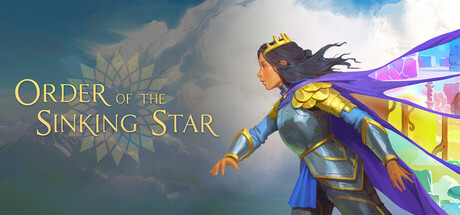
- Beautiful and soothing visuals
- Weak story and characters
- Poor technical performance crashes
- Accessible beyond puzzle veterans
Emotions
Archetypes
Hardware
What players like:
Common complaints:
Gameplay feedback:
Performance notes:
Recommendations:
Other player notes:
Similar games
Blend with other games






Review evidence
Why players say this
Review evidence
Why players say this
Steam review verdict
Excellent Sokoban-style puzzles, over 1000 of them, beautiful soothing visuals, and accessible design outweigh a weak story, forgettable characters, and crashes.
What players like
Excellent puzzle design: The puzzle design is widely praised as excellent, well-crafted, smart, and rewarding, with challenging a-ha moments that keep players engaged.
Highly praised overall game: Reviewers consistently describe the game as a masterpiece, amazing, beautiful, and a pleasure to play, with many calling it worth buying and a great overall experience.
Amazing voice acting: Multiple reviewers highlight the voice acting as brilliant, amazing, and very good, adding significant quality to the game.
Beautiful and soothing visuals: The game's visuals are described as pretty, interesting, soothing, and appealing, with beautiful art that enhances the overall experience.
Creative and layered mechanics: The game combines multiple mechanics in fascinating ways, with mechanics that build on top of one another creatively, resulting in a sophisticated puzzle experience.
Common complaints
Poor technical performance and crashes: Players report repeated crashes after the intro world, low frame rates even on the lowest settings, and poor performance on Steam Deck at high quality settings. Graphics options are also very limited, with only a performance-versus-quality preset available.
Weak story and forgettable characters: Multiple reviewers find the story incomprehensible, dull, or forgettable, with little investment in the characters or world building. The narrative fails to become engaging or memorable.
Bad dialogue and voice acting: The writing and dialogue are heavily criticized as very bad and generic, with reviewers questioning who wrote the lines. Voice acting is also described as generic and lacking quality.
Quantity over puzzle quality: The game contains a large number of puzzles, but many feel low quality or too easy, with easy content exhausted quickly. Reviewers suggest fewer, better puzzles would have been preferable.
Control and input issues: Players experience double inputs when using a gamepad, and the control setup feels weird overall. There is also no explanation given for rewind or undo mechanics.
Gameplay and performance
Puzzle game with 1000+ puzzles: The game is a puzzle game featuring over 1000 puzzles, with around 1400 puzzles in total. A demo includes 100+ puzzles and progress carries over to the full game.
Sokoban-style block-pushing gameplay: The game is fundamentally a Sokoban-style puzzle game where players push and pull blocks, including rocks, to solve puzzles. Movement is restricted to grid-based four directions.
Unique puzzle design with characters: The game features unique puzzle design and interesting characters, with multiple mechanics and interactions between different characters allowing for combinations.
Progressive puzzle difficulty and complexity: Puzzles gradually become more complex and layered as the player advances, with difficulty ramping up significantly in later levels. The difficulty progression is well-paced and does not overstay its welcome.
Mechanics combine and evolve: The game introduces new mechanics continuously, and these mechanics start combining in more complex ways as the player progresses. This leads to creative solutions and endless eureka moments.
Excellent overall performance: Many players report the game runs flawlessly on a wide range of hardware, including desktop PCs, Steam Deck, Linux, and older GPUs. Performance is described as fantastic even at max settings and much better than the demo.
Poor optimization and performance: Several users find performance disappointing, with poor optimization and low frame rates even on lowest settings. This is especially frustrating given the developer's emphasis on performance.
Inconsistent Steam Deck performance: While some report outstanding performance on Steam Deck, others note it runs poorly on high settings and lacks a fullscreen option in desktop mode. Experiences vary significantly.
Good performance on lower settings: Some users find the game runs smoothly when graphics settings are lowered. This suggests that with the right configuration, playable performance is achievable.
Crashes after intro world: Some players experience repeated crashes that persist even after rebooting. This makes the game unplayable past the introductory section.
Recommendations
Strong recommendation for puzzle fans: The overwhelming majority of feedback recommends the game to players who enjoy puzzle games. Multiple clusters describe it as a must-have or essential pick for the genre.
High overall recommendation rate: General recommendation clusters contain unqualified praise and strong endorsements. Reviewers repeatedly urge others to buy or try the game.
Accessible beyond puzzle veterans: Several reviewers note the game appeals even to people who do not normally play puzzle or Sokoban-style games. It is described as an easy recommendation for a broad audience.
Rewarding for patient players: Some feedback highlights that the game pays off for those willing to invest significant time. The experience is described as immensely rewarding for dedicated puzzle fans.
Demo helps purchase decision: Reviewers suggest trying the demo first and base their recommendation on that experience. It is presented as a low-risk way to evaluate the game.
Buying context
Community fair range: $20.00 - $40.00.
Session length: 5.0h.
Players overwhelmingly describe immediate enjoyment, with the demo hooking them instantly and the puzzle variety keeping the game addictive from the outset. One mild caveat is that the main hook takes time to get going, but this does not overturn the immediate-fun profile.
Friction: The main hook does not get going very fast; Hitting a wall in one puzzle quarter.
Unlock drivers: Non-linear structure lets you back out and tackle a different set of problems when you hit a wall; The game opens up with multiple pathways and options if you get stuck on a puzzle.
Player profiles
Hardcore Puzzle Logic Enthusiast: Methodically works through increasingly complex puzzle interactions, seeking logical solutions and enjoying the learning curve. Motivation: Solving challenging logical puzzles and experiencing satisfying eureka moments. Stance: buy.
Casual Bite-Sized Puzzle Player: Plays in spare moments, enjoys drop-in/drop-out sessions, and appreciates the Overworld for reducing difficulty pressure. Motivation: Relaxing, accessible puzzle solving in short, flexible sessions. Stance: buy.
Completionist Content Devourer: Long, dedicated sessions; streams gameplay; aims to see everything the game offers. Motivation: Conquering a massive puzzle game and experiencing all its content, including optional challenges. Stance: buy.
Platform notes
The Windows cohorts show a split: 16GB+ VRAM is positive, while the <8GB and 8-11GB cohorts are mixed due to a combination of smooth performance and optimization or stability complaints.
Windows <8GB VRAM: mixed. Mixed reports: some users get 90 fps or beautiful 4K visuals, but others report poor optimization and very low frame rates at minimum settings.
Windows 8-11GB VRAM: mixed. Mixed reports: one user gets 120-160 fps at 3440x1440 without upscaling, while another reports repeated crashes after the intro world.
Windows 16GB+ VRAM: positive. Users report fantastic performance at max settings and excellent 4K visuals.
Steam Deck: The filtered reviews are predominantly positive for Steam Deck and Linux. Users report flawless, outstanding, and high-frame-rate experiences, with no evidence of external launchers, anti-cheat errors, unreadable UI, or required Proton Experimental toggles. A minority notes a missing desktop-mode fullscreen option and weaker performance at high quality settings, but these are minor caveats rather than major friction.
Linux and Proton: The game demonstrates excellent Linux and Proton compatibility. Users report strong performance on various distributions and hardware, including 4K 120 FPS and flawless operation on both desktop Linux and Steam Deck. Only a minor note about high quality settings on Steam Deck appears, with no Linux-specific blockers or required workarounds.
Other review notes
Demo available for play: Reviewers consistently mention that a demo is available, allowing players to try the game before purchasing. The demo is seen as a significant part of the overall experience.
Comparisons to Braid and Witness: Reviewers often compare the game to the developer's previous titles, Braid and The Witness, with some calling them masterpieces. Opinions vary on how this game stands relative to them.
Developed by Jonathan Blow: Many reviewers note the game is developed by Jonathan Blow, creator of Braid and The Witness. This authorship is frequently mentioned as a key reason for their interest or purchase.
Over 1000 puzzles included: The game contains roughly a thousand puzzles, offering a massive amount of content. This leads to an expected long playtime, with some reviewers noting hundreds of hours to see everything.
Extensive development history: The game was in development for about 10 years, with many reviewers having followed the process through streams and broadcasts. This long development cycle is frequently highlighted.