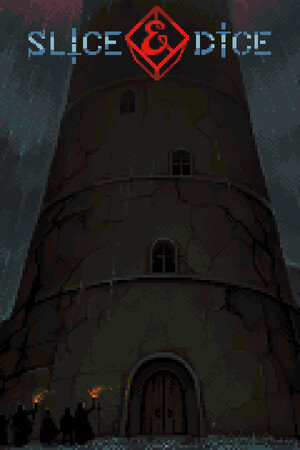
- Charming pixel art visuals
- Addictive dice deckbuilding gameplay
- Innovative dice combat mechanics
- Polished high quality experience
- Limited content and variety
- Difficulty balance and progression issues

Emotions
Archetypes
Hardware
What players like:
Common complaints:
Gameplay feedback:
Performance notes:
Recommendations:
Other player notes:
Similar games
Blend with other games



Review evidence
Why players say this
Review evidence
Why players say this
Steam review verdict
Charming pixel art and addictive dice deckbuilding with innovative combat make this polished gem fun, though limited content and uneven difficulty and progression issues hold it back.
What players like
Charming Pixel Art: The pixel art and overall visual aesthetic are highly praised for being charming, cute, and well-crafted. Many players specifically mention the appealing frog characters.
Excellent Roguelike Deckbuilder: Players consistently describe the game as a solid and enjoyable roguelike deckbuilder, with a novel approach that scratches the deckbuilder itch. It is considered a great example of the genre.
Addictive Gameplay Loop: The game is frequently called addictive and fun, with a satisfying gameplay loop that keeps players engaged. Many highlight the 'one more run' feeling.
Innovative Dice Mechanics: The dice mechanic is widely praised for its depth, creativity, and enjoyability, offering many possibilities and a satisfying learning curve. It stands out as a core strength of the game.
Overall Fun and Enjoyment: Players are having a lot of fun and really enjoying the game, describing it as a delight to play. The gameplay is consistently described as very fun.
Common complaints
Limited content and variety: Reviewers consistently note a lack of diverse content, including limited build variety, few enemy types, relics, events, and levels. This leads to repetitive and samey runs.
Difficulty and balance problems: The game suffers from poor balance, with frustratingly hard difficulty, absurd boss fights, and high enemy damage relative to player HP. Lower difficulties become dull, and the difficulty curve is inconsistent.
Runs are excessively long: Multiple clusters complain that runs take at least 1.5 to 3 hours, which is tiring and repetitive. This long duration is exacerbated by slow progression and pacing.
Slow and sluggish gameplay: The game feels slow and clunky, with tedious and boring gameplay. Progression is slow, making runs drag on.
Derivative of Slay the Spire: The game is heavily compared to Slay the Spire, often unfavorably. It lacks the depth, wackiness, and compelling decision-making of its inspiration, and sometimes copies elements without adding substantial value.
Gameplay and performance
Roguelite Run Structure: The game features run-based progression with random events, unlocks, and escalating power. Runs typically last 30-60 minutes and offer high replayability.
Deckbuilding With Dice: Instead of cards, players construct a deck of dice that are drawn and rolled. This dice-building twist on deckbuilding is a core mechanical hook.
Dice-Based Combat System: Combat revolves around rolling and using dice, with effects like attack, defense, thorns, and poison. Damage previews and unique dice interactions add tactical depth.
Distinct Playable Characters: Multiple characters are available, each with unique strategies, abilities, and even different board shapes. This adds significant replay value and variety.
Relic and Dice Synergies: Relics provide powerful buffs and synergize with dice, enabling different strategies. Collecting and combining relics and dice is key to building powerful runs.
Device Crash on Steam Deck: Multiple reports describe the game crashing and forcing hard reboots, sometimes showing a black screen on the Steam Deck. This affects device stability rather than just the game itself, making it a critical issue.
Runs Well on Low-End PCs: The game performs well on old or low-power hardware and runs light on devices. Players with modest setups report smooth experiences.
Startup Crash Issue: Some players report the game crashes every time they try to launch it. This prevents access to the game entirely for affected users.
Resolution Change Triggers Crashes: Crashes appear to occur after changing the resolution according to player observations. This suggests a specific trigger that developers could investigate.
No Performance Issues Reported: Some users experience no performance problems at all and find the game stable. This indicates inconsistent experiences across different hardware configurations.
Recommendations
Ideal for Slay the Spire fans: Players repeatedly recommend the game to those who enjoyed Slay the Spire and similar roguelike deck-builders. It is seen as a natural fit for that audience.
Strong for roguelike enthusiasts: Many reviewers say the game is a great pick for people who love roguelikes, roguelites, and turn-based deck-building games. The recommendation is broad within that genre community.
Highly recommended overall: A large number of players give the game a full recommendation and describe it as highly recommendable. The sentiment is very positive across multiple review clusters.
Good value for the price: Reviewers frequently mention that the game is worth the price, offers strong replayability for the cost, and provides good value overall. It is often described as worth every penny.
Best purchased on sale: Several players suggest waiting for a discount, recommending buying on sale rather than at full price. The game is considered a good deal when discounted.
Buying context
Community fair range: $10.00 - $15.00.
Game completion: 22.0h.
Session length: 2.0h.
Endgame: 50.0h.
Players often find the dice-based roguelike immediately fun and addictive, but many report it becomes repetitive after a few runs or hours. The time-to-fun profile is early enjoyment followed by a drop in long-term staying power.
Friction: Dice management or RNG may not click with some players early on.; Some report early enemy difficulty and squishy characters.; Slow pacing when optimizing dice placement.; Store-page presentation does not make the mechanics immediately clear..
Unlock drivers: The initial tutorial explains what the mechanics do.; Getting the hang of the dice system and unlocking more dice and items.; Gradual unlocks introduce complexity without a steep learning curve..
Player profiles
Hardcore Deckbuilder Veteran: Optimizes builds aggressively, blitzes through runs quickly, and benchmarks the game against established hard roguelike deckbuilders. Motivation: Seeking real challenge and mastery that rewards deep deckbuilder experience. Stance: sale.
Chill Time-Killer Player: Plays short casual runs, often multitasking or on a secondary device, favoring intuitive and forgiving mechanics. Motivation: Relaxing, low-stress entertainment that fits easily into short breaks or idle moments. Stance: buy.
Combo Crafter: Experiments with varied strategies and builds to discover powerful, game-breaking combos. Motivation: Chasing satisfying power spikes by assembling synergistic dice, relics, and build combinations. Stance: buy.
Platform notes
The Windows <8GB VRAM cohort shows a positive performance outcome in the available hardware-tagged report.
Windows <8GB VRAM: positive. The available 6 GB VRAM / 16 GB RAM Windows 11 report is recommended and mentions only an initial learning curve, not performance problems.
Steam Deck: Feedback is split between users who run the game flawlessly on Steam Deck and users who hit real obstacles. The dominant friction themes are missing or beta-gated controller support, a touchscreen-only workaround reported by at least one player, stability problems including a black-screen crash that forced a full device reboot, and a mismatch between the Verified badge and the absence of native 1280x800 / 16:10 output, compounded by late-game UI clarity issues. Several reviewers also confirm a clean, enjoyable out-of-the-box experience, so the game is broadly playable but requires workarounds and carries residual crash risk.
Linux and Proton: The filtered reviews contain only limited Linux/Proton-specific evidence, mostly focused on Steam Deck. Two users report smooth or issue-free Steam Deck play, while one reports buggier-than-expected performance and another questions the Verified status because native 1280x800 and 16:10 support are absent. There are no reports of Proton Experimental/GE requirements, launch options, anti-cheat/DRM blockers, or native Linux port failures. Overall, the game appears mostly functional on Linux/SteamOS with minor performance and display quirks.
Other review notes
Close Slay the Spire Clone: Many reviewers describe the game as a blatant clone of Slay the Spire, often calling it essentially that game but with dice instead of cards. It is repeatedly said to deliver a similar experience, feeling, or appeal for fans of Slay the Spire.
Originally on Itch.io: The game was previously available on itch.io in early builds, a demo, and a free version before moving to a Steam release. Several reviewers note they played or followed the game since its itch.io days.
Early Access Development History: The game was in early access and received new content in the 1.0 release. Reviewers note that it is still in development or awaiting a full release.
Mixed Comparisons to Other Roguelikes: The game is also compared to Slay the Spire, Balatro, and Gambonanza for its combo mechanics and fighting aspect. It is seen as less random and less punishing than Slay the Spire.
Demo Available Now: A free demo is currently available, though it is simpler than the full game. There was also a previous demo released by the developers before launch.