- Deep demon customization and collection.
- "Vengeance" route improves the story.
- Excellent music and distinctive art style.
- Deep, strategic, and rewarding combat system.
- Substantial content and high replayability.
- Weak, uninspired story and characters.
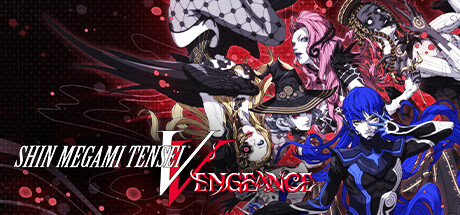
What players like:
Common complaints:
Gameplay feedback:
Performance notes:
Recommendations:
Other player notes:
Similar games
Blend with other games 83%Shin Megami Tensei III Nocturne HD Remaster
 82%Persona 5 Royal
 81%RAIDOU Remastered: The Mystery of the Soulless Army
 81%Soul Hackers 2
 81%Metaphor: ReFantazio
 81%Persona 3 Reload
 80%Touhou Artificial Dream in Arcadia
 79%STAR OCEAN THE SECOND STORY R
 79%Romancing SaGa 2: Revenge of the Seven
 79%NieR Replicant™ ver.1.22474487139...
 79%Tales of Berseria™
 79%OCTOPATH TRAVELER II
Review evidence
Why players say this
Review evidence
Why players say this
What players like
Deep demon customization and collection: The game offers extensive demon customization options through fusion, skill inheritance, and unique demon traits. Reviewers appreciate the depth and flexibility of the demon system, allowing for diverse team builds and strategic approaches. The demon designs themselves are also praised for their creativity and faithfulness to mythological sources.
"Vengeance" route improves story: The "Vengeance" route significantly improves upon the original story, offering better character development, worldbuilding, and meaningful choices. Reviewers appreciate the enhanced narrative and its impact on the overall experience. The availability of both the original and Vengeance routes adds replay value and allows players to experience different perspectives.
Excellent music and art style: The game features a phenomenal soundtrack that enhances the atmosphere and elevates the battles. Reviewers consistently praise the music's quality, variety, and its ability to immerse players in the game world. The game's graphics and art style are also well-received, creating a visually stunning and immersive experience.
Deep, strategic, and rewarding combat: The game features a deep and engaging combat system that rewards strategic thinking, team composition, and exploitation of enemy weaknesses. Many reviewers praise the Press Turn system and its variations, noting that it adds a layer of complexity and excitement to battles. The combat is often compared favorably to other JRPGs, including the Persona series.
Enjoyable, rewarding, and addictive gameplay: The game delivers a consistently enjoyable and rewarding experience through its engaging gameplay loop, exploration, and well-balanced challenge. Many reviewers highlight the game's addictiveness, replayability, and overall fun factor, making it a worthwhile experience for both newcomers and veterans of the genre. Quality of life improvements and smooth performance further enhance the experience.
Common complaints
Weak, uninspired story and characters: The story is a major weak point, described as generic, uninspired, and poorly written. Many reviewers found the plot to be confusing, boring, and lacking in depth, with underdeveloped characters and minimal emotional engagement. The original story (Canon of Creation) was particularly criticized.
Inconsistent difficulty, excessive grinding: The game suffers from inconsistent difficulty, often requiring excessive grinding to progress, especially in the late game. Some reviewers felt forced to use DLC or exploits to overcome difficulty spikes. The game can be punishing, with enemies capable of one-shotting the player.
Tedious, confusing map design: The game features repetitive and frustrating exploration due to confusing map design, lack of clear paths, and reliance on backtracking. Many areas look the same, and the open world feels empty and lifeless, making navigation a chore. Some reviewers experienced nausea due to the disorienting maps.
Lacks autosave, repetitive playthroughs: The game lacks an autosave feature, leading to potential loss of progress and frustration. Multiple playthroughs are required to unlock all achievements and endings, which many reviewers found tedious and repetitive.
Inferior to Persona series: Compared unfavorably to the Persona series, the game lacks the same level of polish, engaging characters, and compelling story. The absence of social elements and life sim aspects makes it harder to connect with the characters and choices made in the game.
Gameplay and performance
Semi-open world exploration: The game features semi-open world exploration with intricate, multi-layered maps that encourage exploration and puzzle-solving. Players can discover hidden routes, collectibles, side quests, and shortcuts. The world design often feels like a dungeon, emphasizing verticality and rewarding curious players.
Story choices and multiple endings: The game presents players with choices that influence the story, alignment, and ultimately, the ending. There are multiple endings based on player decisions and alignment with different ideologies (order, chaos, neutrality). The game offers two main story paths: the original Creation path and a new Revenge path.
Magatsuhi system adds depth: The Magatsuhi system introduces a new layer of strategic depth to combat, allowing players and enemies to unleash powerful ultimate skills when the Magatsuhi gauge is full. These skills can range from buffs and debuffs to massive damage attacks, requiring players to manage the gauge and adapt their tactics accordingly. Some side quests are tied to this system.
Greatly improved PC performance/graphics: The PC port offers significant performance and visual improvements over the original Switch version, including higher framerates (often exceeding 60 FPS, even up to 144 FPS or higher), resolutions up to 4K, and enhanced graphics. The game is now playable on a wider range of hardware, including the Steam Deck, where it runs smoothly.
Well-optimized, smooth performance: The game is well-optimized for PC and Steam Deck, with many reviewers reporting smooth performance at high settings. It runs well even on recommended hardware and the Steam Deck, often locking at 60 FPS with reasonable TDP. Some users have reported minor performance issues in later stages or on specific hardware configurations, but overall, the optimization is considered good.
Minor graphical/performance glitches: Some reviewers have noted graphical glitches, such as splotchy UI elements, and occasional performance dips during scene transitions or menu navigation. These issues can detract from the overall presentation.
Unreal Engine enhances visuals: The game utilizes Unreal Engine, resulting in improved visual fidelity and detailed effects compared to Atlus's in-house engine. This shift enhances the overall presentation and visual appeal of the game.
Denuvo DRM present, impact varies: The game includes Denuvo DRM, but some reviewers did not notice any performance impact. However, the inclusion of Denuvo is still criticized by some players.
Recommendations
Highly recommended JRPG experience: The game is overwhelmingly recommended for both newcomers and fans of the series, especially those who enjoy JRPGs and turn-based combat. Many reviewers consider it a must-play title and a great entry point to the Shin Megami Tensei franchise, with Vengeance being the definitive version of SMT V.
Similar to Pokemon/Persona, darker themes: The game is frequently compared to Pokemon and Persona, with reviewers recommending it to fans of monster-collecting and turn-based combat. It's often described as a darker, more mature take on the Pokemon formula, with a focus on demon fusion and strategic team building.
Worth buying, especially on sale: Many reviewers recommend purchasing the game, especially during a sale, citing its replayability and engaging content. However, some suggest waiting for a discount due to the price, particularly for those who already own the original version.
Mixed, some review bombing signs: Some reviewers express extreme positive or negative sentiment without providing specific reasons, indicating potential review bombing. These reviews often use hyperbolic language and lack constructive feedback.
Play both storylines if possible: Reviewers suggest playing both the Canon of Creation and Canon of Vengeance storylines to experience the full narrative. While some recommend playing Creation first for context, others suggest Vengeance for a better initial experience, especially for those only planning one playthrough.
Other review notes
Enhanced re-release of SMT V: The game is an enhanced re-release of Shin Megami Tensei V, drawing comparisons to Shin Megami Tensei III: Nocturne and Persona 5 Royal. It retains the core of SMT V but with changes and additions. The game is set in Tokyo, a common location for Megami Tensei games.
Two storylines: Creation and Vengeance: The game features two distinct storylines: "Canon of Creation" (original) and "Canon of Vengeance" (new). "Canon of Vengeance" expands upon the original with new content, characters, and altered events, but it is recommended to play "Canon of Creation" first for context. The Steam version includes quality of life improvements.
Lengthy, combat-focused, lacks auto-save: The game is a lengthy, combat-focused experience with light story elements initially. It offers multiple difficulty levels and six different endings, encouraging replayability. The game lacks an auto-save feature.
Mythological story of world reconstruction: The game's story revolves around creation and destruction within a mythological setting, drawing upon religious, philosophical, and theological elements. The world is a post-apocalyptic Tokyo populated by mythological creatures from various cultures. The player's role is to rebuild the world.
Wait for complete editions: Some reviewers suggest waiting for complete editions of Atlus games due to their pattern of releasing enhanced versions later. Content updates are surprisingly free, a departure from Atlus's usual DLC approach. This point reflects a common sentiment regarding Atlus's release strategy.