- Hybrid combat system praised
- Charming well-written characters
- Excellent JRPG overall
- Engaging story and worldbuilding
- Slow start and pacing
- Inconsistent partial voice acting
Emotions
Archetypes
Hardware
What players like:
Common complaints:
Gameplay feedback:
Performance notes:
Recommendations:
Other player notes:
Similar games
Blend with other games 92%Trails in the Sky 2nd Chapter
 91%Sora no Kiseki the 1st
 91%The Legend of Heroes: Kuro no Kiseki
 90%The Legend of Heroes: Trails in the Sky
 90%The Legend of Heroes: Trails in the Sky SC
 87%The Legend of Heroes: Trails of Cold Steel
 87%The Legend of Heroes: Trails from Zero
 87%8-Bit Adventures 2
 87%Quartet
 86%The Caligula Effect: Overdose
 86%DRAGON QUEST® XI S: Echoes of an Elusive Age™ - Definitive Edition
 86%Sea of Stars
Review evidence
Why players say this
Review evidence
Why players say this
Steam review verdict
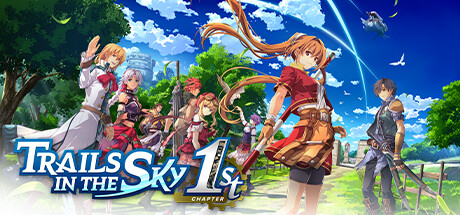
An excellent JRPG with a clever hybrid combat system, charming characters, and engaging worldbuilding, though its slow start and uneven pacing are compounded by inconsistent partial voice acting.
What players like
Hybrid combat praised: The blend of real-time action and turn-based combat is repeatedly highlighted as a creative and addictive mechanic. Players appreciate the seamless switching and strategic depth it offers.
Charming and well-written characters: Characters are described as lovable, distinct, and memorable, with strong development and endearing personalities. Their interactions and depth contribute significantly to the game's appeal.
Excellent JRPG overall: Reviewers widely describe the game as one of the best JRPGs, praising its well-rounded experience, gothic atmosphere, and cozy tone. It is seen as a standout entry in the genre with impactful moments and strong storytelling.
Engaging story and worldbuilding: The narrative is frequently called fantastic, well-written, and emotionally resonant, with extensive worldbuilding that draws players in. The plot and character development are consistently praised.
Fun and enjoyable experience: Reviewers find the game highly enjoyable from start to finish, with humorous moments and a consistently fun gameplay loop. It is described as a delight overall.
Common complaints
Slow start and pacing: Many players note the game and its story begin very slowly, only picking up around the midpoint. The deliberate pacing may not appeal to everyone.
Inconsistent partial voice acting: Cutscenes and dialogues frequently mix voiced and text-only lines, with some characters voiced while others are silent. This inconsistency is jarring and annoying.
Unengaging and predictable story: The narrative is described as boring, padded, and cliché, with few surprises. It only becomes interesting near the end for some players.
Poor English voice acting quality: The English dub is often criticized as painful, cringeworthy, and inconsistent, especially for Estelle. The protagonist's voice is particularly disliked.
Repetitive music and cheap graphics: The soundtrack is repetitive with few themes, and the graphics look cheap and lack AAA quality. NPC models also lack variety.
Gameplay and performance
Hybrid real-time and turn-based combat: Combat blends real-time action with traditional turn-based systems, allowing players to fight weaker enemies in real time or use command battles for tougher foes. This dual approach is a defining feature of the game's battle design.
Story-driven JRPG with anime presentation: The game is a story-focused JRPG featuring anime-style characters, voice acting, and extensive narrative content. Players highlight its character development and world exploration.
Turn-based combat core: Combat is primarily turn-based, rewarding turn management and strategic use of skills. Many players describe it as character-driven and flashy, with evolving mechanics over time.
Numerous side quests: The game contains many side quests that complement the main story, often providing world-building and character stories. Quest markers and map indicators help players find them.
Fast travel and speed-up options: Fast travel reduces backtracking and unlocks early, while a high-speed mode accelerates movement and event scenes. These features improve pacing and convenience.
Overall Positive Performance Sentiment: Many users describe the game as running phenomenally, smoothly, flawlessly, or like a dream, with no technical issues. This general praise indicates a well-received PC port.
Strong High-End PC Performance: The game runs at high resolutions and frame rates on powerful hardware, with users citing 4K 120FPS, 1440p 240FPS, and stable 180 FPS on a 5070 Ti. Performance is consistently praised on high-end setups.
Runs Well on Low-End Hardware: Many users report smooth performance on entry-level or older PCs, including a GTX 1060, Ryzen 3 3200G integrated graphics, and weak laptops. The game scales well to modest hardware.
Frequent Crashes and Stability Issues: A significant number of users experience crashes, especially on high-end hardware, sometimes tied to exceeding FPS caps or V-Sync settings. Crashes persist after clean reinstall and even in the sequel demo.
Excellent Steam Deck Compatibility: Multiple users report the game runs smoothly on Steam Deck, including good performance with AMD upscaling and reasonable battery life. Some note overheating issues but overall compatibility is strong.
Recommendations
Recommended for JRPG fans: A large number of reviewers strongly recommend the game to fans of the JRPG genre, describing it as a must-play for anyone who enjoys Japanese role-playing games.
Great entry point for newcomers: Many reviewers highlight the game as an ideal starting point for newcomers to the Trails series, praising its accessibility and modern feel compared to earlier entries.
Strong general recommendation: Reviewers give broad thumbs-up recommendations, saying the game deserves praise and is worth playing for a wide audience.
Try the demo first: Several reviewers advise playing the free demo before purchasing to confirm whether the game suits your tastes, calling it a safe way to preview mechanics and story.
Plan to buy the sequel: Multiple reviewers state they intend to immediately purchase and play the second chapter after finishing this game, indicating strong engagement with the story.
Buying context
Community fair range: $40.00 - $60.00.
Game completion: 80.0h.
Story completion: 70.0h.
The game is widely described as a slow burn with a dialogue-heavy, sluggish opening, but enjoyment often arrives once the story opens up and combat/party options expand. A minority of players never get past the pacing.
Reported time to anchor: 3h.
Friction: Slow, dialogue-heavy opening and prologue pacing; Combat feels boring at first with a limited party; Long walls of text and dialogue bloat; High enemy HP and tedious battles; Harsh early-game difficulty spikes; Dated, frustrating orbment/progression system.
Unlock drivers: The story picking up and creating a hook; Gaining more characters and skills for combat; Improved exploration and quest indicators making the slow start more varied; Seamless field-to-combat transition modernizing pacing.
Player profiles
Series Newcomer Entry-Seeker: Story-led first playthrough, often on Normal or Easy, may try the demo and complete side quests. Motivation: To enter the long-running Trails series at an accessible, modern starting point. Stance: buy.
Trails Veteran Nostalgia Completionist: Chronological series replays, side-quest completion, and direct comparison with the original releases. Motivation: To revisit a beloved Trails classic with modern polish and continue deep investment in the series. Stance: buy.
Combat Systems Tinkerer: Experiments with quartz and orbment builds, tests higher difficulties, and values efficient combat flow. Motivation: To master and optimize the combat and orbment build systems. Stance: buy.
Platform notes
Across the six largest hardware cohorts, players consistently report smooth performance, stable frame rates, and good optimization, with only minor isolated caveats such as occasional cutscene crashes or frame drops on lower-end systems.
Windows 12-15GB VRAM / 16-31GB RAM: positive. Reports describe smooth high-frame-rate play at high settings, including 1440p ultra, capped 120 fps, and no major stability complaints.
Windows 8-11GB VRAM: positive. Performance is generally described as smooth and stable with perfect frame rates, though one reviewer noted a few cutscene crashes.
Windows <8GB VRAM / <16GB RAM: positive. Even older laptops and handheld play are reported as smooth around 60 fps on low settings, with some heavier combat effects dropping to 25-30 fps.
Steam Deck: The game generally performs well on Steam Deck, with many users reporting stable 60 FPS and good controller support out of the box. However, achieving optimal performance often requires tinkering, such as using Proton-GE or third-party plugins, and some users experience battery drain and occasional stability issues like FPS drops or crashes. No evidence of small text, external launchers, anti-cheat errors, or unreadable UI was found. The experience is largely playable but not entirely seamless due to these technical caveats.
Linux and Proton: Linux and Proton feedback is predominantly positive: users report the game runs fine or great on Debian, Fedora, and Steam Deck with Proton, with no anti-cheat, launcher, or launch-blocking issues. The main Linux-specific friction is optional Proton-GE use for a notable FPS uplift and minor HDR/multi-monitor graphical quirks.
Extra review signals
Monetization: The reviews confirm a one-time-purchase JRPG with post-purchase monetization: paid cosmetic DLC and costume packs, a season pass, and at least one direct report of progression bundles. Deluxe-edition upgrade frustration and regional-pricing complaints add friction but are not the sole basis for the score. No credible evidence of real-money gacha, loot boxes, or currency obfuscation appears, so the score stays in the aggressive paid-DLC range rather than casino-style predatory.
External guides: The feedback centers on under-explained mechanics, tutorial gaps, and some guide or walkthrough use for quests and story outcomes. There is no evidence of farming, drop rates, loot tables, inventory management, crafting requirements, or bug/navigation blockers. Under the strict priority rules, the presence of complex mechanics and quest/content lookup triggers Tier 3.
Other review notes
Remake of original Trails game: Reviewers consistently identify the game as a remake of the original Trails in the Sky or an earlier series entry. Many note visual updates and quality-of-life changes compared to the original release.
Sequel chapter highly anticipated: Reviewers express excitement for the Second Chapter and note that a sequel is planned or already available. The game is often described as part of a trilogy with later entries.
First Trails series entry: The game is widely described as the first entry in the Trails series and serves as an entry point for newcomers. Several reviewers mention it was their first Trails game.
English and Japanese voice acting: The game supports English dubbing and Japanese voice acting with English subtitles. Voice acting is partial, with some dialogue voiced and some in text.
Playable demo available: A demo is available to try before buying, lasting over five hours and up to 6-10 hours if exploring the prologue on Nightmare difficulty.