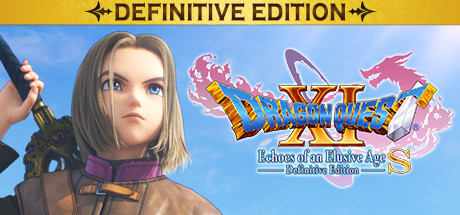
DRAGON QUEST® XI S: Echoes of an Elusive Age™ - Definitive Edition Review Summary
- Rich story and character development
- Engaging turn-based JRPG combat
- Immersive world and orchestral soundtrack
- Poor pacing and excessive length
- Childish tone and forced dialogue
- Graphical downgrade and PC port issues
Emotions
What players like:
Common complaints:
Gameplay feedback:
Performance notes:
Recommendations:
Other player notes:
Similar games
Blend with other games 87%The Legend of Heroes: Trails in the Sky SC
 87%The Legend of Heroes: Sen no Kiseki II KAI -The Erebonian Civil War-
 86%ASTLIBRA Revision
 86%The Legend of Heroes: Trails of Cold Steel
 86%8-Bit Adventures 2
 86%Quartet
 86%Sora no Kiseki the 1st
 85%Sea of Stars
 85%Yakuza: Like a Dragon
 85%The Legend of Heroes: Trails in the Sky
 85%Clair Obscur: Expedition 33
 85%FANTASIAN Neo Dimension
Review evidence
Why players say this
Review evidence
Why players say this
What players like
Rich Story and Character Development: The narrative is highlighted as emotionally resonant, well-paced, and layered with twists. Characters are described as charming, three-dimensional, and memorable, with strong arcs and relationships that evoke player investment.
Engaging JRPG Gameplay Loop: Players consistently praise the game's satisfying and well-designed turn-based combat, smooth pacing, and balanced difficulty. The gameplay is described as approachable yet strategic, with optional challenges for replayability.
Immersive World Design: The game world is described as heartwarming, vivid, and alive, with meticulous attention to detail in level design, exploration incentives, and environmental storytelling.
Orchestral Soundtrack Enhances Immersion: The fully orchestrated soundtrack is praised for its emotional impact, contextual fitting, and memorability. It elevates key moments and complements the game’s atmosphere.
Common complaints
Poor pacing and length: The game is perceived as overly long, with slow pacing in early chapters and a tedious mid-to-late game slog. Players report feeling trapped in repetitive or unchallenging content, especially during hours 60–80 and post-game sections.
Childish tone and writing: The story, characters, and dialogue are frequently labeled as childish, with awkward tone shifts (e.g., flamboyant aesthetics) and poorly integrated mature themes. Some content feels out of place or overly casualized.
Repetitive and irritating music: The soundtrack is described as repetitive, low-quality, and even grating, with limited tracks and short loops. Players report the music becoming irritating over time, detracting from immersion.
Graphical downgrade and poor visuals: The game’s graphics are criticized as inferior to the original version, with downgrades attributed to timed exclusivity. The 2D mode is particularly unpolished, feeling like an emulator with high encounter rates and slow performance.
Poor PC port and controls: The PC version suffers from lazy porting, including no key remapping, unintuitive controls, and poor keyboard/mouse support. Players struggle with basic functions like exiting the game or navigating menus.
Gameplay and performance
Story-driven character development: The narrative is heavily character-driven, with rich storylines, emotional depth, and callbacks to previous titles. Character interactions and side quests add significant depth to the experience.
Balanced difficulty with options: The game offers balanced difficulty settings, including hard-mode and Draconian Quest modifiers for challenge. Difficulty can be adjusted at game creation or via mods, but some settings are irreversible.
Customizable character progression: Players can customize characters through skill trees, equipment systems, and outfits. Progression affects combat effectiveness, and grinding is optional but available for endgame content.
Mini-games and side content: Mini-games like casino slots, horse racing, and crafting add variety. Side quests and collectibles encourage exploration and replayability, with some tied to hidden lore or achievements.
Turn-based combat with strategy: The game features a turn-based combat system with strategic elements like timing buffs, exploiting weaknesses, and adjustable speed. Players can choose between manual or automatic combat, catering to different playstyles.
Performance varies by platform: The game runs smoothly on PC (especially at higher settings) and older hardware but suffers FPS drops on Steam Deck and during camera movements. Switch performance is notably worse than PC.
Mods enhance stability and visuals: Mods resolve stuttering, improve geometry/textures, and enable higher resolutions/frame rates. The game is stable with mods but requires them for optimal performance on strong hardware.
Limited graphical and technical options: Players criticize the lack of HDR, DLSS/FSR, bloom, and render scaling. Technical downgrades like jagged edges and low GPU utilization (4GB VRAM) are also noted.
Definitive Edition runs smoothly: The Definitive Edition is praised for stable, fluid performance with no stutters or frame drops, even at high settings (e.g., 1440p/144fps).
Save data and aspect ratio issues: Steam cloud saves are prone to corruption, and the game lacks support for 16:10 aspect ratios, frustrating users with non-standard displays.
Recommendations
Ideal for JRPG and classic RPG fans: The game is widely recommended for fans of traditional JRPGs, turn-based combat, and story-driven experiences. It appeals to both newcomers and veterans of the genre, offering a modern take on classic mechanics.
Nostalgic yet accessible experience: The game provides a nostalgic trip for long-time fans while remaining welcoming to newcomers. Its rich content and classic storytelling make it a standout in the genre.
Technical and content considerations: Some reviewers note minor issues like save data management, localization quirks, or pacing. However, these are often outweighed by the game's strengths, such as its emotional storytelling and length.
Broad appeal with minor caveats: The game is highly recommended for a general audience, including beginners and long-time fans, but may not suit those expecting modern polish or complexity. Some reviewers suggest avoiding postgame content for a better experience.
Strong value and purchase recommendation: Reviewers consistently highlight the game's worth at full price, especially during sales. It is considered one of the best entries in the franchise and offers significant content for its cost.
Other review notes
Nostalgia-driven graphics revival: Players frequently mention 'Project Rebuild' and retro 2D modes as tributes to classic games, emphasizing the emotional and cultural value of preserving original aesthetics. This reflects a strong demand for nostalgia in modern releases.
Emotional and personal connections: Stories of data loss, nostalgia, and personal anecdotes (e.g., playing while streaming) highlight the emotional weight of the game. These experiences foster a sense of community and shared history among players.
Cultural and historical RPG influence: The series is recognized as a cornerstone of RPG culture, shaping tropes and serving as a national memory in Japan. Players highlight its legacy and impact on the genre, underscoring its significance beyond gameplay.
Toriyama-inspired art direction: The game’s design is praised for its connection to Akira Toriyama, a legendary artist, which resonates with fans of his iconic style. This adds a layer of authenticity and appeal for long-time followers of the series.
Platform optimization concerns: Players note that the game feels optimized for PlayStation but is released on Steam, raising questions about performance and compatibility. This suggests potential frustration with cross-platform releases.