- Excellent turn-based combat
- Addictive demon fusion system
- Outstanding and catchy soundtrack
- Compressed audio quality
- Too many random encounters
- Lazy disappointing remaster
Emotions
Archetypes
Hardware
What players like:
Common complaints:
Gameplay feedback:
Performance notes:
Recommendations:
Other player notes:
Similar games
Blend with other games 86%RAIDOU Remastered: The Mystery of the Soulless Army
 84%Soul Hackers 2
 83%Shin Megami Tensei V: Vengeance
 82%Baten Kaitos I & II HD Remaster
 81%Tales of Graces f Remastered
 81%FINAL FANTASY VIII - REMASTERED
 81%Etrian Odyssey HD
 81%FINAL FANTASY TACTICS - The Ivalice Chronicles
 81%SaGa Frontier 2 Remastered
 81%LISA: The Painful
 80%OFF
 80%FANTASIAN Neo Dimension
Review evidence
Why players say this
Review evidence
Why players say this
Steam review verdict
Excellent turn-based combat, addictive demon fusion, and a catchy soundtrack are undermined by compressed audio, excessive random encounters, and a disappointing remaster.
What players like
Excellent turn-based combat: Players consistently praise the strategic, deep, and satisfying turn-based combat, specifically the Press Turn system. Mechanics like exploiting enemy weaknesses to gain extra turns and the challenge of the battles are highlighted as addictive and rewarding.
Addictive demon fusion system: Players love the demon fusion and recruitment systems, finding them satisfying and addictive. The ability to catch, converse with, and fuse a wide variety of demons offers endless customization and strategic depth.
Outstanding and catchy soundtrack: The soundtrack receives high praise for being magnificent, catchy, and outstanding. It is frequently mentioned as a key element that enhances the game's atmosphere and emotional impact.
Meaningful choice-based story: The game offers a good story with multiple endings that depend on player choices. This system provides high replayability and engages players with thoughtful, philosophical decisions.
Faithful to PS2 original: The game is praised for being nearly identical to the PS2 version, offering a faithful and nostalgic experience. This consistency pleases fans who wanted to revisit the original.
Common complaints
Compressed audio quality: Audio and music are heavily compressed, often carried over from the PS2 version, resulting in low quality that sounds awful compared to modern standards. This is a common complaint across many reviews.
Too many random encounters: Random encounters occur every few steps, making dungeon exploration tedious and the game frustrating, especially in later playthroughs. Players find them outdated and a major waste of time.
Lazy and disappointing remaster: The remaster is consistently labeled as lazy, minimal, and disappointing, with no significant effort to improve the original. It is considered one of the laziest ports available.
Overpriced for an old remaster: The game is considered overpriced for an 18-year-old title, with a base price of $50 that does not match the quality of the remaster. Even on sale, many feel it is not worth the cost.
Intrusive Denuvo DRM: The inclusion of Denuvo DRM is criticized as intrusive and problematic, with some players refusing to play because of its performance impact and always-on verification.
Gameplay and performance
Labyrinthine dungeon design: Dungeons are labyrinthine mazes filled with random teleport traps, invisible walls, dead ends, and puzzles, creating oppressive exploration.
Demon fusion and collection: The game features a deep demon fusion system with skill inheritance, allowing extensive customization, along with a large collection of over a hundred unique demons to recruit and fuse.
Press Turn combat system: Turn-based combat uses the Press Turn system, where hitting weaknesses grants extra actions; buffs and debuffs are essential for success.
Challenging difficulty modes: The game offers multiple difficulty settings, including a notoriously hard mode, with Normal and Hard options plus an easy mode for accessibility.
Multiple narrative endings: Player choices throughout the game lead to multiple endings, including a special True Demon Ending based on alignment and moral decisions.
Mods required for 60 FPS: Players report that achieving 60 FPS or higher requires mods, as the base game does not support higher frame rates. Some mods may introduce issues like broken encounter rates.
30 FPS frame rate cap: The game is locked at 30 FPS, which many players find unacceptable for modern gaming. This is the most frequent complaint across the feedback.
Frequent crashes and freezes: The game crashes or freezes frequently, especially during cutscenes, combat with multiple enemies, or specific progression points, causing progress loss.
Poor audio quality: Audio quality is heavily criticized as compressed, low quality, or damaged, requiring mods to improve. Music and sound effects are notably poor.
Low quality cutscenes: Cutscenes are low resolution (often 480p, 4:3 aspect ratio) and look outdated, resembling the original PS2 version rather than a proper remaster.
Recommendations
Wait for a sale: A large number of reviews suggest waiting for a sale before purchasing, as the game is considered not worth the full price but is a good value when discounted.
Highly recommended for JRPG fans: Many reviewers highly praise the game and specifically recommend it to fans of Japanese role-playing games, especially those who enjoy classic JRPGs with grinding elements.
Good for Persona and SMT fans: Fans of Atlus' other series, such as Persona or Shin Megami Tensei, will likely enjoy this game due to its similar turn-based combat and demon-collecting mechanics.
For challenging RPG and series roots: The game is recommended for players who want a challenging RPG, especially those interested in the origins of the Shin Megami Tensei series and classic grinding mechanics.
Use performance and audio mods: Players recommend using mods to unlock 60 FPS and restore uncompressed audio, as the PC port has technical limitations that these mods significantly improve.
Buying context
Community fair range: $14.99 - $40.00.
Game completion: 100.0h.
Story completion: 40.0h.
Session length: 2.0h.
Endgame: 30.0h.
Players generally find the early and mid game enjoyable but the late game becomes a tedious, overlong chore, causing a drop in fun after a certain point.
Player profiles
Hardcore Challenge Seeker: Strategic, uses buffs/debuffs, plans demon fusion, accepts grinding as part of the challenge. Motivation: Mastering the Press Turn battle system and overcoming brutal difficulty. Stance: sale.
Nostalgic Longtime Fan: Plays with nostalgia correction, tolerates outdated mechanics, may use mods for quality of life. Motivation: Reliving a classic JRPG experience and appreciating its atmosphere and story. Stance: sale.
Persona Refugee: Struggles with difficulty, learns to use buffs and strategy, may rely on guides or mods. Motivation: Exploring the darker roots of Atlus games after enjoying Persona. Stance: no buy.
Platform notes
Both cohorts report that the game requires mods to fix performance and audio issues, but once modded, it runs well and is recommended by users.
Windows <8GB VRAM: positive. Game runs poorly at default 30 FPS with muted audio, but mods fix these issues; users still recommend.
Windows 12-15GB VRAM: positive. With mods, the game runs smoothly at max graphics and 60 FPS, even on Steam Deck at low TDP.
Steam Deck: The game is locked at 30fps, burdened by Denuvo DRM that hinders Linux/Steam Deck compatibility, and suffers from compressed audio, resolution caps, and broken cutscenes on Steam Deck. Mods can resolve most issues but require tinkering, making the out-of-box experience significantly flawed.
Linux and Proton: Persona 4 Golden HD Remaster (or similar) has significant Linux compatibility issues including broken cutscenes, explicit lack of developer support, and warnings against Steam Deck use. However, community mods enable smooth gameplay on both Linux and Steam Deck, requiring tinkering to achieve a playable state.
Extra review signals
Monetization: The remaster is criticized for selling previously included content (Maniax, Dante) as paid DLC and offering convenience DLC (exp/money maps) that alleviate intentionally slow progression. Combined with a high base price, these aggressive monetization practices go beyond standard cosmetic or optional DLC.
External guides: User feedback highlights a strong dependency on external guides due to complex systems, unclear progression, and many irreversible missable elements. The primary complaint falls under Instructional Data needs, as players seek guidance on mechanics, quest outcomes, and secrets.
Other review notes
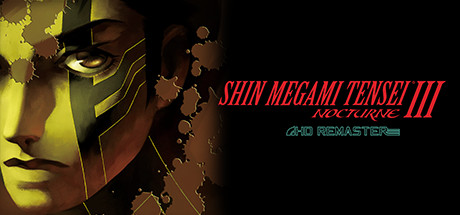
Remaster of PS2 classic: The game is an HD remaster of the 2003 PS2 cult classic Shin Megami Tensei III: Nocturne. Many reviewers describe it as a basic port with minor improvements, lacking the enhancements expected of a proper remaster.
Free DLC missable: Free DLC content, including the Chronicle Pack and True Demon Ending, must be manually downloaded from Steam before starting the game. If not selected at the new game screen, this content and the related ending are permanently missable.
Mods fix FPS and audio: Mods are essential for a good experience, fixing the 30fps cap, adding 60fps or higher framerates, and improving compressed PS2-era audio. Tools like MelonLoader and modpacks such as 'Quality of Death' are highly recommended.
Paid DLC for characters: Paid DLC packs add characters like Dante from Devil May Cry or Raidou Kuzunoha, and include difficulty-lowering options. The Maniax Pack or Chronicle Pack are needed for additional content and easier gameplay.
Few quality-of-life improvements: The remaster adds widescreen and HD resolution, but lacks modern quality-of-life features. Many reviewers feel it is a minimal upgrade, more of a port than a full remaster.