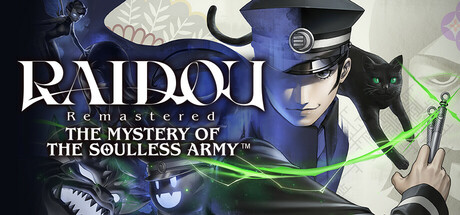
RAIDOU Remastered: The Mystery of the Soulless Army Review Summary
- Vastly improved gameplay and added features.
- Retains original charm and atmosphere.
- Engaging demon interactions and combat system.
- Interesting story set in unique Taisho era.
- Clunky, stiff, and unresponsive combat.
- High price point with poor optimization.
What players like:
Common complaints:
Gameplay feedback:
Performance notes:
Recommendations:
Other player notes:
Similar games
Blend with other games 86%Shin Megami Tensei III Nocturne HD Remaster
 83%Onimusha 2: Samurai's Destiny
 82%Soul Hackers 2
 82%Baten Kaitos I & II HD Remaster
 81%Tales of Graces f Remastered
 81%Shin Megami Tensei V: Vengeance
 81%Onimusha: Way of the Sword
 81%Anima Gate of Memories: I&II Remaster
 81%Stellar Blade™
 80%Sora no Kiseki the 1st
 79%Tales of Zestiria
 79%DRAGON QUEST VII Reimagined
Review evidence
Why players say this
Review evidence
Why players say this
What players like
Vastly improved gameplay and features: The remaster significantly improves gameplay with smoother combat, redesigned systems, and quality-of-life features like fast travel and quick saves. It retains the original's charm while modernizing the experience, making it superior to the PS2 version. The combat system has been overhauled, with new mechanics such as dodging, posture breaking, and active skills.
Retains original charm and atmosphere: The remaster successfully retains the nostalgic charm and unique atmosphere of the original PS2 game, including its art style and setting. The game evokes positive emotions, especially for those familiar with the original, while still feeling fresh and interesting.
Engaging demon interactions and combat: The game features engaging demon interactions, including fusion, negotiation, and combat. Players can summon and fight alongside their favorite demons, with the ability to control two demons simultaneously. The demon compendium and fusion system have been adjusted for more agility and options, allowing for freedom in creating demon builds.
Interesting and engaging story: The game features an interesting and engaging story that holds up well. The story is fast-paced and has hooked the reviewer.
Unique Taisho era setting: The game has a unique and appealing atmosphere, with a cool setting inspired by the Taisho era. The environments and locations look great, contributing to the game's overall immersive experience.
Common complaints
High price, poor optimization: Several reviewers mention the game's high price point relative to its content and technical execution. Optimization issues like frame drops and lag, combined with outdated graphics, further detract from the value proposition. Some consider the remaster a cash grab due to lack of significant improvements.
Clunky, stiff, unresponsive combat: The combat system is criticized for being clunky, stiff, and unresponsive, reminiscent of older PS2-era titles. Players find the combat monotonous and lacking impact, with poor feedback on attacks. These issues make the game less enjoyable, especially for those accustomed to more modern action games.
Cumbersome demon management mechanics: Managing demons is cumbersome due to a difficult-to-see demon HP bar, tedious summoning sequences, and the need to constantly switch demons for specific abilities. Players must juggle multiple tasks related to demon management during combat, adding to the game's complexity and hindering the flow of gameplay.
Overwhelming, unforgiving combat difficulty: The game's difficulty stems from overwhelming combat mechanics, unforgiving boss fights, and unclear enemy telegraphing. Players are burdened with managing multiple systems simultaneously, while also facing enemies with difficult-to-read attacks and repetitive boss patterns. This leads to frustration and a high barrier to entry.
Inconsistent, outdated visuals: The game's visual presentation is inconsistent, with outdated PS2-era character models clashing with updated textures. Reviewers also note poor texture quality, inconsistent lighting, and a lack of a free camera, leading to obscured views and a visually unappealing experience.
Gameplay and performance
Action-based combat system: The game features action RPG combat, a departure from the turn-based system of the main SMT series, with faster and more responsive battles. While generally improved, some find it somewhat dull or clunky, especially in smaller arenas. Some reviewers draw comparisons to games like Fate/Samurai Remnant.
Detective work and demon summoning: The game blends action RPG combat with investigative elements, set in 1930s Japan. Players balance detective work with summoning and controlling demons, navigating political intrigue and supernatural entities. It combines SMT's demon interactions with Persona's human relationships.
Combo-based combat mechanics: The combat system includes special techniques, gauge-based ultimate moves, just-dodge rolling, and finishing moves. Successfully evading or breaking an enemy's stance allows for a special move called 'Satsuma Issen'. The game rewards combo-based play.
Simultaneous demon summoning: Players can summon two demons simultaneously, even duplicates, who share a mana bar with the player. The demons have titles, and can be collected and nurtured.
Instant dodge counter mechanic: The game includes an instant dodge mechanic that allows for a powerful counter-attack if timed correctly. However, in the 'righteous path' mode, the instant movement and demon invisibility feel overpowered.
Excellent Linux, Steam Deck compatibility: The game exhibits excellent compatibility and performance on Linux and Steam Deck. Players report a smooth experience right out of the box, indicating strong optimization for these platforms.
Graphics updated to HD: The game's graphics have been updated to high definition. This suggests a visual enhancement, though the specific impact on gameplay or overall experience is not detailed.
Recommendations
Strongly recommended; great entry point: The game is highly recommended, especially to fans of Atlus games (SMT, Persona) and newcomers to the series. Reviewers praise the improvements in the remaster, making it the best way to experience the game, and find the story refreshing. Some suggest it's a good entry point for those new to SMT or looking for a faster-paced alternative to turn-based combat.
Hopes for future installments/remasters: Many reviewers express hope for future installments, remasters, and sequels in the Devil Summoner series, and other Megaten games. They appreciate Atlus's work on this remaster and wish to see more content of similar quality in the future. Some specifically mention wanting a remaster of Abaddon King or a Raidou 3.
Unresolved bugs; no Russian patch: Some reviewers do not recommend purchasing the game due to unresolved bugs, despite their support for the title. One reviewer mentions that they would give the game a higher score if a Russian language patch were released. This point highlights technical issues and localization concerns.
Controller, settings, and purchasing advice: Several minor points are mentioned, including the recommendation to use a controller, adjust brightness and contrast, and buy the deluxe edition to avoid DLC costs. One reviewer suggests that the game will be discounted soon, and another recommends waiting for a discount unless you are an 'Atlas whale'. These points offer practical advice and purchasing considerations.
Improve combat; outsource action feel: One reviewer suggests retaining or improving the current combat system in future installments but outsourcing the action/combat feel to another developer. They also express curiosity about how much better the game could be with improved technical capabilities, similar to Metaphor: Refantazio. This point focuses on potential improvements to the combat and technical aspects of the game.
Other review notes
Faithful remake with added elements: The game is a remake with elements from 'Devil Summoner: Kuzunoha Raidou vs. the Soulless Army' (2006), featuring dubbing and subtitling not present in the original. It retains the feel of the original game, perhaps too faithfully, while using original assets.
Demon summoning RPG mechanics: The game emphasizes RPG elements through demon summoning mechanics. Players take on the role of a demon summoner, utilizing familiar mechanics within the game.
Desire for more Atlus remasters: The reviewer hopes for more support for the game and the remastering of other sagas on current platforms. They believe that other IPs deserve more attention compared to Persona.
Inconsistent voice acting quality: The voice acting quality is inconsistent. Some characters' voices do not align with the reviewer's expectations.