- Top-tier Metroidvania experience
- Fun and challenging platforming
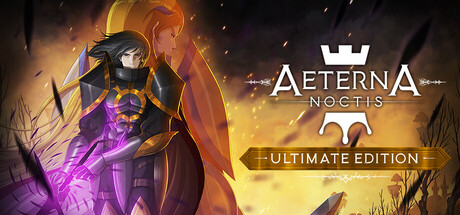
- Beautiful visuals and art style
- Brutal, unfair platforming difficulty
- Various bugs and lack of polish
- Poor overall PC optimization
Emotions
Archetypes
Hardware
What players like:
Common complaints:
Gameplay feedback:
Performance notes:
Recommendations:
Other player notes:
Similar games
Blend with other games





Review evidence
Why players say this
Review evidence
Why players say this
Steam review verdict
A top-tier Metroidvania with fun, challenging platforming and beautiful art, though brutal, sometimes unfair difficulty, bugs, rough polish, and poor PC optimization hold it back.
What players like
Top-tier Metroidvania: The game is frequently called one of the best Metroidvanias, with some reviewers ranking it among their favorites. It is praised for its beautiful art and challenging gameplay within the genre.
Fun and challenging platforming: Platforming is frequently praised as fun, clever, and engaging, with a good balance of challenge and fairness. It is often cited as the standout feature that sets the game apart.
Beautiful visuals and art style: The game's graphics and art style are widely praised as gorgeous, stunning, and beautifully drawn. The visual presentation is a major positive point for many reviewers.
Amazing music and soundtrack: The music and soundtrack are consistently described as amazing, beautiful, and atmospheric. It enhances the overall experience and is considered a highlight by many players.
Excellent gameplay and mechanics: Gameplay is described as smooth, responsive, addictive, and well-executed. Many reviewers find the mechanics solid and engaging, contributing to an overall excellent experience.
Common complaints
Brutal, unfair platforming difficulty: Many players find the platforming sections extremely punishing, often requiring frame-perfect execution and leading to frustration and repeated deaths. The platforming is described as ruthless and not always fair.
Various bugs and lack of polish: The game has numerous bugs, glitches, and jank, sometimes causing crashes or getting stuck. It is less polished than similar games like Hollow Knight.
Tedious backtracking with repeated platforming: Backtracking is extremely tedious, especially when it forces players to repeat difficult platforming sections without shortcuts. This becomes painful and exhausting, particularly in the end game.
Excessive and janky platforming focus: The game is heavily platforming-focused, with too many sections that feel janky or overstay their welcome, blurring the line between platformer and metroidvania. Even with all abilities, many areas remain difficult.
Shallow and unsatisfying combat: Combat feels like an afterthought, weak, generic, and unpolished. Many reviewers note it is brainless and not the strong point of the game.
Gameplay and performance
Metroidvania genre with platforming: Players frequently describe the game as a Metroidvania that emphasizes platforming and exploration. Many note a large map, ability unlocks, and backtracking as key elements.
Challenging platforming difficulty: A common theme is that platforming is very difficult, with many traps, spikes, and precision jumps. Players often cite platforming as the main source of challenge.
Precision platformer core: The game is frequently described as a precision platformer requiring tight controls and exact jumps. Many feel it leans more toward precision platforming than traditional Metroidvania.
Boss fights with patterns: Boss fights are a notable feature, often requiring players to learn attack patterns and dodge mechanics. Some bosses have multiple phases and bullet-hell attacks.
High-difficulty Metroidvania focus: Reviewers repeatedly highlight the game as a high-difficulty Metroidvania with demanding platforming sequences and hard boss fights. The combination of Metroidvania structure and hard difficulty is a core identity.
Poor overall PC optimization: Many players report severe performance issues, including low frame rates, stuttering, and GPU usage at 99% even on high-end hardware. Lowering settings often fails to improve performance.
Frequent crashes and stability issues: Crashes occur regularly, sometimes hourly, and can cause loss of progression or save data. Some players experience occasional crashes, while others face frequent ones.
Steam Deck performance inconsistent: While some find the game runs well on Steam Deck, others report poor performance and limitations. One user notes it should be rated Playable rather than Verified due to microscopic text and unusable control remap.
Long loading times: Loading screens are excessively long, occurring frequently even between small scenes. Some players find that load times are only acceptable with nearly minimal graphics settings.
Controller support broken: Controller support is badly broken, with misread thumbstick directions causing unintended actions. Alt-tabbing also causes the controller to stop working until alt-tabbing again.
Recommendations
Recommended for Metroidvania fans: Many reviewers strongly recommend the game to fans of the Metroidvania genre, often citing its exploration and challenging gameplay as highlights. It is frequently described as a must-play for enthusiasts of the genre.
For hardcore platformer enthusiasts: The game is highly recommended for players who enjoy difficult platforming challenges, such as those found in Path of Pain or Celeste. It is not recommended for casual players due to its demanding precision.
Not recommended for casual players: Multiple reviewers advise against buying the game for casual gamers or those new to the genre, as its high difficulty and punishing nature may lead to frustration.
Hollow Knight fans will enjoy: Reviewers frequently state that if you loved Hollow Knight, especially its White Palace section, you will likely enjoy this game. Comparisons to Hollow Knight are common, with some even considering it better.
Difficult but fair challenge: The game is recommended for players who seek a challenging but fair experience, often described as difficult yet rewarding. It appeals to those who enjoy overcoming tough obstacles.
Buying context
Community fair range: $15.00 - $30.00.
Game completion: 45.0h.
Story completion: 30.0h.
Endgame: 30.0h.
Aeterna Noctis often starts rough because of early difficulty, a weak starting kit, bugs, and confusing tutorials, but reports indicate it becomes fun after several hours and a few bosses as powers and progression open up. Some players enjoy it immediately, while others find the late game frustrating.
Friction: Early difficulty spike and weak starting character; Bugs and unpolished early experience; Confusing tutorials and poor localization; Short melee range and lack of blocking make early combat awkward; Backtracking and oversized maps slow progress; Precision platforming and trial-and-error sections frustrate early.
Unlock drivers: Gaining more powers and growing stronger while progressing; Reaching the middle section where the map opens up with strong platforming; Persevering through initial rage and learning the challenges; Defeating bosses after multiple tries for satisfaction; Using the skill tree and gem systems to improve stats.
Player profiles
Hardcore Precision-Platforming Veteran: Seeks punishing traversal and boss challenges, learns patterns, and retries hard sections until successful. Motivation: Mastering demanding precision platforming and difficult boss fights. Stance: buy.
Metroidvania Genre Enthusiast: Explores sprawling maps, hunts upgrades and secrets, and engages with bosses and skill-tree customization. Motivation: Exploring a large Metroidvania world with familiar progression, combat, and collectible systems. Stance: buy.
Difficulty-Sensitive Casual Explorer: Chooses easier difficulty, explores at a relaxed pace, and avoids punishing optional platforming. Motivation: Experiencing a visually rich Metroidvania world without overwhelming difficulty or frustration. Stance: sale.
Platform notes
On Windows systems with under 8 GB VRAM, the cohort reports notable stability and readability issues, including stuttering, black-screen load failures, and crashes. These technical problems outweigh the few recommended reports, which mostly discuss gameplay or audio rather than reliable performance.
Windows <8GB VRAM: negative. Reviews report font readability problems at lower resolutions, inexplicable stuttering, black-screen load failures, and frequent crash risk, while positive reports focus mainly on gameplay and atmosphere.
Steam Deck: The game is labeled Steam Deck Verified but user feedback reveals significant friction. Anti-cheat software caused launch failures and security concerns (later removed), text and UI are often unreadable on the handheld screen, controller input is problematic for precise platforming, and performance is inconsistent with crashes and frame drops. These barriers collectively result in a high friction score, contradicting the Verified status.
Linux and Proton: The Linux and Steam Deck evidence is mostly positive: reviewers report no problems with Proton 6.3-8, label Linux/Steam Deck compatibility as Platinum, and say the game runs well on Deck and Steam Machine hardware. One detailed report required Proton GE because videos did not show on Proton-Stable and mentioned minor video stutter, while Deck performance feedback is mixed. Overall, the game appears to work with only minor Proton/Deck tweaks rather than significant Linux-specific breakage.
Extra review signals
Monetization: The reviews discuss difficulty, achievement pressure, free DLC installation failures, and a paid DLC that can reset map exploration. No review describes a real-money shop, paid gacha, loot boxes, currency obfuscation, paid convenience, battle pass, or direct pay-to-win mechanics. The only monetization evidence is traditional paid DLC and achievement gating, which does not meet the threshold for aggressive or predatory monetization.
External guides: The audit reveals a primary dependency on instructional data (Tier 3: The Student), with players frequently consulting external guides for quest outcomes, ability acquisition, and mechanics. Navigation confusion (Tier 4) is also present but secondary. No evidence of farming or inventory management wiki tax (Tier 1/2). Mitigating features like a built-in map and generous checkpoints slightly reduce the burden. The overall wiki tax is moderate, scoring 50.
Other review notes
Frequent Hollow Knight comparisons: Many reviewers compare the game to Hollow Knight across art style, music, mechanics, and overall quality, often placing it in the same conversation as Celeste, Ori, and Metroid.
Platforming praised as Hollow Knight-caliber: Reviewers highlight platforming difficulty and design as comparable to or better than Hollow Knight's, especially the White Palace sections, and similar to Celeste.
Massive game scope and map: The game is repeatedly described as very large, with huge zones and one of the biggest maps in the genre, spanning dozens of hours of exploration.
Aeterna Lucis sequel announced: A direct sequel titled Aeterna Lucis is planned and close to release, with reviewers noting it will connect to this game's story.
Very long playtime for genre: Players report 30-60 hours to complete, with completion percentages remaining low even after dozens of hours, making it one of the longest metroidvanias.