- Beautiful visuals and graphics
- Fun and enjoyable gameplay
- Excellent music and sound
- Severe performance issues and stutters
- Poor optimization across all settings
- Frequent crashes and stability problems
Emotions
Archetypes
Hardware
What players like:
Common complaints:
Gameplay feedback:
Performance notes:
Recommendations:
Other player notes:
Similar games
Blend with other games




Review evidence
Why players say this
Review evidence
Why players say this
Steam review verdict
Beautiful visuals, fun gameplay, and excellent music and sound are undermined by severe stutters, poor optimization, and frequent crashes.
What players like
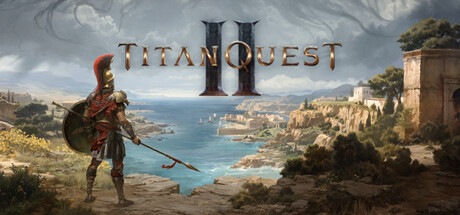
Beautiful Visuals and Graphics: The game's graphics and visual design are frequently commended for being beautiful, detailed, and a pleasure to look at. Many note the vibrant and polished aesthetic that stands out from competitors.
Fun and Enjoyable Gameplay: Players consistently describe the core gameplay as fun, entertaining, and enjoyable, often highlighting its chill and engaging nature. This is a fundamental strength praised across many reviews.
Excellent Music and Sound: The music and sound design are frequently praised as stunning, top-notch, and excellent. Voice acting is also highlighted as very good, contributing to an immersive experience.
Solid ARPG Foundation: Players view the game as a well-made ARPG with a good story and smooth, easy-going gameplay. It is considered to have a strong base for future development.
Impressive Even in Early Access: Despite being in early access, the game is considered very solid, wonderful, and great. It is seen as already providing a complete and enjoyable experience.
Common complaints
Boring and Uninspired Gameplay: Many reviewers describe the game as boring, repetitive, and lacking the fun of a looter game. It feels soulless and unimaginative, with monotonous gameplay.
Inferior to Titan Quest 1: Players widely feel that this game fails to live up to the original Titan Quest, citing inferior world building, gameplay, progression, and skill tree. It feels more like a DLC or rework rather than a true sequel.
Skill System Needs Overhaul: The skill system is criticized for being uninspiring, clunky, and poorly explained. Many feel it needs a complete rework for better synergy and meaningful progression.
Insufficient Enemy Variety: Enemies are criticized for being monotonous and lacking diversity, with too much wildlife and repetitive tactics. This makes combat feel dull and unchallenging.
Lack of Language Support: The game lacks official localization for several languages, including Spanish, Italian, Brazilian Portuguese, and Russian. This limits accessibility for non-English speakers.
Gameplay and performance
Mastery System with Customization: The mastery system allows skill customization and is often mentioned alongside talents and attributes. Players appreciate the depth it adds to build creation.
Skill Tree System Praised: Players consistently highlight the skill tree system, noting its branches, modifiers, and customizable active and passive sub-skills. This feature is central to character building and is widely appreciated.
Deep ARPG Builds Highlighted: Reviewers frequently describe the game as an ARPG with deep character builds, similar to Diablo 2 and 3, featuring skill trees, stat systems, and point allocation. This appeals to fans of the genre.
Dual-Mastery Class System: Players can combine two masteries to form a custom class, a feature frequently praised for its flexibility and depth. This dual-class system is a standout mechanic.
Crafting System Included: The game features a crafting system that is often described as tinker-friendly, with equipment upgrades and random affixes. Crafting is a notable part of the gameplay loop.
Severe performance issues and frame drops: Many players report severe performance issues, including FPS drops to 20-30 or lower, often occurring in specific chapters or areas with water/puddles. The game becomes nearly unplayable for some, with constant lag spikes and stuttering.
Poor optimization across all settings: Optimization is widely criticized as absent or terrible, with FPS drops even on high-end hardware and low settings. Lowering graphics settings often does not help, and the game is excessively hardware-hungry.
Frequent crashes and stability problems: Crashes are a major issue, occurring at launch, during shader compilation, or randomly during gameplay. Some players experience constant crashes after updates, requiring Task Manager to close the game.
Performance degrades after updates: Some players note that performance has worsened with recent updates, including hotfixes and the Spirit & Crafting Update. Hotfix 3 reportedly did not improve performance at all.
Stuttering and freezes: Frequent stuttering and freezes are reported, sometimes resolving after a moment but often making the game unplayable. Freezes occur even when opening menus like inventory or stash.
Recommendations
Recommended for ARPG fans: The game is frequently recommended for fans of action RPGs, particularly those who enjoy simple or old-school styles. It appeals to players who liked the first Titan Quest or similar games.
Wait for full release: Many players advise against purchasing or playing now, recommending waiting until the game leaves Early Access or is fully released. They believe the complete product will be more worth buying after fixes.
Not recommended in current state: A significant number of reviewers explicitly do not recommend the game as it currently stands, often citing unfinished content or poor performance. This sentiment spans multiple clusters expressing similar dissatisfaction.
Generally positive recommendations: Many players give a straightforward positive recommendation, often without caveats. They recommend the game to others, sometimes wholeheartedly.
Worth the money: Many players feel the game offers good value for its price, stating it is worth buying or worth every cent. Some specify it is especially worth it on sale.
Buying context
Community fair range: $20.00 - $30.00.
Game completion: 20.0h.
Story completion: 18.0h.
Titan Quest II often starts slowly with confusing systems and sluggish pacing, but some players report it clicks after defeating the griffin or once character progression and combat speed become noticeable; others remain bored or find it repetitive.
Friction: Confusing early systems and UI feedback; Slow, sluggish pacing; Restrictive respec and punished experimentation; Weak or boring skills and passives; Poor itemization and loot drops; Multiplayer and co-op technical issues.
Unlock drivers: Defeating the griffin; Gaining attack speed and movement speed; Feeling character progression; Interesting early and mid-game leveling; Co-op sessions with friends; Story and first-act progression.
Player profiles
Titan Quest Veteran / Classic ARPG Loyalist: Single-player campaign, experimenting with mastery combinations, exploring Greek mythology. Motivation: Nostalgia and continuation of the classic Titan Quest ARPG experience. Stance: buy.
Hardcore Min-Max Grinder: Hardcore mode, min-maxing stats and skills, farming bosses for optimal loot. Motivation: Optimizing powerful builds and overcoming challenging endgame content. Stance: no buy.
Casual Chill Explorer / Genre Newcomer: Slow exploration, story focus, simple builds, chill sessions. Motivation: Relaxing immersion in a Greek mythological world without hardcore pressure. Stance: buy.
Platform notes
Across the returned Windows cohorts, the game performs acceptably on many high-VRAM systems but shows widespread optimization trouble, with stutters, frame drops and crashes dominating mid- and low-VRAM reports. Even 16GB+ VRAM users give mixed results, from smooth 1440p play to freezes and engine crashes.
Windows 12-15GB VRAM / 16-31GB RAM: mixed. Reviews are split: some users report smooth play at 2K, while many others describe stutters, FPS drops even at medium settings, and occasional freezes to 1 FPS.
Windows 8-11GB VRAM: negative. Performance complaints dominate; even recommending reviewers report constant lag spikes, frequent drops to 1-5 FPS and 30 FPS or lower averages, and non-recommendations cite heavy frame drops and forced Lumen.
Windows <8GB VRAM / 16-31GB RAM: negative. Most reports describe poor performance, with frame rates that cannot hold 60 FPS on low or medium settings, drops to 15-30 FPS, crashes, and an unplayable Steam Deck experience.
Steam Deck: Audit of the Steam Deck experience for Titan Quest 2 shows a high-friction, often broken handheld state. Performance is widely reported as weak on Steam Deck, with users citing 20-30 FPS, borderline playability, or a slideshow even on lowest settings. The game relies heavily on DLSS, FSR, and frame generation for acceptable framerates, and Linux/Steam Deck use often requires desktop mode, Proton Experimental, FSR, and low settings. Stability is a major barrier: frequent crashes, black screens, shader-decompression crashes, and launch failures are reported. Small text and poor menu/controller navigation add handheld friction. Some positive reports confirm the game can run on Steam Deck and Linux, but they do not offset the crash and performance evidence. Final score is 80.
Linux and Proton: Linux/Proton compatibility is mostly positive: several users report smooth performance and completed playthroughs on Linux distributions and Steam Deck. However, some users need low settings, FSR, frame caps, or Proton Experimental, and one user reports occasional startup crashes with Proton. The majority evidence supports a working but lightly tweaked experience rather than a broken or heavily workaround-dependent one.
Extra review signals
Monetization: The reviews consistently praise Titan Quest 2 for not including a cash shop, battle pass, seasons, or pay-to-win mechanics. A few reviewers raise concerns about future DLC and whether the base game feels complete, but these are traditional pricing and content-completeness complaints, not evidence of in-game microtransactions. No review provides direct evidence of real-money gacha, loot boxes, paid power, or a post-purchase store.
External guides: Feedback is mixed but skews positive on exploration, sidequests and storytelling. The clearest genuine data-dependency complaint is instructional: reviewers mention a missing in-game wiki, difficulty finding clear information online, and reliance on community mechanics guides (Tier 3). Secondary complaints cover technical bugs such as losing audio after alt-tab and needing to delete overlay/config files (Tier 4). References to 'spreadsheet' and 'loot pinata' appear only as negations praising the game for NOT being a min-max or grind game, so they do not trigger Tier 1 or Tier 2. Under the strict priority rules, the Tier 3 instructional dependency governs the score.
Other review notes
Frequent Comparison to Titan Quest 1: Many reviews compare the game to the original Titan Quest, often unfavorably or noting it lacks the same feel. Some see it as a worthy successor, while others feel it doesn't live up to the first game.
Early Access Development Status: The game is currently in Early Access, with active development and ongoing content additions. Reviewers note it is not yet complete but shows polish and regular updates, with more story and features expected.
Visual and Mechanical Comparisons to Diablo and Path of Exile: The game is frequently compared to Diablo 3, Diablo 4, and Path of Exile 2, with mixed opinions on its mechanics, visuals, and overall quality. Some find it outdated or lackluster compared to these ARPGs.
Missing Spanish Localization: Several reviews point out that the game lacks Spanish localization, specifically Spanish from Spain. This is a common complaint among Spanish-speaking players.
Ukrainian Localization Supported: The game includes Ukrainian language support and translation, as noted by multiple reviewers.