- Huge build variety
- Great ARPG overall
- Fun and addicting gameplay
- Repetitive endgame content
- Mid-game becomes grindy
- Low drop rates
Emotions
Archetypes
What players like:
Common complaints:
Gameplay feedback:
Performance notes:
Recommendations:
Other player notes:
Similar games
Blend with other games





Review evidence
Why players say this
Review evidence
Why players say this
Steam review verdict
Great ARPG with huge build variety and addicting gameplay, but endgame is repetitive, mid-game gets grindy, and drop rates are low.
What players like
Huge build variety: Many reviews highlight the vast number of viable builds, flexible character customization, and deep mechanics that allow for diverse playstyles and experimentation.
Great ARPG overall: Players consistently praise this as a high-quality ARPG, often calling it underrated, one of the best, or a great classic of the genre with thoughtful design.
Fun and addicting gameplay: The core gameplay loop is described as fun, addictive, interesting, and charming, providing an overall satisfying experience.
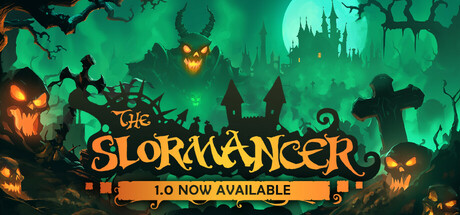
Appealing pixel art: The pixel art style is frequently praised for being cute, visually fantastic, and made with care, contributing positively to the game's aesthetic.
Funny and lighthearted story: Players enjoy the humorous, quirky, and simple story that adds charm to the experience without being annoying.
Common complaints
Endgame is too repetitive: Players consistently report that the endgame lacks variety and becomes a tedious grind with little motivation to continue. The repetitive tasks and slow progression make the experience feel stale and disappointing.
Repetitive enemies and environments: Players note that enemy types and map designs feel repetitive, with little variety throughout the campaign. This lack of diversity makes the gameplay feel like a chore and reduces engagement.
Mid-game becomes a grind: The mid-game section is frequently criticized for becoming tedious and grindy, with slow progression that discourages continued play. Players feel that the game loses its momentum and becomes a repetitive task.
Drop rates are too low: Many players find the drop rates for items, materials, and experience points to be excessively stingy, particularly for legendary and epic equipment. This makes progression feel unrewarding and frustrating, often compared unfavorably to other games like Diablo.
Grinding blocks story progression: Players are frustrated that story progression is gated behind excessive grinding, including completing specific challenges and tasks across multiple game modes. This forces players to grind extensively before advancing the narrative.
Gameplay and performance
Genre: action RPG with looting and grinding: The game is repeatedly described as an Action RPG (ARPG) with hacking-and-slashing, heavy looting, and grinding for better items. This is the core genre identity.
Deep skill tree systems: The game features multiple skill trees, with each skill having its own tree and up to 150 shared nodes. This allows for extensive build customization and specialization.
Weapon variety and leveling: Each class has access to many weapons with unique abilities; weapons can level up individually, feature evolution mechanics, and each weapon type changes the playstyle drastically.
Pixel art visual aesthetic: Reviews consistently mention a 2D pixel art style, often comparing it to a Diablo-like experience. The pixel art aesthetic is a notable visual feature.
Deep customization and theorycrafting: The game heavily emphasizes build theorycrafting and extensive customization through multiple mastery systems, skill trees, and itemization. This appeals to min-maxers.
Steam Deck excellent performance: Multiple users report the game runs perfectly, smoothly, and stably on Steam Deck with controller-friendly builds. This is the most frequent positive remark.
FPS drops with heavy effects: FPS drops to single digits when many enemies and effects are on screen, especially when builds become too powerful. This is a common performance complaint.
Crashes and stuttering issues: Users experience random crashes, frequent crashes, stuttering during specific skills like whirlwind and psychic fire, and general stutters. These issues disrupt gameplay.
Mixed optimization reports: Some users report poor optimization and choppiness depending on builds, while others note smooth performance on old hardware and good optimization on low-end systems.
UI scaling issues on Steam Deck: The UI does not scale properly to the Steam Deck LCD screen, making it appear too small. This affects readability and usability on that device.
Recommendations
Highly recommended for ARPG fans: Many players strongly recommend this game to fans of action RPGs, especially those who enjoy Path of Exile, Diablo, and Last Epoch. The game is praised for being a great fit for the genre.
Great for hack-and-slash looters: Fans of hack-and-slash and looter games consistently recommend this title, highlighting its enjoyable loot systems and satisfying gameplay. It appeals to both casual and dedicated players of the subgenre.
Great value for money: Players feel the game is worth its price, often calling it a good purchase or a 10/10 value. This positive sentiment about cost-to-enjoyment ratio is significant.
Not recommended to buy now: A few reviewers currently advise against purchasing the game, possibly due to balance issues or unmet expectations. They suggest waiting for improvements.
Enjoy build and combo experimentation: Players who like tinkering with character builds and experimenting with combos find the game enjoyable. The depth of build customization appeals to theorycrafters.
Buying context
Community fair range: $10.00 - $15.00.
Game completion: 50.0h.
The Slormancer has a slow first hour but becomes engaging as players unlock skills and customization, though the fun often drops after several hours due to repetitive grind and progression walls.
Reported time to anchor: 1h.
Friction: repetitive grind against the same enemies; progression walls requiring excessive waves or trials; boring and repetitive level design; steep learning curve from complex skill trees and gear management; lack of enemy variety.
Unlock drivers: unlocking new skills and customization options; deep build system with free respeccing; interesting loot and progression systems; satisfying stat progression and build refinement.
Player profiles
Build-Master Grinder: Engages in theorycrafting, meticulously grinds materials, rerolls stats, and optimizes gear using the deterministic crafting system. Adapts builds freely without punishment. Motivation: Mastering build systems and crafting the perfect gear through deep customization. Stance: buy.
Narrative-Seeking Casual: Plays through the campaign at a steady pace, avoids repetitive farming, and expects a clear path to the final boss without arbitrary grind requirements. Motivation: Completing the story and experiencing the narrative conclusion. Stance: no buy.
Platform notes
Steam Deck: The Slormancer on Steam Deck has a significant UI scaling problem where the font size is too small even at maximum settings, making the game difficult to read and play for many users. Additionally, some users encounter crashes and performance degradation over time. While the game runs well for others, these issues create notable friction.
Linux and Proton: The Slormancer demonstrates strong Proton/Linux compatibility based on Steam Deck feedback. Users report stable, fluid performance with no notable issues or required tweaks. The single isolated remark about potential slowdown under extreme effect spam is a performance consideration, not a Linux-specific blocking problem, and does not outweigh the clear positive consensus.
Extra review signals
Monetization: Reviews explicitly mention no microtransactions.
External guides: The user feedback indicates a significant dependency on external resources due to insufficient in-game explanations for complex systems (passives, weapon evolution) and a lack of official or comprehensive community guides. A minor UI bug with map display also contributes to navigation frustration.
Other review notes
Small developer team size: Players recognize that the game is developed by a small team of two people, three if including the composer. This context may influence expectations or appreciation for the game's scope.