- Exceptional physics-based combat and controls
- Immersive sound design enhances gameplay experience
- Engaging Metroidvania-style exploration and puzzles
- Repetitive gameplay loop reduces long-term enjoyment
- Unclear progression and objectives frustrate players
- Technical issues disrupt smooth gameplay experience
Emotions
What players like:
Common complaints:
Gameplay feedback:
Performance notes:
Recommendations:
Other player notes:
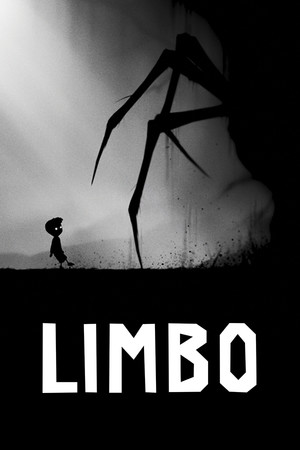
Similar games
Blend with other games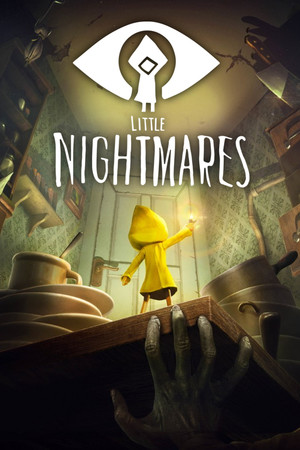


Review evidence
Why players say this
Review evidence
Why players say this
What players like
Exceptional gameplay and controls: Players consistently praise the smooth, intuitive, and satisfying controls, whether using a mouse, keyboard, or controller. The gameplay mechanics, including movement, combat, and puzzle-solving, are described as fluid and highly enjoyable.
Immersive sound design and music: The soundtrack and sound effects are frequently mentioned as key contributors to the game’s atmosphere. The music enhances immersion, while sounds like screams, eating noises, and environmental feedback add to the visceral experience.
Engaging puzzle and combat balance: The game strikes a perfect balance between puzzle-solving and combat, with puzzles that are challenging yet intuitive and combat that offers multiple strategic approaches. Players appreciate the variety and creativity in both elements.
Fun and creative violence: The game’s violent mechanics, such as grabbing, throwing, and consuming humans, are described as highly entertaining and satisfying. Players enjoy the physics-based interactions and the variety of ways to dispatch enemies.
Easy achievements and accessibility: The game’s achievements are noted as easy to obtain, making it accessible for casual players and those seeking 100% completion. This adds to the overall enjoyment without requiring excessive effort.
Common complaints
Repetitive and tedious gameplay loop: Players describe the gameplay as repetitive, with excessive backtracking, simplistic puzzles, and a lack of variety in enemies or mechanics. The novelty of the monster growth mechanic wears off quickly.
Unclear progression and objectives: Players struggle with unclear objectives, linear progression that feels non-intuitive, and a lack of guidance. This leads to aimless exploration and frustration, especially in later stages.
Technical and control issues: Players report awkward controls, high mouse sensitivity, and minor bugs (e.g., clipping textures, softlocks). The monster's size also makes maneuvering difficult in tight spaces.
Completionist unfriendly design: Achievements are bugged or unclear, and the lack of a map or teleportation system makes 100% completion frustrating. Some areas have points of no return without warning.
Weak story and lore: The story is criticized as vague, uninteresting, or incomplete, with human flashback cutscenes disrupting pacing. The lore fails to engage players or provide meaningful context.
Gameplay and performance
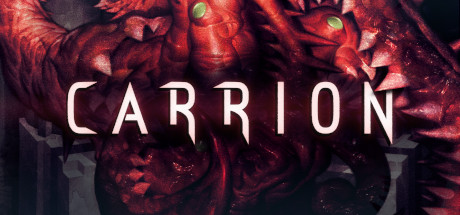
Monster Progression & Evolution: Players control an amorphous biomass that grows and evolves by consuming enemies, unlocking new abilities and paths. This core mechanic drives both combat and puzzle-solving, enabling nonlinear exploration.
Metroidvania-Style Exploration: The game features interconnected levels with backtracking, ability-gated progression, and hidden secrets. Players revisit areas with new powers to access previously unreachable zones or collectibles.
Physics-Based Combat & Interaction: Combat emphasizes dismemberment, devouring, and ragdoll physics, with multiple strategies (stealth, brute force, or hybrid). Enemies react dynamically to the monster’s actions (e.g., fleeing, fighting back).
Nonlinear Level Design: Levels feature interconnected rooms, multiple exits, and hidden paths, allowing for varied routes and replayability. Some areas are maze-like, requiring spatial awareness.
Puzzle-Solving with Abilities: Puzzles require using the monster’s evolving abilities (e.g., climbing walls, breaking barriers) to manipulate the environment. Solutions are often open-ended, encouraging experimentation.
Stable performance across devices: The game runs smoothly on most modern PCs, consoles, and even laptops with basic hardware. Players report no significant bugs, glitches, or performance issues, making it accessible to a wide audience.
Limited graphical customization: While the game performs well, it lacks advanced graphical options such as resolution selectors. This may limit flexibility for players with specific display or performance preferences.
Freezing during phase transitions: Players experience game freezes during phase transitions, even after adjusting configurations. The absence of loading screens may contribute to this issue, disrupting gameplay flow.
Recommendations
Ideal for horror/action fans: The game is frequently recommended for fans of horror, action, and puzzle genres, especially those who enjoy unique themes like playing as the monster or non-human characters. Comparisons to *The Thing*, *Dead Space*, and *Alien* are common.
Highly recommended on sale: The majority of feedback emphasizes the game's value at a discounted price, particularly around $5-$10. Players suggest waiting for promotions due to its short length and limited replayability.
Short but immersive experience: Players describe the game as a short, atmospheric experience best enjoyed in one sitting. While praised for its uniqueness, some note its lack of replay value outside of mods.
Sequel and DLC potential: Many players express hope for a sequel, DLC, or more content from the studio, citing the game's unique concept and strong foundation as reasons for expansion.
Strong mod support: Mods are frequently mentioned as a way to enhance replayability and overall experience, with players recommending their use for added value.
Platform notes
Steam Deck: Carrion delivers a largely smooth experience on the Steam Deck, with many users praising its native compatibility, performance, and controls. However, technical barriers exist, including the need to toggle Proton for Linux/Steam Deck users, isolated black screen launch issues, and control precision problems during late-game scaling. While the game is playable and enjoyable for most, these friction points prevent it from being entirely seamless.
Extra review signals
Monetization: The game *CARRION* employs a largely fair monetization strategy, with a free DLC included in the base game and no evidence of predatory tactics like pay-to-win or lootboxes. However, some users perceive the base game as short and the paid DLC (e.g., concept art/comics) as overpriced for its content, which slightly undermines value perception. The absence of aggressive microtransactions or FOMO mechanics is a strong positive.
External guides: The primary user feedback for *Carrion* highlights a critical dependency on external resources (e.g., wikis, walkthroughs) due to the game's lack of an in-game map and unclear spatial guidance. While the core gameplay, atmosphere, and monster-control mechanics are widely praised, the navigation issues significantly disrupt immersion and progression, especially for players aiming for 100% completion. The game's design forces players into a 'Tourist' role, relying on external aids to navigate its interconnected levels, which overshadows its otherwise strong gameplay loop.
Other review notes
Artistic indie design: Praised as an indie title with high artistic impact, featuring unique elements like naming an eldritch horror 'Noodles' for emotional support.
Challenging difficulty: The game requires strategic thinking, with players comparing its map design to *Metroid: Survival Fear* and praising its brain-teasing difficulty.
Scoring and achievements: Features a scoring system for efficiency/creativity and suggestions for achievement challenges (e.g., 'not hungry'), adding depth to gameplay.
Structured gameplay routes: Developers intentionally restrict freedom to guide players through set routes, emphasizing curated experiences over open-ended exploration.
Desire for sequel expansion: Players express interest in a sequel with expanded gameplay and story, indicating strong engagement with the current experience.