- Creative and intuitive puzzle design engages players
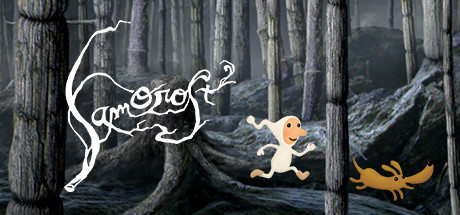
- Charming surreal art style enhances immersion
- Atmospheric soundtrack complements relaxing gameplay
- Short experience lacks depth for price
- Game-breaking bugs disrupt progression
- Poor technical performance frustrates players
Emotions
What players like:
Common complaints:
Gameplay feedback:
Performance notes:
Recommendations:
Other player notes:
Similar games
Blend with other games







Review evidence
Why players say this
Review evidence
Why players say this
What players like
Creative and intuitive puzzles: Puzzles are designed to encourage experimentation, observation, and lateral thinking without frustration. Players appreciate their simplicity, creativity, and progressive difficulty, which balances challenge and accessibility for all ages.
Charming and surreal art style: Players consistently praise the game's unique visual direction, combining hand-drawn illustrations with surrealistic and dreamy aesthetics. The art style is described as whimsical, nostalgic, and visually striking, often compared to a mix of organic textures and cosmic elements.
Atmospheric and relaxing soundtrack: The music and sound design are frequently mentioned as key strengths, enhancing the game's surreal atmosphere. Players describe the soundtrack as calming, haunting, and immersive, with praise for its ability to complement the visuals and gameplay seamlessly.
Short but rich experience: The game is praised for its concise yet impactful length, offering a complete and memorable experience in 1-2 hours. Players feel the duration justifies the price and avoids unnecessary filler, making it ideal for casual or relaxing playthroughs.
Engaging and humorous storytelling: The game's narrative is celebrated for its charm, humor, and emotional resonance despite lacking dialogue. Players highlight the whimsical tone, cute characters, and heartfelt moments, such as interactions with the dog companion or surreal scenes like the 'badger moment.'
Common complaints
Poor technical performance: Frequent crashes, freezes, and input issues (e.g., mouse clicks not registering) disrupt gameplay. Fullscreen/windowed mode switching often requires relaunching.
Game-breaking bugs: Critical bugs prevent progression, such as unclickable items, frozen puzzles, and teapot mechanics failing. Some require restarting levels or the entire game to resolve.
Overpriced for content: Players feel the game is overpriced given its short length, bugs, and lack of depth compared to alternatives like *Machinarium*. Suggested value is often $1–2.
Disjointed art/style: Criticisms include blurry backgrounds, inconsistent art (e.g., pipe-requiring character), and subjective dislike of gross-out elements (e.g., farting).
Lack of guidance/hints: No in-game hints or inventory system forces players to rely on external guides or trial-and-error, alienating newcomers.
Gameplay and performance
Puzzle-based point-and-click gameplay: The game revolves around solving environmental and logic-based puzzles using point-and-click mechanics. Players interact with objects and scenes to progress, often requiring curiosity and exploration rather than explicit guidance.
Short and self-contained experience: The game is designed to be completed in under 2 hours, with a compact narrative and no backtracking. This makes it ideal for casual play but limits replayability for some players.
No dialogue or text reliance: The game uses visual storytelling, intuitive cues, and sound effects to convey its narrative and mechanics. This design choice emphasizes accessibility and artistic expression but may leave some puzzles ambiguous.
No inventory or complex mechanics: The game avoids traditional adventure game mechanics like inventory systems, focusing instead on direct interaction with objects within a single screen. This simplifies gameplay but may frustrate players expecting deeper systems.
Trial-and-error puzzle design: Many puzzles require experimentation, timing-based interactions, or pixel hunting, which can be challenging without hints. This design encourages persistence but may frustrate players seeking logical solutions.
Resolution and aspect ratio issues: The remastered version supports 1080p but cannot stretch the 4:3 game zone to 16:9, causing visibility problems on modern displays. Some players also experience a tiny playing area on high-resolution screens.
Fullscreen and input bugs: Players report issues with full-screen/windowed mode switching, mouse input problems, and crashes/freezes, particularly in fullscreen mode. The game may also display a small centered playing area with black borders on high-resolution screens.
Minor performance issues: While the game generally runs smoothly, some players report minor bugs, lag, and technical flaws with level loading that do not severely impact gameplay.
Restart fixes temporary bugs: Some bugs, including game-breaking issues, can be temporarily resolved by restarting the game, though this is not a permanent solution.
Recommendations
Highly recommended for indie fans: The game is frequently recommended for fans of indie, surreal, and artistic games, particularly those who enjoy exploration and creativity. Many reviews highlight its unique aesthetic and relaxing gameplay.
Best purchased on sale: Numerous reviews advise buying the game only during discounts due to its short length and niche appeal. Some suggest waiting for a 50% price cut or bundle deals.
Ideal for casual relaxation: The game is praised for its suitability as a short, relaxing experience, often recommended for unwinding or playing slowly with tea and headphones.
Try free first game first: Several reviews recommend playing the free first installment (Samorost 1) to gauge interest before purchasing this sequel, ensuring it aligns with player preferences.
Linux compatibility fix: A specific technical note advises using Proton 8.0-5 for Linux compatibility, which is critical for players on that platform.
Other review notes
Unique art style evolution: The developer is recognized for surreal and imaginative games, with this title being their first to use close-up photographs for landscapes. Later games, like Machinarium and Botanicula, shifted to a hand-drawn approach.
Surreal floating tree setting: The game features a unique premise of creatures living inside a floating tree trunk in space, aligning with the developer's reputation for imaginative worlds.
Potential level design confusion: Some players restarted the game multiple times, believing a level was bugged. This suggests potential issues with clarity or progression design.
Hardware compatibility concerns: Players reported issues with specific hardware setups, such as HDMI to USB-C cables and port compatibility, which may affect accessibility.
Save file location details: The game provides specific save file locations for Linux and Windows, which may assist players in managing their progress but is a niche technical detail.