- Stunning surreal art style enhances immersion
- Immersive atmospheric sound design captivates players
- Nostalgic and charming appeal resonates widely
- Minimalist storytelling evokes strong emotions
- Simplistic puzzles lack challenge depth
- Lacks narrative and storytelling depth
Emotions
What players like:
Common complaints:
Gameplay feedback:
Performance notes:
Recommendations:
Other player notes:
Similar games
Blend with other games





Review evidence
Why players say this
Review evidence
Why players say this
What players like
Immersive atmospheric sound design: The soundtrack and sound effects are frequently highlighted for their ambient, haunting, and mood-enhancing qualities. The music complements the surreal visuals, creating a cohesive and immersive experience that resonates with players.
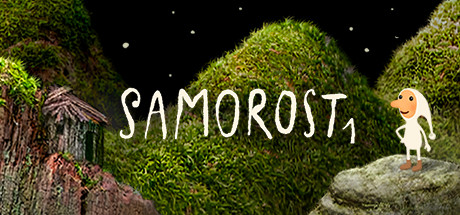
Stunning surreal art style: The game is widely praised for its unique and surreal visual style, blending hand-drawn graphics with photomontage and real-life textures. This artistic approach creates a dreamlike, whimsical atmosphere that stands out even years after release.
Nostalgic and charming appeal: Many players fondly recall the game from their childhood or associate it with nostalgic flash game experiences. Its whimsical charm and artistic identity evoke warm, positive memories and a sense of timelessness.
Minimalist yet evocative storytelling: The game tells a complete and humorous story without relying on text or dialogue. Its minimalist approach uses visuals, environmental cues, and sound to convey narrative, making it accessible and open to interpretation.
Developer’s artistic legacy: The game is recognized as a foundational work for Amanita Design, showcasing their signature style and influencing subsequent titles. Players appreciate its role in shaping the developer’s reputation for high-quality, artistic games.
Common complaints
Simplistic and unchallenging puzzles: Puzzles are frequently described as too easy, lacking depth, or relying on random clicking rather than logical problem-solving. This frustrates players seeking a more engaging or challenging experience.
Lack of narrative and storytelling depth: The game is frequently described as having no story, minimal dialogue, or an underdeveloped universe. This leaves players feeling disconnected or unengaged with the experience.
Outdated or unpolished presentation: The game’s graphics, animations, and overall presentation are described as primitive, rough, or outdated compared to later titles in the series. This detracts from immersion and visual appeal.
Inferior to sequels in quality: Players frequently compare the game unfavorably to its sequels, noting that it feels like a rough proof of concept or demo rather than a complete experience.
Poor guidance and lack of hints: Players struggle with the absence of tutorials, hints, or clear instructions, making it difficult to progress without external help. This exacerbates frustration with puzzle-solving.
Gameplay and performance
Point-and-click puzzle gameplay: The game primarily features point-and-click mechanics with interactive elements and puzzle-solving. Players explore environments, click on objects, and solve puzzles to progress the narrative, often through trial-and-error or logical deduction.
Short and concise playtime: The game is notably short, with most players completing it in 15-30 minutes. This brevity is frequently mentioned as a defining characteristic, making it suitable for casual or one-sitting playthroughs.
Simple and creative puzzles: Puzzles are designed to be simple yet engaging, often requiring creative thinking or observation rather than traditional logic. Some puzzles may lack clear logic but are enjoyable for their inventiveness.
Exploratory and atmospheric: Players interact with hand-crafted, static scenes to uncover patterns or hidden objects. The game emphasizes exploration and atmospheric immersion, often rewarding attentiveness to detail.
Minimalist and text-free experience: The game lacks dialogue, tutorials, or explanatory text, relying instead on visual cues and intuitive interactions. This minimalist approach enhances immersion and encourages exploration.
Optimized for low-end hardware: The game is highly optimized, running smoothly on very low-end devices (e.g., hardware capable of running Doom). This makes it accessible to a broader audience with minimal technical requirements.
Corrupted textures and rendering bugs: Players report black squares covering textures and issues with character rendering, suggesting corrupted assets or graphical glitches. These bugs significantly impact visual quality and immersion.
Steam Deck and Windows compatibility: The game is compatible with Steam Deck (including Proton 9.0-4) and Windows, ensuring broad platform accessibility. This is particularly valuable for portable and PC gaming communities.
Soft lock on exit via Esc key: A critical bug causes the game to soft lock when attempting to exit using the Esc key, disrupting the user experience and requiring forced closures.
Recommendations
Highly recommended for casual adventure fans: The game is frequently recommended for players who enjoy atmospheric adventures, puzzles, and unique art styles. It serves as a great introduction to the series and the studio's broader work, appealing to fans of indie and point-and-click games.
Gateway to the series and studio: Reviewers often suggest playing this game as a prologue or introduction to the Samorost trilogy or Amanita Design's broader catalog. It is seen as a way to gauge interest in the studio's future or existing projects.
Ideal for beginners and families: The game is recommended as a gentle introduction to point-and-click adventures, suitable for beginners or even children. Its simplicity and charm make it accessible to a wide audience.
Encourages further exploration of the series: Many players express interest in continuing to the sequels after playing this game. It is seen as a curiosity-inducing appetizer that leaves players wanting more from the franchise.
Not for action-oriented players: The game is explicitly noted as unsuitable for fans of fast-paced, action-heavy genres like hack-and-slash or bullet frenzy. Its slow-paced, puzzle-focused gameplay may not appeal to everyone.
Other review notes
Cultural and artistic impact: Samorost is celebrated as an art object and is included in '1001 Video Games You Must Play Before You Die.' Its success led to the creation of Amanita Design, a renowned Czech game studio.
Nostalgic early 2000s vibe: The game evokes nostalgia for early internet culture and Flash-based browser games. Many players reflect on its historical significance and personal memories tied to the era.
Series starting point: Samorost is the first game in its series, leading to sequels like Samorost 2 and 3. It established the foundation for Amanita Design’s future projects, including Machinarium.
Student project origins: The game originated as a student project by Jakub Dvorský and later became the foundation for Amanita Design. It is often compared to other academic thesis projects in gaming.
Unique linguistic and audio details: The title 'Samorost' refers to driftwood in Czech, and the game features a sound bite from DJ Krush. Later sequels also include Ukrainian language support.