- Massive improvement over predecessor
- Core breeding and fusion mechanics
- Excellent monster designs
- Clunky menus and poor QoL
- Breeding/fusion kills monster individuality
- Broken difficulty and balance
Emotions
Archetypes
Hardware
What players like:
Common complaints:
Gameplay feedback:
Performance notes:
Recommendations:
Other player notes:
Similar games
Blend with other games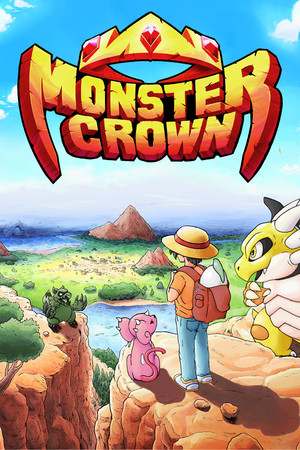





Review evidence
Why players say this
Review evidence
Why players say this
Steam review verdict
Excellent monster designs and improved breeding/fusion mechanics make it better than its predecessor, but clunky menus, poor QoL, shaky balance, and fusion erasing individuality hurt it.
What players like
Massive improvement over predecessor: The game is consistently described as a major upgrade from the first entry, with better writing, sprite work, and reduced jank.
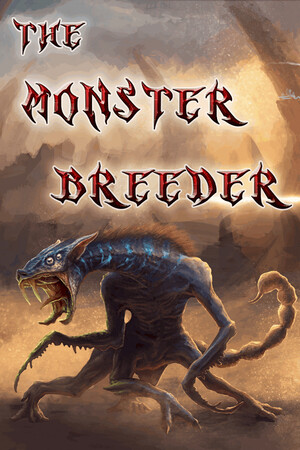
Excellent monster designs: Players frequently praise the creature designs as cool, varied, and beautifully sprited.
Interesting story: The narrative is often called interesting and sufficient, though some describe it as merely okay.
Beautiful visuals: The game is described as pretty, with a retro vibe and excellent area graphics.
Fantastic fusion system: The fusion mechanic is repeatedly called fantastic, addictive, and fun to experiment with.
Common complaints
Clunky menus and poor QoL: The UI and menus are repeatedly called primitive, tedious, and lacking basic quality-of-life features. Inventory management, breeding interfaces, and monster box navigation are cumbersome, with missing sorting, filtering, and clear information display.
Breeding/fusion kills monster individuality: The breeding and fusion systems allow players to maximize stats and transfer moves freely, resulting in all monsters feeling identical and removing strategic decision-making. This makes collecting and team building pointless, as any monster can be customized into a perfect fighter, reducing them to cosmetic skins.
Broken difficulty and balance: Game balance collapses after the first area, with monsters and bosses capped at low levels, making the rest of the game trivially easy even on the highest difficulty. Players become overpowered quickly, and bosses often feel like HP sponges that pose no threat.
Edgy and weak storytelling: The narrative and dialogue are often described as trying too hard to be dark and edgy, with cringeworthy writing and a convoluted plot. Characters lack depth and the story feels rushed or inconsistent, reducing engagement.
Poor direction and guidance: Many players report that the game barely tells you what to do next, with little direction, no functioning map, and confusing world design leading to aimless wandering. The quest log is unhelpful and mechanics are often poorly explained, making external wikis nearly necessary.
Gameplay and performance
Core breeding and fusion mechanics: The game's central systems are breeding and fusing monsters to create customized creatures. Players can transfer stats, moves, types, abilities, and appearances through these mechanics.
Turn-based monster taming RPG: The game is a turn-based RPG focused on collecting and battling monsters. Combat includes accuracy percentages and a five-type weakness system.
Open world exploration: The game features an open world with multiple regions and freedom to explore. The world opens up after the first area and contains secrets to discover.
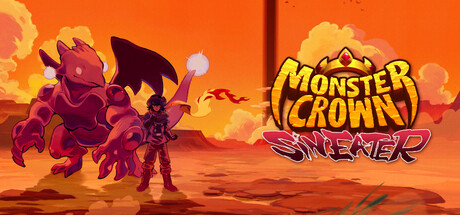
Hybrid forms and variants: Each monster has a base form plus five hybrid variants (Brutes, Malicious, Unstable, Relentless, Will). Fusions often result in variants of base monsters.
Multiple difficulty settings: Players can choose from several difficulty levels, including a highest difficulty or challenge mode. This adds replayability and accommodates different skill levels.
Controller support severely buggy: A reviewer reports that controller support is severely buggy, hindering gameplay with a gamepad. This affects players who prefer controller input.
Menu freeze requires restart: A reviewer reports the game froze in the menu and required a restart to recover. This suggests a stability issue occurring before gameplay begins.
Runs perfect on Steam Deck: One reviewer states the game runs perfectly on the Steam Deck, indicating good compatibility with that handheld device. This is a positive note on portability.
Recommendations
Highly recommended for genre fans: The game is repeatedly recommended for fans of creature collectors, monster taming, and similar genres. Reviewers specifically call out fans of Pokemon, Shin Megami Tensei, and Dragon Quest Monsters.
Strongly recommended overall: Numerous reviewers give the game a wholehearted recommendation, calling it excellent and worth checking out. This sentiment is echoed across multiple clusters with high frequency.
Worth the price: Many reviewers state the game is worth its price, with some calling it worth every penny and others specifying it is worth it at full price. A few mention it is especially worth it on sale.
Mixed/negative due to issues: A handful of reviewers do not recommend the game in its current state, citing flaws, needing more work, or waiting for fixes and more content. Some suggest waiting for a sale or more updates.
Not for everyone: Some reviewers caution that the game is not for everyone, particularly those who want a challenge or balance, or those who dislike open, grindy monster tamers. It is best enjoyed by a specific audience.
Buying context
Community fair range: $15.00 - $20.00.
Game completion: 20.0h.
Story completion: 35.0h.
The strongest reports describe immediate fun in early battles and monster combination experimentation, followed by repetition and boredom. A slower, guidance-poor early game is a notable conflicting experience, but no review explicitly identifies a later point where the game becomes fun.
Friction: Poor tutorial and unclear systems; Lack of guidance and trial-and-error mechanics; Unskippable cutscenes and credits; Tedious inventory and Barn management; Early-game grinding on medium difficulty; A painfully slow early game.
Unlock drivers: Talking to NPCs early to learn systems; Evolution as a satisfying progression path; Added pact icon for previously pacted monsters.
Player profiles
Veteran Monster-System Connoisseur: Optimizes teams, breeds and fuses monsters, and evaluates mechanics against genre benchmarks. Motivation: Mastering and comparing deep monster-collection, fusion, and team-building systems. Stance: buy.
Old-School Exploration Nostalgist: Wanders through open areas, seeks hidden content, and prefers minimal instructions. Motivation: Recapturing old-school exploration, secrets, and non-linear discovery. Stance: buy.
Hardcore Difficulty Grinder: Plays on high difficulty, grinds levels, and builds powerful optimized monsters. Motivation: Overcoming punishing difficulty and turning grinding into mastery. Stance: buy.
Platform notes
Only one included review is available for the Windows <8GB VRAM cohort; it is recommended and contains no reported performance problems.
Windows <8GB VRAM: positive. The sole included review is recommended and reports no performance issues, though it focuses on breeding mechanics rather than technical performance.
Steam Deck: The reviews are overwhelmingly positive about Steam Deck and Linux compatibility: the game runs well, is described as a natural fit for the Deck, and shows no evidence of Proton Experimental requirements, external launchers, unreadable UI, anti-cheat errors, or crashes. The main frictions are mixed controller reliability and manual save-related progress loss. Overall, the Steam Deck experience is low-friction and largely works out of the box, with minor caveats.
Linux and Proton: The available feedback is a single positive Linux report: the user says the game plays on Linux and has nine hours of playtime, with no compatibility issues, crashes, launcher blockers, or tweaks mentioned. This supports an out-of-the-box working experience on Linux based on the provided evidence.
Extra review signals
External guides: The reviews primarily complain that Sin Eater explains its mechanics poorly and that advanced breeding and fusion systems make external wiki consultation feel necessary. The evidence supports an instructional data barrier, not farming drop data, inventory management, or navigation/bug issues.
Other review notes
Favorable Pokemon comparisons: Reviewers frequently compare the game to Pokemon, noting a darker, more mature tone and deeper story. Some see it as an evolution of the formula that brings back childhood magic.
Major improvement over original: Many reviewers highlight that this game is a massive upgrade from the first Monster Crown, fixing past issues and delivering a far more polished experience. It is often described as the game the original should have been.
Similar to Shin Megami Tensei: Several comparisons are drawn to Shin Megami Tensei, especially regarding fusion mechanics, darker themes, and endgame choices. Some describe it as SMT without mythology.
Successor to buggy first game: The first Monster Crown was known for game-breaking bugs, but this sequel is praised for being free of such issues. A new team allowed for faster fixes.
Dark and adult story: The narrative is described as adult and dark, appealing to players tired of cutesy monster games. Some compare it to SMT for its mature themes.