- Fun and enjoyable overall
- All DLC included at price
- Deep monster synthesis customization
- Smooth performance with options
- Mediocre forgettable story
- Reduced monster variety count
Emotions
Archetypes
Hardware
What players like:
Common complaints:
Gameplay feedback:
Performance notes:
Recommendations:
Other player notes:
Similar games
Blend with other games





Review evidence
Why players say this
Review evidence
Why players say this
Steam review verdict
Fun monster-catching with all DLC included and deep synthesis customization runs smoothly, though the forgettable story and reduced monster variety hold it back.
What players like
Game is very fun overall: A significant number of reviewers describe the game as genuinely fun and entertaining, with gameplay that remains enjoyable throughout. The game is considered extremely fun and interesting, even when compared to previous series entries.
Enjoyable as a Monsters series title: Long-time fans of the Dragon Quest Monsters series find this entry to be a fun and faithful addition. It is praised for evoking nostalgia while still being playable and colorful, solidifying its place as a proper Monster series game.
All DLC included in price: Many reviewers note that the Steam version includes all paid DLC from the Switch version at no extra cost. This is considered a great value proposition, making the game a definitive version with all content pre-loaded.
Excellent monster designs: The monster designs are consistently praised for being cool, charming, and well-made. Fans of the Monsters series especially enjoy the visual appeal and the memorable nature of the creatures.
Deep monster synthesis and customization: The synthesis system is praised for its depth, allowing deep monster customization through talents, traits, and fusing. Players find the strategic element engaging, enabling weak monsters to beat stronger ones through clever breeding and talent combinations.
Common complaints
Story is mediocre and forgettable: Multiple clusters describe the story as weak, unengaging, and lacking memorable characters. Overall, the narrative fails to leave a lasting positive impression.
Reduced monster variety and count: The monster roster is noticeably smaller than in previous entries, with many palette swaps padding the numbers. High-tier monsters are also scarce, hurting collection and synthesis depth.
Poorly written and paced plot: The writing is consistently criticized as poor, with predictable developments, forced dialogue choices, and weak character interactions. The plot often feels nonsensical and fails to engage.
Childish and simplistic story: The narrative tone is frequently described as infantile and aimed at a younger audience, lacking depth and maturity. This may alienate older players expecting a more complex plot.
Lack of online multiplayer modes: Players are disappointed by the absence of online versus and battle modes, especially compared to the Switch version. This omission limits long-term engagement and community interaction.
Gameplay and performance
Monster synthesis is core: Across many clusters, the central mechanic involves synthesizing or breeding monsters to create stronger ones, often required to progress and unlock special monsters.
Capturing and scouting monsters: Players extensively capture, scout, and recruit monsters during battles, with options to scout specific monsters via mechanics like the Mole Hole.
Dragon Quest Monsters collection: The game is situated in the Dragon Quest Monsters series, with monster collection, breeding, and turn-based combat reminiscent of Pokémon but with a unique synthesis twist.
Breeding and fusion systems: Breeding and fusion are highlighted as deep mechanics, allowing players to combine monsters to improve stats and create powerful offspring, with some games featuring a four-monster fusion system.
Auto-battle and speed options: The battle system includes conveniences like auto-battle and speed-up options to reduce grinding, with tactics for AI control or manual play.
Smooth stable framerate: Players report consistently smooth performance with stable or uncapped high FPS, including 60+ FPS, 85 FPS, and up to 144 FPS. This indicates solid optimization on many systems.
Excellent Steam Deck performance: Multiple users highlight great performance on Steam Deck at high settings, far better than the Switch version. The game also runs well on Legion Go and other handhelds.
Better than Switch in all ways: PC and Steam Deck versions consistently outshine the Switch version, with better framerates, faster loading, and fewer graphical issues. This makes the PC version a recommended alternative.
Poor graphics quality: Several reviews criticize the graphics as poor, with mediocre textures and render distance, especially compared to what is expected on PC. This suggests subpar visual fidelity despite decent performance.
Good optimization on PC: Many praise the game's optimization, noting it runs well even on laptops and doesn't strain resources. Some wish for more advanced graphical options, but performance is generally seen as a strong point.
Recommendations
Buy only on sale: A significant portion of feedback advises against paying full price, suggesting waiting for a discount, often 50-75% off. This indicates the game is considered overpriced at launch but acceptable at a reduced cost.
Recommended for franchise fans: Numerous reviews recommend the game specifically to fans of Dragon Quest, Dragon Quest Monsters, and monster-taming genres, citing the core loop of capturing and synthesizing monsters. These recommendations come from multiple clusters, showing a strong consensus on the target audience.
Great for monster collection: Positive feedback highlights the monster collection and synthesis aspects as enjoyable, aligning with franchise strengths. This suggests the core gameplay loop succeeds.
Not for non-fans: Several reviews explicitly state that the game is not recommended for players new to the series or those without prior affection for Dragon Quest. This suggests a steep learning curve or reliance on existing franchise knowledge.
Not recommended at all: A minority of reviews give a thumbs down and advise against purchasing the game entirely, even at a discount. These critical voices highlight overall dissatisfaction with the experience.
Buying context
Community fair range: $10.00 - $20.00.
Game completion: 50.0h.
Story completion: 25.0h.
Endgame: 15.0h.
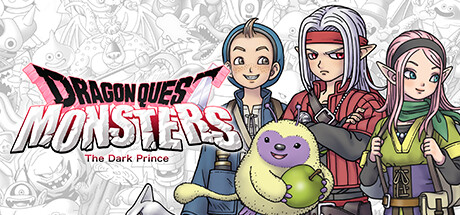
Dragon Quest Monsters: The Dark Prince opens as a slog with empty early zones and low scout rates, then becomes addictive once the monster synthesis system is reached around the 3-4 hour mark, though long-term tedium and repetitive pacing divide players later.
Reported time to anchor: 3h 30m.
Friction: Empty and boring early tutorial zone; Very low scout/capture rates early (about 14%); Inability to save or open the menu in the tutorial town; Poor story pacing at the beginning; Odd automated combat that takes time to understand; Rough movement and jumping controls.
Player profiles
Casual First-Time Tamer: Casual wandering, capturing monsters, using auto-battle for weak foes, experimenting with fusions without heavy optimization. Motivation: To experience an accessible monster-collection game with easy synthesis and relaxing exploration. Stance: buy.
Disappointed Veteran: Compares systems to previous titles, focuses on synthesis complexity and monster variety, grinds for nostalgia but becomes frustrated with missing features. Motivation: To recapture the depth and magic of older DQM games while maintaining the habitual monster breeding. Stance: sale.
Completionist Collector: Uses guides and charts to plan fusions, systematically explores all zones, grinds for rare monsters, and focuses on achievements over story or PvP. Motivation: To collect and register all monsters, achieve 100% completion, and fully explore the synthesis tree. Stance: buy.
Platform notes
Performance varies across VRAM tiers: higher VRAM Windows systems run well, while lower VRAM systems report stability issues such as memory leaks.
Windows <8GB VRAM: negative. Multiple users report major issues, including a severe memory leak that forces full PC restarts every two minutes.
Windows 12-15GB VRAM: positive. Both reports are positive, with one noting smooth gameplay when Vsync is enabled and another praising the game as a clear upgrade over the Switch version.
Windows 8-11GB VRAM: positive. The only report is positive, describing the PC version as more comfortable to play with adjustable graphics and FPS settings, despite minor usability complaints.
Steam Deck: User feedback overwhelmingly indicates that DQM3 runs natively and excellently on the Steam Deck, achieving high settings and stable performance without requiring Proton or launcher configuration. The primary friction points are limited to high battery drain, a rare single reported error, potential cloud save quirks, and external controller configuration issues. The built-in Deck experience is reported as seamless.
Linux and Proton: User feedback demonstrates that Dragon Quest Monsters: The Dark Prince runs exceptionally well on Linux via Proton, with multiple reviewers highlighting flawless out-of-the-box performance on the Steam Deck, including locked 60fps and high settings. There are no reports of launch failures, crashes, or required workarounds on Linux, and the only negative performance complaint explicitly contrasts a non-Deck PC issue with the stable Steam Deck experience, which is not Linux-specific.
Extra review signals
Monetization: The reviews consistently show that the PC version of the game includes all previously paid DLC from the Switch version at a lower price, eliminating any need for additional real-money purchases. While some reviews express frustration about the original Switch DLC model and speculate about deliberate inconvenience, these concerns are not applicable to the current product, which is a single-purchase package with no microtransactions, loot boxes, or pay-to-win elements.
External guides: The primary user complaint centers on the mandatory use of external guide sites to understand monster fusion recipes, especially for 4-monster combinations and high-tier (S/X) fusions. This creates a significant barrier for self-reliant players and aligns with the Hoarder (Tier 2) category of needing crafting/inventory planning data.
Other review notes
Comparisons to Dragon Quest Monsters: The game was frequently compared to earlier Dragon Quest Monsters titles, especially the Joker series. Reviews generally felt the older games were superior, noting the new game oversimplified gameplay.
Comparisons to Pokemon franchise: Multiple reviews compared the game to Pokemon, with a positive view, noting similarities in catching and battling mechanics while considering it a distinct monster-catching alternative. This comparison was pervasive across different player groups.
Benefits from Dragon Quest IV knowledge: Understanding the story benefits from having played Dragon Quest 4, which may increase enjoyment. The plot is a prequel or retelling of that early game.
Fair price on sale: Many reviewers purchased the game during sales, with discounts of 75% or at prices like 1200-2000 yen. At these reduced prices, the game was considered good value.
Includes all Switch DLC: The game includes all DLC from the Switch version across all platforms. This was mentioned positively among reviews, noting that PC versions include previous paid content.