- Excellent HD-2D remake quality.
- Significant content and mechanic upgrades.
- Engaging and accessible gameplay.
- Reuses DQ3 assets, lacks innovation.
- Overpriced, offering poor content value.
- Inconsistent and unbalanced difficulty curve.
Emotions
What players like:
Common complaints:
Gameplay feedback:
Performance notes:
Recommendations:
Other player notes:
Similar games
Blend with other games 89%DRAGON QUEST III HD-2D Remake
 86%DRAGON QUEST VII Reimagined
 83%Trails in the Sky 1st Chapter
 83%LUNAR Remastered Collection
 82%BRAVELY DEFAULT FLYING FAIRY HD Remaster
 82%DRAGON QUEST MONSTERS: The Dark Prince
 81%Suikoden I&II HD Remaster Gate Rune and Dunan Unification Wars
 81%Sora no Kiseki the 1st
 81%STAR OCEAN THE SECOND STORY R
 81%Legend of Mana
 80%FINAL FANTASY TACTICS - The Ivalice Chronicles
 80%Wizardry: Proving Grounds of the Mad Overlord
Review evidence
Why players say this
Review evidence
Why players say this
What players like
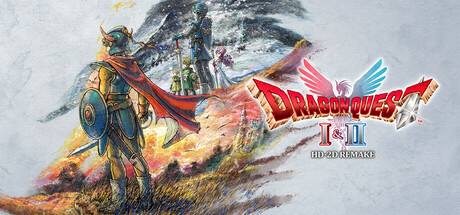
Excellent HD-2D Remake Quality: Players praise the remakes for their faithful yet enhanced reimagining of the originals, blending classic charm with modern quality-of-life updates and stunning HD-2D graphics. Many feel these are the definitive and most accessible versions of the classic games, showing love and respect for the source material.
Significant Content & Mechanic Upgrades: The remakes introduce substantial improvements, including a more developed plot for Dragon Quest 1 and a proper party system for Dragon Quest 2. Combat is enhanced with group battles and AOE spells, and new mechanics like learnable skills and increased boss encounters add depth, often paralleling features from the Dragon Quest 3 remake.
Engaging and Accessible Gameplay: The gameplay is widely enjoyed for being engrossing and easy to pick up, offering a fun experience for both new players and veterans. Features like adjustable difficulty and rewarding progression, such as earning strong weapons, contribute to a highly positive and flexible player experience.
Deeper Story and Enriched Lore: Players appreciate the significant story additions, new opening, and expanded lore that enhance the game's atmosphere and provide more nuance. These narrative enrichments, including cutscenes and voice acting, add considerable depth and substance, making the experience feel more robust and engaging.
Extensive Customization & QoL: The game offers a wealth of quality-of-life features, highly praised by players. These include toggleable map elements like mini-maps, treasure chests, and objective markers, alongside practical additions like a default dash function and shortcut registration, allowing players to tailor their experience.
Common complaints
Reuse DQ3 assets, lacks innovation.: Players widely criticize the game for heavily reusing assets and mechanics from the Dragon Quest 3 remake, leading to a lack of fresh innovation. This makes the experience feel dated, shallow, and redundant, especially for those familiar with DQ3, and highlights fundamental design issues of the original DQ1 within a modern framework.
Overpriced for content, poor value.: A significant number of players find the game's price point excessively high given the perceived lack of innovation, asset reuse, and shallow core experience. They believe the content provided does not justify the full retail price, leading to disappointment and a sense of poor value.
Inconsistent, unbalanced difficulty curve.: Feedback on difficulty is contradictory, with some finding the game too easy even on hard settings, while others report brutal spikes, particularly late-game or on normal mode. This indicates a poorly tuned or unbalanced difficulty curve that frustrates players and makes progression feel inconsistent.
Limited display, no ultrawide support.: The game suffers from display issues including defaulting to windowed mode, problems with achieving proper full screen, and a lack of support for ultrawide resolutions. These limitations detract from the visual experience and modern PC compatibility.
Distracting old-timey English localization.: The English localization's choice to use an archaic, old-timey style is widely criticized as distracting, annoying, and difficult to read. Players note this style is absent in the original Japanese, suggesting a more direct or optional translation would be preferred.
Gameplay and performance
Retains classic JRPG feel: The new game maintains the single-hero journey and simple core story reminiscent of the original Dragon Quest 1 and 2. While tracing the original narrative, it still feels like a classic JRPG, honoring its roots.
Evolved turn-based combat: Combat remains traditional turn-based but now features multi-monster encounters, addressing the original's one-on-one limitation. New weapons like whips and boomerangs, combined with tactical options, help manage the high random encounter rate. Additionally, skills are more focused on survival utility.
Adjustable difficulty & QoL: The game offers multiple difficulty settings to customize the experience, allowing players to make it easier if desired. Additionally, quality-of-life features like easy reloading after defeat and an option to change the language to Japanese improve the overall player experience.
No party customization: Unlike Dragon Quest 3 which offers full party customization and varied classes, the current game (implied to be based on DQ1/DQ2) does not feature this level of party control. It sticks to fixed character progression paths, contrasting with other series entries.
Gold Golem farming strategy: Players have identified Gold Golems as a viable method for farming resources, suggesting a known in-game economic strategy. This is a specific player-discovered tip.
Requires Technical Workarounds: Some players need to apply specific technical workarounds to resolve issues. Examples include adding '-dx11' to Steam launch options for shader compilation or managing Steam processes to fix launch problems.
Normal Optimization Reported: A limited amount of feedback suggests that for some players, the game's optimization is considered normal and acceptable. This indicates a decent experience for certain configurations, though feedback is sparse.
Framerate Locked at 60 FPS: The game currently has a hard 60 frames per second cap, which can be a limitation for players with high refresh rate monitors or those expecting smoother gameplay beyond this threshold.
Unexpected Windows 10 Compatibility: Despite official minimum requirements specifying Windows 11, the game has been observed to run successfully on Windows 10 for users who meet other CPU and GPU hardware specifications.
Recommendations
Appeals to Classic RPG Fans: The game is highly recommended for existing Dragon Quest fans, players who grew up with the series, or those looking for a classic, old-school JRPG experience. New players unfamiliar with the series or seeking complex modern gameplay may find the minimal story and gameplay simplicity less engaging.
Overpriced, Wait for Sale: Many reviewers feel the game is too expensive at full price, suggesting it should be significantly cheaper (e.g., 2500-2980 yen). They recommend waiting for a deep sale or considering older versions for better value.
PC Version Not Recommended: Some players specifically advise against purchasing the game on PC, with one suggesting users refer to external information if playing on Windows 10. This indicates potential platform-specific issues or a suboptimal experience.
Utilize Tactics as New Player: New players to the franchise are advised to actively use tactics during gameplay. This suggests that while the game might seem simple, strategic combat decisions are important for those unfamiliar with the series.
Other review notes
Eagerly Awaiting Future Remakes: Many players express strong enthusiasm for future Dragon Quest remakes, specifically hoping for the Zenithian Trilogy (DQ4-6), DQ7, DQ8, and DQ9 on PC and other platforms. There's also a desire for spin-off titles like Dragon Quest Monsters to receive similar treatment, with some noting Square Enix is already redoing some games.
Caution on Remake Quality: Despite excitement for future remakes, players express reservations about the quality standards, especially after experiences with DQ3 HD. There's a desire for the Heaven's Trilogy and other titles to be handled with higher standards, asserting that the current approach feels more like a 'remaster' than a proper 'remake' and could pollute the IP if not done right.
Reliving Classic Series Experience: Players cherish the nostalgic value of Dragon Quest, recalling past experiences from NES, SNES, and Android versions. They acknowledge the enduring appeal of Yuji Horii's storytelling and text, which forms a core pillar of the series, thanking him and Akira Toriyama for their contributions and the unique warmth of the games.
Manage Language and Settings: Players discussed the default language, noting it can be changed to Japanese in the library properties, which was not an issue for everyone. There's also a general request for improved game settings and clarification on default control mappings, particularly for console-like inputs.
Minor Gameplay Aspects: Some players observed the game's high battery consumption on portable gaming PCs. Other minor points included the pleasing music, the recommendation to use seeds freely, and that some fights can be challenging.