- Skill and upgrade system praised
- Sci-fi setting appreciated
- Level design and graphics good
- Repetitive and monotonous gameplay
- Save deletion and ending bugs
- Poor optimization and low FPS
Emotions
Archetypes
What players like:
Common complaints:
Gameplay feedback:
Performance notes:
Recommendations:
Other player notes:
Similar games
Blend with other games






Review evidence
Why players say this
Review evidence
Why players say this
Steam review verdict
Its sci-fi setting, skill upgrades, graphics, and level design impress, but repetitive gameplay, save and ending bugs, and poor optimization with low FPS hold it back.
What players like
Skill and Upgrade System: Characters can be upgraded through bio-chips, and the skill system is one of the good parts. Skill cards like Freezer, Energy Shield, and time-slowing card can be game changers.
Sci-Fi Setting Appreciated: The sci-fi theme is interesting and unusual for the RPG genre, providing a nice change from typical fantasy settings. The unusual futuristic setting and backstory on a colony ship are highlights.
Level Design and Graphics: Levels are beautifully designed and convincing, with 45 levels across five distinct environments. Graphics are pleasant, with a slightly fairy-tale, cartoonish atmosphere.
Strategic Pause and Controls: You can pause anytime with Space bar and plan moves step by step, which helps avoid ranged attacks and escape melee enemies. Controls are convenient and clear, with easy mouse wheel camera rotation.
Easy and Accessible Gameplay: The game is easy to play with simple controls and straightforward quests that don't require backtracking. It is good for playing in between without needing to learn complicated mechanics.
Common complaints
Repetitive and monotonous gameplay: Players frequently cite repetitive gameplay, monotonous combat, and a lack of variety as major flaws. The game becomes boring after a few hours and feels tedious.
Save deletion and ending bugs: Several critical bugs affect game completion: the ending sequence does not play, the game returns to the main menu, and save files are deleted after the final boss. Teleportation can also crash the game and cause progress loss.
Lack of language support: The game lacks Chinese and Japanese language support, and the Steam version is missing the Polish dubbing from the CD-Action version. English NPCs have no voiceover, only text.
Outdated graphics and sound: Graphics are considered pixelated and outdated, and sound effects are poor, often described as 'pew pew pew'. The overall presentation feels dated even for its time.
Poor story and narrative: The game lacks a satisfying narrative, with a trite and naive plot that is considered lame and bare. There is a complete absence of story.
Gameplay and performance
Diablo-like action RPG: Many reviewers compare the game to Diablo, describing it as a hack-and-slash ARPG with similar structure and mechanics. It is often called a Diablo clone or a space version of Diablo.
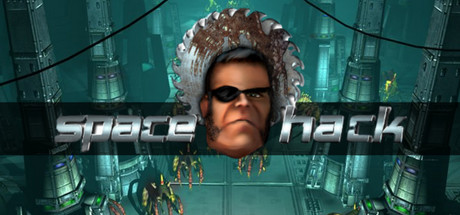
Sci-fi hack-and-slash setting: The game is set in a futuristic sci-fi environment with hack-and-slash combat, often against bug-like aliens. Players take on the role of a space marine.
Energy cells as ammo and currency: Energy weapons consume energy cells that also serve as the game's currency. This dual-purpose system creates a unique resource management challenge.
Leveling grants stat points: Leveling up allows players to allocate stat points to attributes like strength, dexterity, knowledge, and endurance. Each level grants 5 points to distribute.
Simple quest objectives: Quests are straightforward, typically involving breaking, turning on, or killing targets. The quest system provides basic tasks for players.
Poor optimization and low FPS: The game is poorly optimized, with frame rates dropping to around 10 FPS in main maps. Even high-end hardware struggles to maintain smooth performance.
Frequent game crashes: Many users report crashes with no clear cause, including during gameplay and after progressing. Some crashes occur after killing monsters or bosses before saving.
Launch failures on various systems: The game fails to launch on some laptops and even on moderately decent PCs. This prevents players from accessing the game at all.
High-end hardware still struggles: Even on high-end modern systems, the game runs at very low frame rates, often barely above 18 FPS. This indicates severe optimization issues.
Texture flickering problem: Persistent texture flickering occurs while walking and standing still. Lowering graphics settings only partially resolves the issue.
Recommendations
Do not buy: Several reviewers strongly advise against buying the game, citing it as a waste of money or not worth playing. Their feedback is direct and negative.
Mixed or conditional recommendations: Several reviewers give conditional recommendations, such as if you find it cheap, if you are desperate for a sci-fi ARPG, or if you can tolerate its flaws. They often mention caveats.
Positive but not outstanding: Reviewers give positive but lukewarm recommendations, acknowledging the game is fundamentally good but not exceptional. They suggest trying it without high expectations.
Not recommended: Reviewers cannot recommend the game for various reasons including outdatedness, boredom, and lack of fun. The feedback is consistently negative.
Only worth buying on sale: Many reviewers state the game is worth purchasing only at a discount or if obtained cheaply or free. They emphasize that it does not justify its full price.
Buying context
Community fair range: $3.00 - $10.00.
Game completion: 45.0h.
Story completion: 38.0h.
Session length: 0.5h.
The reported time-to-fun profile is negative: the game does not reliably become fun, with repetitive combat, tedious routines, and poor pacing dominating. Brief initial curiosity appears in some reports, but it fades into repetition or remains unconfirmed rather than resolving into enjoyment.
Friction: Repetitive combat and enemies; Tedious backtracking to the colony healer; No tutorial or explanation of energy mechanics; Bugs, crashes, and lost progress; Slow, boring leveling and limited equipment variety; Poor pacing and unbalanced, archaic mechanics.
Player profiles
Nostalgic Old-School Diablo Veteran: Plays slowly and casually as a single-player click-and-move aRPG, valuing old-school atmosphere and genre comfort over modern polish. Motivation: Reliving the Diablo-era action-RPG experience from memory and enjoying a familiar retro formula. Stance: buy.
Time-Pressed Grind-Averse Critic: Tries the game for a short period, evaluates leveling speed and repetition, then abandons it if the grind feels endless. Motivation: Finding an action RPG with engaging progression rather than repetitive grinding. Stance: no buy.
Bargain-Bin Collector: Samples low-cost or bundle games casually and accepts rough edges because the purchase price is negligible. Motivation: Cheaply acquiring or bundling games for a collection or backlog. Stance: deep sale.
Other review notes
Frequent Diablo comparisons: Many reviewers compare the game to Diablo, often unfavorably, describing it as a weak clone or crude imitation with inferior gameplay and fun. This is the most prevalent theme across clusters.
Localization and voice acting issues: The game has limited language support, with no official Russian, Chinese, or German versions, though community translations and voice-over guides exist. The English Steam version lacks NPC voice acting.
Feels outdated and lacking polish: Many note that the game feels like a one-man indie project, lacks explanation for new players, and would have been better if released earlier. It suffers from horrible pacing and is not worth playing 20 years later.
Miscellaneous feedback: Additional feedback includes the game being received in a bundle, being playable with voice acting, having a community fix for the outro, and being compared to Half-Life 2 regarding release year.
Issues with cutscenes and compatibility: Players report problems with the outro and intro cutscenes, including non-playing videos and graphical bugs on modern Windows. Community fixes and compatibility mode settings are often required.