- Outstanding Atmosphere and Immersion
- Stunning Visuals and Art Style
- Fun and Rewarding Exploration
- Unclear Navigation and Destinations
- Vague and Obtuse Instructions
- Performance Degrades Over Time
Emotions
Archetypes
Hardware
What players like:
Common complaints:
Gameplay feedback:
Performance notes:
Recommendations:
Other player notes:
Similar games
Blend with other games







Review evidence
Why players say this
Review evidence
Why players say this
Steam review verdict
Stunning visuals, immersive atmosphere, and rewarding exploration are undercut by unclear navigation, vague instructions, and performance that degrades over time.
What players like
Outstanding Atmosphere and Immersion: Many players praise the game's atmosphere as immersive, intense, and haunting, with a desolate wasteland that feels alive yet dead. The environmental storytelling and apocalyptic setting greatly enhance the overall experience.
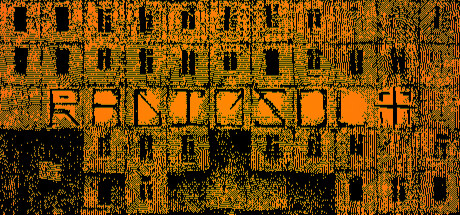
Stunning Visuals and Art Style: The game's visuals, art direction, and stylization are frequently described as gorgeous, phenomenal, and aesthetically pleasing from every angle. The low-poly, low-resolution textures and unique UI design contribute to a distinct and captivating look.
Fun and Rewarding Exploration: Exploring the open world is a highlight, with players enjoying the discovery of secrets, landmarks, and environmental storytelling. The world is expansive, detailed, and encourages wandering, often described as fun and rewarding.
Unique Spider-Bot Gameplay: Playing as a robotic spider is a novel and memorable experience, with full-surface crawling, complex movement, and platforming elements that feel satisfying. The ability to explore as a weird little jumping spider bot is a dream come true for many.
Intriguing Story and Lore: The story starts strong with an intriguing mystery and questions about the world, and the environmental storytelling is rewarding. The narrative, though vague, adds to the experience and keeps players engaged.
Common complaints
Unclear navigation and destinations: Players struggle to find destinations due to unclear directions and vague landmarks, often requiring external guides or excessive backtracking. Specific examples include finding the sphere entrance, control tower, and power plant.
Vague and obtuse instructions: Instructions and tutorials are extremely vague, with little to no guidance, leaving players confused about objectives and mechanics. Many report not knowing what to do or where to go.
Performance degrades over time: FPS drops significantly after extended play, often due to memory issues or lack of map unloading, and can be temporarily fixed by saving and reloading. Stutters and slowdowns are common in dense areas.
Poor optimization on recommended hardware: Optimization is poor, with the recommended GPU being a 3060 for stylized graphics, and even powerful GPUs struggle to maintain framerate. Players report lag and low FPS in 4K.
Climbing and movement frustrating: Climbing over thin surfaces is frustrating, with the player hanging off edges and jumping being unreliable. Movement is slow and controls are poor, causing constant stress.
Gameplay and performance
Open World Exploration: The game emphasizes open world exploration and navigation across a large map. Exploration is a core activity and main focus.
Sun as Deadly Threat: Sunlight harms or kills the robot protagonist, creating a permanent hazard. Players must avoid sun exposure, often hiding or moving strategically to survive.
Spider Robot Protagonist: Players control a robotic spider or spider-like machine, often described as a companion or avatar. The spider-bot is a central element of the game's identity.
Vague Directions and Minimal Guidance: Exploration feels confusing and disorienting due to vague directions and a lack of guidance. The game intentionally avoids hand-holding, leaving players to figure things out.
Complex Movement and Platforming: The game features a complex movement system with platforming elements, full-surface crawling, accelerated jumping, and slow movement. Some players note reduced gravity and camera issues.
FPS drops during long play sessions: Many players report that frame rates degrade significantly after extended play, often due to memory issues or map data not being unloaded. Restarting the game or reloading a save temporarily restores performance.
Save and reload fixes performance: A common workaround for performance degradation is to save and reload the game, which resets the frame rate issues. This is frequently mentioned alongside FPS drops over time.
Performance drops in dense areas: Frame rates plummet when players enter areas with many buildings or detailed environments, such as large structures or city ruins. This indicates poor optimization for complex scenes.
Poor optimization for pixel graphics: Players express frustration that the game performs poorly despite its stylized pixel art style, which typically requires fewer resources. This suggests inefficient rendering or resource management.
Stutters on lower-end GPUs: Players with GPUs like RTX 3050 or below experience frequent stutters, and some report compatibility issues with certain GPUs. A 3060 is recommended for smoother performance.
Recommendations
Optimization and performance issues: Multiple clusters highlight poor performance, including refunds and negative reviews until optimization is fixed. One cluster specifically mentions an FPS bug that prevents a full recommendation.
Positive recommendations for specific tastes: Many clusters offer recommendations for players who enjoy immersion, post-apocalyptic settings, open world exploration, puzzle solving, and sci-fi themes. These recommendations are conditional on player preferences.
Mixed overall sentiment: Some clusters give simple positive recommendations, while others are negative or conditional. This reflects a divided player base.
Refunded due to poor performance: Two clusters mention refunding the game specifically because of poor performance. This is a strong indicator of technical problems.
Recommended for patient and chill players: One cluster recommends the game for chill and patient players who enjoy exploring for its own sake. Another warns against it for those who get angry or frustrated easily.
Buying context
Story completion: 4.0h.
Players report strong early story momentum and enjoyment of self-directed mechanic discovery, but that enjoyment erodes as vague objectives, poor directions, an opaque radio-tuning progression gate, and performance problems take over. The dominant pattern is initial fun that later drops rather than a game that never clicks.
Friction: Unclear objective guidance and red-herring paths with no plot progression; Poor in-game locational directions causing tedious searching, worsened by the sun evasion mechanic; Progression gated behind an opaque radio tuning mechanic; Vague wording that makes finding things tedious; Performance and optimization problems with framerate drops and stutter.
Player profiles
Patient Immersion Explorer: Slow, patient wandering and sightseeing, prioritizing atmosphere, story, and discovery over combat or challenge. Motivation: Immersive exploration of atmospheric open worlds and mysteries. Stance: buy.
Guidance-Dependent Open-World Critic: Pushes through open-world progression but expects tutorials, signposting, and localization to be usable, and drops the game when lost or blocked. Motivation: Clear guidance and meaningful open-world content to sustain progression. Stance: no buy.
Brutalist Megastructure Genre Fan: Seeks out and appreciates architectural and megastructure set pieces, tolerating rough edges for niche genre value. Motivation: Experiencing rare brutalist and megastructure environments. Stance: buy.
Platform notes
Performance reports are split across cohorts: the Windows 12-15GB VRAM group describes severe frame-rate drops and slow-motion issues, while the Windows <8GB VRAM group reports strong optimization.
Windows 12-15GB VRAM: negative. Reported issues include severe FPS drops to around 5 FPS, slow-motion or bullet-time behavior, and one user noting performance is not the best.
Windows <8GB VRAM: positive. The single included review reports super great optimization and on-point performance for a newly released indie game.
Steam Deck: The sole review reports that the game runs on Linux without fuss, but its interface scaling is not Steam Deck-ready. This creates moderate friction due to potential small-text readability issues, though no crashes, anti-cheat errors, launcher problems, or Proton tweaks are mentioned. The experience is playable but not seamless.
Other review notes
Only first chapter available: Many reviewers note the game currently includes only Chapter 1, leaving the story incomplete. They hope future chapters will be released soon.
Positive reception and sequel interest: Reviewers express very positive impressions and would try a sequel if it comes out. They hope to see more from RADIOSOL.
AI translation controversy and quality: The game appears to be machine translated from Russian, with AI translation affecting the experience. Some note indie developers may not afford human translators for five languages.
Compared to Rain World: Reviewers compare the game to Rain World for exploration and world design. It is also likened to White Knuckle in similarity.
Ending hints at Chapter 2: The ending sets up a second chapter, featuring a train heading to a giant pyramid and silicon creatures. Reviewers are waiting for Chapter 2.