- More content than first game
- High replayability and variety
- Superior sequel to original
- Better than Slay the Spire
- Frequent crashes and freezes
- Art style is off-putting
Emotions
Archetypes
Hardware
What players like:
Common complaints:
Gameplay feedback:
Performance notes:
Recommendations:
Other player notes:
Similar games
Blend with other games


Review evidence
Why players say this
Review evidence
Why players say this
Steam review verdict
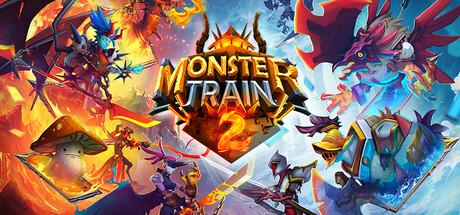
More content and replayability than its predecessor and even better than Slay the Spire, but frequent crashes and an off-putting art style hold it back.
What players like
More content than first game: Players consistently highlight that Monster Train 2 offers significantly more content than its predecessor, including new clans, abilities, and storyline. Many describe it as having double or more content, making it an enhanced and expanded experience.
High replayability and variety: Reviewers praise the game for its almost endless replayability, driven by multiple clan combinations, various game modes, and different challenges. The ability to mix factions and the depth of strategies keep players engaged for months.
Superior sequel to original: The sequel is widely regarded as an upgrade over Monster Train 1, improving on every aspect while retaining all its strengths. Players appreciate the added content, refined mechanics, and enhanced quality of life.
Better than Slay the Spire: Many players consider Monster Train 2 to be superior to Slay the Spire, citing deeper complexity, more variety, and less randomness. The game is often described as the natural progression or a more fun alternative to the genre's benchmark.
Best deck-building game: A considerable number of reviewers rank Monster Train 2 as one of the best, if not the best, deck-building games they have played. They highlight its incredible depth, strategic variety, and satisfying gameplay.
Common complaints
Art style is off-putting: Multiple reviewers found the unique art style to be wild and unappealing, which detracted from their enjoyment of the game. This appears to be a significant aesthetic barrier for some players.
Too similar to first game: Players felt the sequel closely mirrored the original in gameplay, variety, and content, leading to a perception of it being almost a copy-paste. This lack of innovation disappointed those expecting a fresh experience.
Lack of boss variety: Reviewers noted that the game features few bosses with little variation, causing gameplay to become repetitive and boring over time. This is a common issue that reduces long-term engagement.
Barely a roguelike due to lack of variety: The game lacks sufficient variety and depth to be considered a proper roguelike, with reviewers noting insufficient replay value and strategic complexity. This undermines the core genre expectations.
Lacks meta progression: Meta progression is meagre and at best mildly helpful, leaving players with little incentive to continue after runs. This reduces long-term motivation and sense of growth.
Gameplay and performance
Deck-building roguelike genre: Players consistently describe the game as a deck-building roguelike, combining card mechanics with roguelike elements like pathing and procedural runs. This core genre identity is the most frequently mentioned aspect of the game.
Multiple distinct races: The game features numerous selectable races or factions, each offering different playstyles and strategic options. Players appreciate the variety and the ability to choose between different racial factions.
Challenge modes available: The game includes various challenge modes, such as daily challenges, dimension gates, and modes that add restrictions and buffs. These modes provide additional replayability and test player skill.
Unique clan synergies: Multiple clans are available, each with distinct skills and playstyles that can be combined for powerful synergies. Players enjoy experimenting with different clan combinations to create effective strategies.
Sequel expands on predecessor: The game is a sequel that improves and expands upon the mechanics of its predecessor. Players note similarities to the first game while appreciating the enhancements and added content.
Crashes and freezes frequent: Several clusters mention crashes, freezes, and system-level instability, including app hangs and OS green screen crashes. These issues suggest severe technical problems that can disrupt gameplay and affect the entire system.
Runs well on Steam Deck: Multiple players report the game plays great on the Steam Deck, indicating good optimization and compatibility with the device. This positive feedback highlights a broad satisfaction among portable PC gamers.
Runs on low-end hardware: The game reportedly performs well on low-end hardware, such as fanless PCs, low-end office laptops, and Intel UHD integrated graphics, with instant load times and smooth performance. This indicates efficient optimization for modest systems.
Less lag than comparable title: A player notes the game has less lag than a comparable title, implying better performance relative to similar games. This positive comparison may indicate superior optimization or technical execution.
Recommendations
Recommended for deckbuilding roguelike fans: Many reviewers recommend this game to fans of deck-building roguelikes and card-based roguelites, often comparing it to Slay the Spire and calling it a must-buy for the genre. This cluster strongly indicates the game appeals directly to players who enjoy the core mechanics of such games.
Play first game before sequel: Some reviewers advise playing and finishing the first game before starting this one because the story follows directly. However, a few say you can skip the first game and still enjoy this one, indicating mixed opinions on whether the original is required.
High value for money: Multiple reviews state the game offers great value for its price, frequently using phrases like 'worth the money' and 'bang for your buck'. Some even say it's worth full price, and the purchase is strongly recommended.
Sequel worth playing for fans: Reviewers who played the first game generally recommend this sequel, saying it continues the story and offers a satisfying experience. It is considered one of the best modern sequels and should not be skipped by those who enjoyed the original.
Comparable to Slay the Spire: Several reviews directly compare the game to Slay the Spire, calling it as good or even better as a genre-defining title. Fans of Slay the Spire are repeatedly told they will love this game.
Buying context
Community fair range: $20.00 - $25.00.
Story completion: 30.0h.
Session length: 0.7h.
The game has a steep learning curve that initially frustrates players, but once they understand the systems and unlock enough content, it becomes extremely addictive and rewarding.
Friction: steep learning curve; complex overlapping systems; initial confusion and lack of clarity; required time to unlock meta progression.
Unlock drivers: understanding core mechanics; unlocking upgrades and clans; achieving successful deck synergy; positive feedback loops from combos.
Player profiles
Loyal Veteran: Adjusts strategies each run, appreciates depth and new mechanics while leveraging knowledge from the first game. Motivation: To enjoy more of the same refined gameplay with meaningful improvements over the original. Stance: buy.
Casual Player: Plays casually at lower difficulties, often struggles with mechanics and meta progression, prefers chill runs. Motivation: To enjoy a relaxing, low-commitment deckbuilding experience without needing hundreds of hours. Stance: sale.
Deckbuilding Enthusiast: Experiments with different clan combinations, theorycrafts, and enjoys high replayability through constant discovery. Motivation: To explore infinite synergies and discover creative, overpowered builds. Stance: buy.
Platform notes
Performance varies across hardware cohorts; the under 8GB VRAM group experiences stability issues, while the 8-11GB VRAM group has mixed optimization feedback.
Windows <8GB VRAM: mixed. Players report frequent crashes and freezes, which improved after updates but still cause instability for some.
Windows 8-11GB VRAM: mixed. Performance feedback is mixed: some praise optimization, while others criticize poor optimization.
Steam Deck: The game is fully optimized for Steam Deck, offering smooth performance, great battery life, and excellent controller support. Minor UI scaling adjustments may be needed for small text, but overall it provides a native experience.
Linux and Proton: The game runs flawlessly on Steam Deck based on all available user reviews, demonstrating strong out-of-the-box Proton/Linux compatibility with no reported crashes, glitches, or required tweaks.
Extra review signals
Monetization: The game uses a traditional DLC model with no microtransactions or in-game purchases. Most reviews praise the free updates and fair pricing, though a few criticize the DLC for locking content and being overpriced. Overall monetization is fair.
External guides: The game exhibits a moderate Wiki Tax, where players must rely on external guides, wikis, and googling to understand mechanics, deck builds, and game data. Key complaints include unclear deck information, difficulty spikes requiring external solutions, and the need to alt-tab or use a second monitor for essential information. This dependency reduces the fluidity of gameplay and frustrates players who prefer self-contained experiences.
Other review notes
Considered superior to Monster Train 1: The game is frequently compared to its predecessor, Monster Train 1, with most reviewers calling it a definitive upgrade, an all-around better version, or a complete replacement. Some note it has twice the content and improved features, though a few find the original's classes more interesting.
Favorable comparisons to Slay the Spire: Many reviewers compare the game to Slay the Spire, often stating it is better, more engaging, or a natural progression. Some note it has more variety and less randomness, while others find it less intuitive or second to Slay the Spire.
DLC adds significant value: The game features DLC that adds playable characters and clans, with some reviewers praising it as masterfully crafted. Others see it as a monetization strategy or note that it initially excludes the first game's DLC content.
Massive content volume: Reviewers highlight the game's substantial content, noting it has more than double the content of the first game, with many clans and long playtimes. Some mention 150 hours to complete half or 30 hours covering less than 1/10 of the game.
More clans than predecessor: The game offers more playable clans than the first, with reviewers noting 10 clans base and 11 with DLC, or 12 including all previous clans. This increases variety and replayability.